Thailand Hot Season: March to May Weather and Where to Go
November 2, 2026

The Thailand hot season runs roughly from late February to mid-May, and it is the hottest, driest stretch of the year in most of the country. It is also when Songkran happens, when the Gulf islands are at their best, and when hotel prices start to fall after the winter peak. If you are planning a trip for March, April or May 2027, this guide explains what the heat is really like, how the weather differs by region, and how to plan days that still work.
When is the Thailand hot season?
The Thai Meteorological Department (TMD) announces the start of the hot season each year. In 2026 it began on 22 February and was expected to last until around mid-May, with the hottest period from mid-March through April. The 2027 start will be announced closer to the time, but late February or early March is the usual pattern.
The hot season ends when the southwest monsoon arrives, usually in mid to late May, bringing the start of the rainy season to most of the country.
How hot does it get?
In Bangkok, afternoon temperatures in April are often in the mid-30s °C, and high humidity makes it feel hotter. The heat index, which combines temperature and humidity, regularly goes into the 40s. In 2026, the TMD warned that some northern provinces could reach 42 to 43°C at the peak, and advised people to limit time outdoors between 10am and 7pm on the hottest days.
Nights stay warm, usually in the high 20s, so there is little relief after dark. Early mornings are the most comfortable part of the day.
Storms can also happen at the start and end of the season, when hot air meets the last cool air from the north. These summer storms are usually short but can bring strong winds and heavy rain for an hour or two.
Where to go: weather by region
Bangkok and central Thailand
Hot and humid throughout. Sightseeing is possible, but you need to plan around the midday heat. Temples, markets and river trips work best before 10am. Air-conditioned museums, malls and long lunches fill the middle of the day. The evenings are good for rooftop bars, night markets and riverside dinners.
Northern Thailand (Chiang Mai, Chiang Rai, Pai)
Very hot in March and April, and this is also the burning season. Smoke from agricultural fires and forest fires often pushes air quality to unhealthy levels in Chiang Mai and the north, usually from about February to April. Mountain views can disappear into haze for days. If air quality matters to you, or you are travelling with children or anyone with breathing problems, consider the north earlier in the year. Our guide to the Chiang Mai burning season explains the timing and how to check the daily air quality.
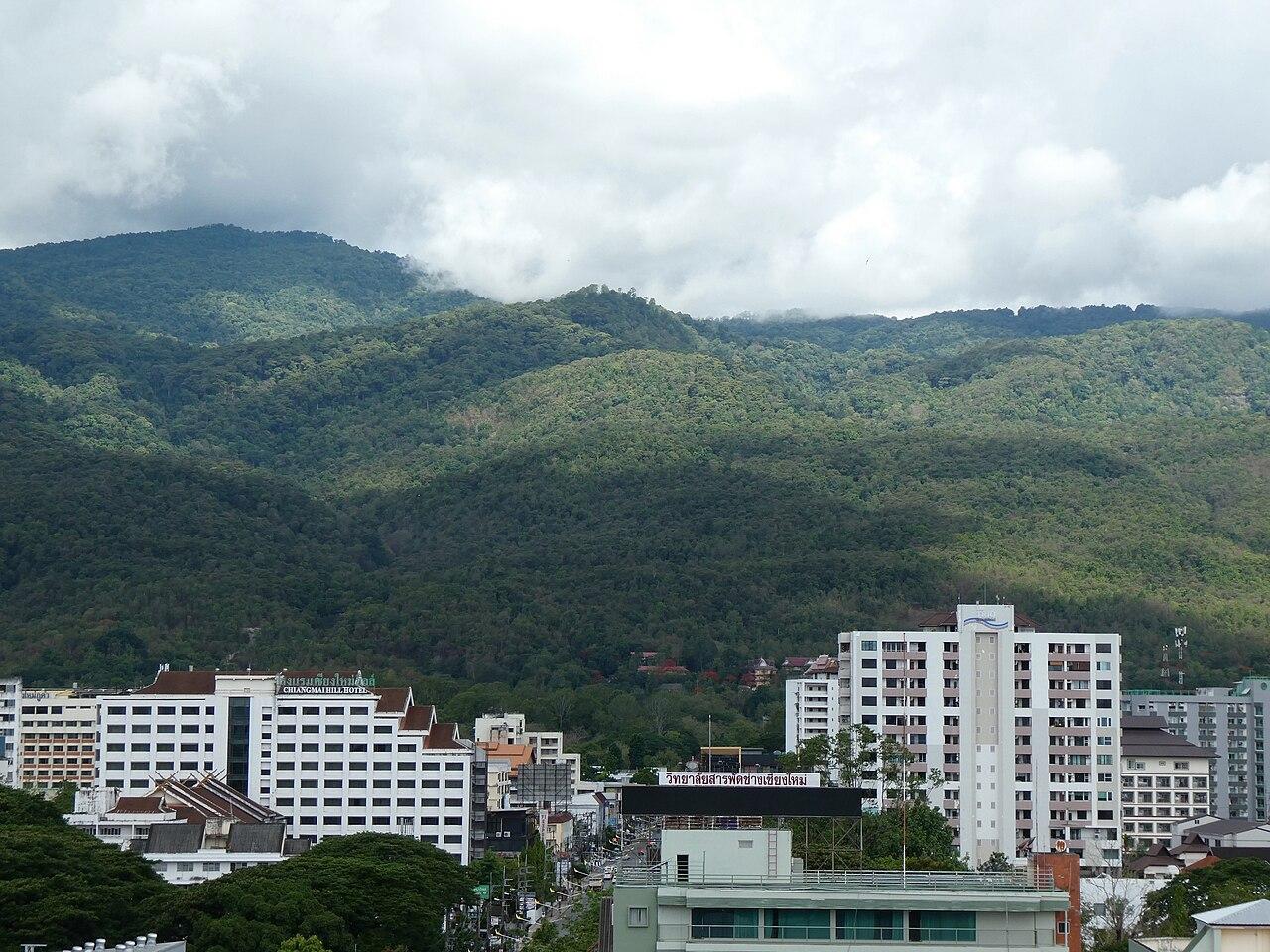
Photo: Setawut / Wikimedia Commons, CC BY 4.0
Gulf of Thailand islands (Koh Samui, Koh Phangan, Koh Tao)
This is one of the best times to visit. The Gulf coast has a different weather pattern from the Andaman side: its main rainy period is roughly October to December, so March to August is usually dry and sunny with calm seas. The sea is warm and visibility for snorkelling and diving around Koh Tao is often good.
Andaman coast (Phuket, Krabi, Koh Lanta, Koh Phi Phi)
Still dry and sunny in March and April, with calm seas for boat trips. The southwest monsoon usually arrives in May, bringing more rain, bigger waves and some boat routes reducing service. Late April and early May are a shoulder period with lower prices and a higher chance of afternoon storms.
Songkran 2027
Songkran, the Thai New Year, is the biggest event of the hot season. In 2027 the official public holidays are Tuesday 13 to Thursday 15 April, according to the Bank of Thailand's 2027 holiday notice. Many people take the whole week off, and the government sometimes adds extra holidays, so check the final schedule closer to the date.
During Songkran:
- Water fights take over the streets in Bangkok (Silom Road and Khao San Road are the best known), Chiang Mai (around the Old City moat) and most tourist areas.
- Many Thais travel home to the provinces, so buses, trains and domestic flights fill up and Bangkok itself becomes quieter in some areas.
- Temples hold merit-making ceremonies and the more traditional side of the festival, including pouring water over Buddha images.

Photo: Chainwit. / Wikimedia Commons, CC BY 4.0
Book transport and hotels early if you are travelling during that week. Our Songkran 2027 guide covers where to go and what to pack.
How to plan days in the heat
The best way to enjoy Thailand in March, April and May is to change the shape of your day, not to avoid the heat completely.
1. Start early. Aim to be at the first temple or market by 7:30am or 8am. The Grand Palace opens at 8:30am, and the first hour is noticeably cooler and quieter. 2. Go indoors from about 11am to 3pm. Use the hotel pool, an air-conditioned museum, a mall food court, a massage or a long lunch. 3. Head out again in the late afternoon. From about 4pm the sun is lower, and sunset views from the river or a rooftop are a good reward. 4. Use air-conditioned transport. In Bangkok, the BTS Skytrain and MRT are cooler and faster than walking long distances. Grab and taxis are cheap for short hops. 5. Plan beach days, not temple days, for the hottest weeks. If you are combining a city and a beach, put the city at the start of your trip, before April if possible.
Staying safe in the heat
- Drink water regularly, and add electrolyte drinks (sold at every convenience store) on hot days.
- Wear a hat, sunglasses and loose, light clothing that still covers shoulders and knees for temples.
- Use high-factor sunscreen and reapply, especially at the beach and on boat trips.
- Know the signs of heat exhaustion: dizziness, headache, nausea and heavy sweating. Get to a cool place and rest if you feel unwell.
- Check the TMD forecast and heat warnings, which are published in Thai and English.
Is the hot season a good time to visit Thailand?
It depends on where you go and what you plan to do.
It works well for:
- Beach trips to the Gulf islands
- Island hopping on the Andaman coast in March and early April
- Songkran, if you want to join the festival
- Travellers looking for lower prices than December and January
It is harder for:
- Long days of walking and sightseeing in Bangkok
- Trekking and mountain views in the north, because of heat and haze
- Anyone sensitive to heat or air pollution
If you prefer cooler weather, the period from November to February is the main high season. Our guide to Thailand in December covers that time of year.
A sample 10-day hot season route
- Days 1 to 3: Bangkok. Early-morning temples and markets, afternoons indoors, evenings by the river. The 3 days in Bangkok itinerary gives you a ready-made plan that you can adjust in RoamerPlanner to put the outdoor stops before 10am.
- Days 4 to 10: Koh Samui and Koh Tao or Koh Phangan. Fly to Samui from Bangkok, or take an overnight train and ferry to save money. Spend a few days on Samui, then take the ferry to Koh Tao for snorkelling or diving.
If you want to include the north, add two or three days in Chiang Mai at the start, and check the air quality forecast first. The 3 days in Chiang Mai itinerary has a plan that works with early starts.
Before you go, remember that visitors arriving in Thailand need to complete the Thailand Digital Arrival Card online before arrival; our TDAC guide explains how.
Quick FAQ
When is the hot season in Thailand? Usually from late February or March to mid-May. In 2026 the TMD announced the start on 22 February.
What is the hottest month in Thailand? April, generally. Mid-March to the end of April is the peak.
Where is the best place to go in Thailand in April? The Gulf islands (Koh Samui, Koh Phangan, Koh Tao) usually have the most reliable weather. The Andaman coast is also good until the monsoon arrives in May.
When is Songkran 2027? The official holidays are 13 to 15 April 2027.
Sources: Thai Meteorological Department hot season announcement for 2026 (via the Thai government's thailand.go.th portal, 20 February 2026); Bank of Thailand notification on 2027 financial institution holidays (Songkran dates). Checked 28 October 2026.
Cover photo: Vyacheslav Argenberg / Wikimedia Commons, CC BY 4.0
Trips you can copy
Ready-made day-by-day plans for this place. Copy one for free and change it to fit your trip.
Turn this into a plan
Ready to turn this into a real itinerary? Plan it in RoamerPlanner.
Start your own plan, no account neededBrowse sample trips