ETIAS and EES: What Changes for Visitors to Europe
November 2, 2026
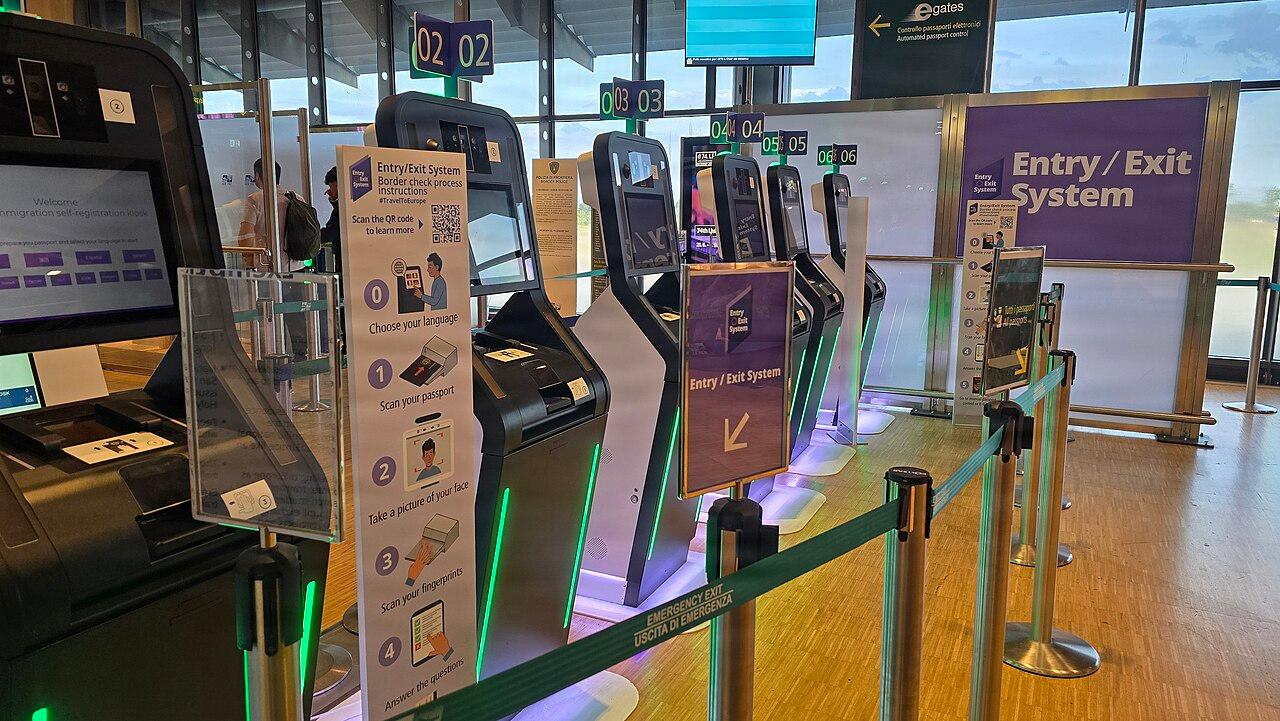
ETIAS is the €20 travel authorisation that visa-free visitors will one day need before a trip to most of Europe, and it is easy to confuse with EES, the biometric border system that has already replaced passport stamps. If you hold a passport from the UK, the US, Canada, Australia, Japan, Korea, Singapore or another visa-exempt country, here is what has actually changed, what has not started yet, and what to do for a trip in the next few months.
The short version, as of late October 2026: EES is live, ETIAS is not. You do not need to apply or pay for anything before a Schengen trip today, but your first border crossing will take a little longer than it used to.
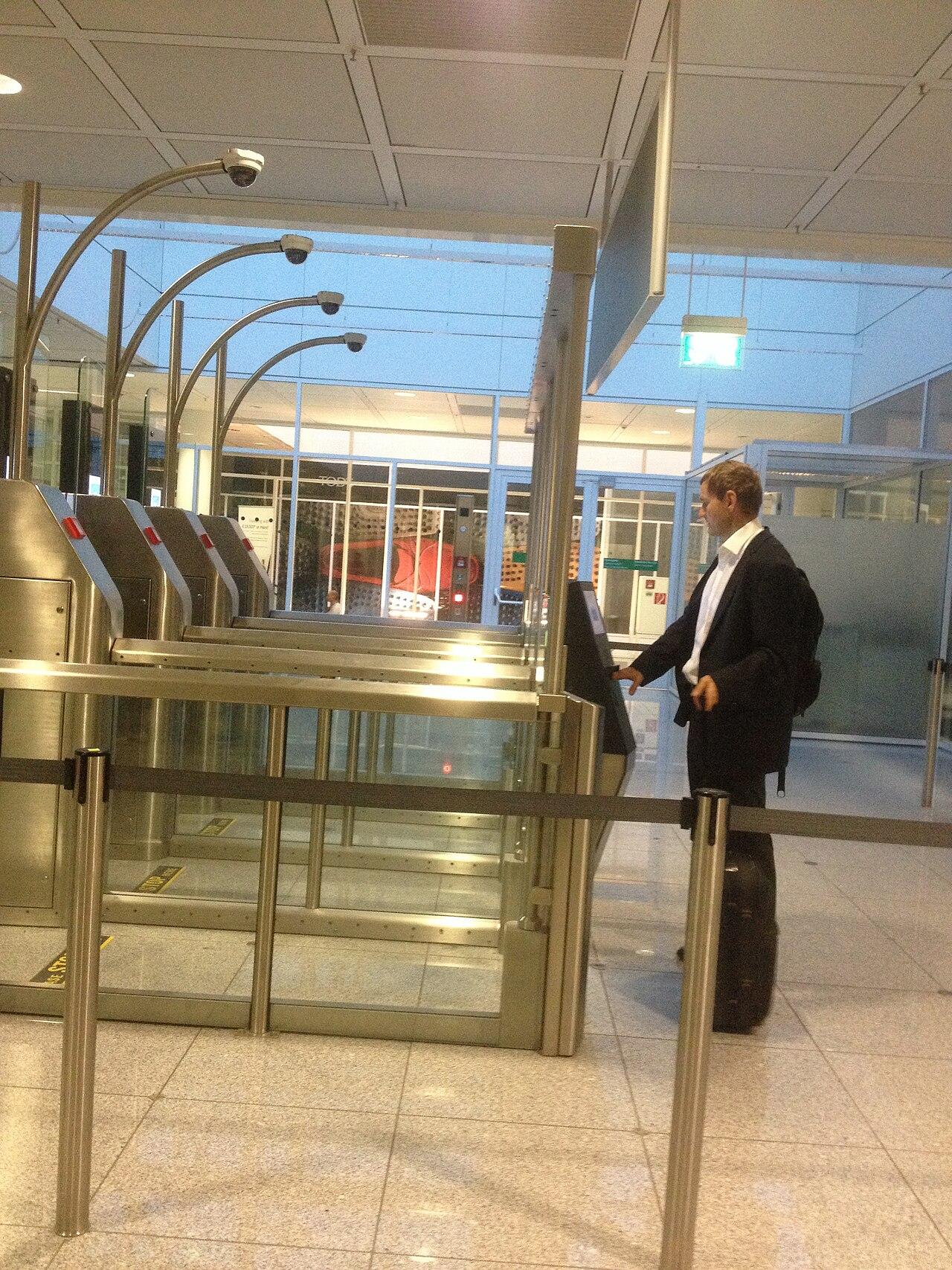
Photo: Subhashish Panigrahi / Wikimedia Commons, CC BY-SA 4.0
EES: the part that has already started
The Entry/Exit System (EES) is a digital register of non-EU travellers on short stays. It started gradually on 12 October 2025 and, according to the European Commission, has been fully operational at all external Schengen border crossing points since 10 April 2026.
Who it applies to
EES covers non-EU nationals visiting for a short stay, meaning up to 90 days in any 180-day period, whether or not they need a visa. It is used by 29 European countries: the EU member states except Cyprus and Ireland, plus Iceland, Liechtenstein, Norway and Switzerland.
Some people are not registered, including EU, Icelandic, Liechtenstein, Norwegian and Swiss nationals, holders of a long-stay visa or residence permit issued by an EES country, and certain family members of EU citizens who hold a residence card. The full list is on the Commission's EES pages.
What happens at the border
The first time you enter after EES started, the border officer (or a self-service kiosk) records:
- your passport details
- a facial image
- four fingerprints, if you do not need a visa (visa holders already gave fingerprints when they applied)
Children under 12 are not fingerprinted. On later trips, the system only needs to check you against the stored record, which should be quicker. The record replaces the old passport stamp, so the system also counts your 90 days automatically and flags overstays.
You do not need a biometric passport to be registered. A chipped passport only matters if you want to use self-service kiosks or e-gates, where they exist.
What it means in practice
The main effect is time. The first registration can add a few minutes per person, and some airports and land crossings had long queues during the 2026 rollout, especially in summer. For a trip this winter:
- Allow extra time on arrival for your first entry since October 2025, particularly at busy airports.
- If you are travelling from the UK by Eurostar, ferry from Dover or the Channel Tunnel, the French and Schengen checks happen before departure in the UK, so EES registration takes place there. Arrive at the terminal earlier than you used to.
- Families should plan for each person, including children, to go through the process.
ETIAS: the part that has not started
The European Travel Information and Authorisation System (ETIAS) is a separate, online pre-travel check, similar in idea to the US ESTA, the UK ETA or Korea's K-ETA. It has been delayed several times.
Current status
The official ETIAS website says the system is not in operation, no applications are being collected, and the EU will announce the start date several months before launch. Earlier official wording pointed to the last quarter of 2026, but that was removed from the site in mid-2026, and as of late October 2026 no new date has been published. Several news outlets, including The Guardian and The Connexion, reported in October that a 2026 start now looks unlikely.
So for any trip you are planning now, there is nothing to apply for.
How it will work once it starts
Based on the official ETIAS FAQ:
- Who needs it: non-EU nationals from visa-exempt countries visiting any of 30 European countries for a short stay (the 29 EES countries plus Cyprus).
- Cost: €20. Applicants under 18 or over 70 are exempt from the fee, as are qualifying family members of EU citizens.
- Validity: three years, or until your passport expires if that comes first. A new passport means a new ETIAS.
- Processing: most applications are expected to be decided within minutes. Some will take up to 96 hours, and cases that need extra documents or an interview can take up to 30 more days.
- Where to apply: only through the official ETIAS website or app.
There will also be a transition. The ETIAS rules provide for a six-month transitional period after launch, when having an ETIAS is optional, followed by a grace period for some first-time travellers. In practice, even once a date is announced, you are likely to have many months before it becomes compulsory.
Watch out for unofficial ETIAS websites
Because the name has been in the news for years, many websites already offer to "process your ETIAS" for a fee. The EU's own site says it is not collecting any applications, so any site taking money for an ETIAS right now is not official. UK travel trade bodies have warned travellers in October 2026 not to apply through these sites.
When ETIAS does open, applying directly will cost €20. Intermediaries are allowed, but anything above €20 is their fee, and they will handle your passport and personal data. The safest approach is to wait for the official launch and apply yourself.
What has not changed
It is worth being clear about what stays the same:
- The 90/180-day rule. Visa-free visitors can still stay up to 90 days in any 180-day period across the Schengen area. EES just counts it digitally. Cyprus is counted separately.
- Passport validity. For Schengen entry, your passport should be valid for at least three months after the date you plan to leave and should have been issued within the last 10 years. Check both dates, because older passports can fail the 10-year rule even if they have not expired.
- Visa requirements. If you needed a Schengen visa before, you still need one. ETIAS is only for visa-exempt nationalities.
- Entry conditions. Border officers can still ask for proof of accommodation, a return ticket or enough money for your stay.
A simple checklist for a Europe trip this winter or spring
1. Check your passport expiry and issue date against the three-month and ten-year rules. 2. Confirm whether your nationality is visa-exempt. If it is, you do not need ETIAS yet. 3. Add extra time at your first Schengen border crossing for EES registration. 4. If you are leaving from the UK by train or ferry, arrive earlier than usual for the departure checks. 5. Keep track of your days if you are on a long trip; the 90/180 rule is now enforced automatically. 6. Ignore any site asking you to pay for ETIAS before the EU announces a start date.
Our international travel checklist covers the rest of the paperwork and bookings to sort out before you fly.
How this affects trip planning
For most city breaks the practical change is small: a longer first queue, then normal travel. Where it matters more is on tight schedules. If you land in Paris and plan to catch a train to another city two hours later, or fly into Rome and go straight to a timed Colosseum entry, leave a bigger buffer than you would have in the past.
If you are planning a first trip, the 3 days in Paris and 3 days in Rome itineraries are a good base, and the 10-day Italy itinerary shows how to link Rome, Florence and Venice. Building the trip in RoamerPlanner lets you keep your flight times, first-day buffer and booking references in one place, which helps if a border queue pushes things back.
Quick FAQ
Do I need ETIAS to visit Europe now? No. As of late October 2026, ETIAS is not in operation and no applications are being collected.
When will ETIAS start? No date has been announced. The EU says it will give several months' notice, and there will be a six-month transitional period after launch.
How much will ETIAS cost? €20, with no fee for applicants under 18 or over 70.
Is EES the same as ETIAS? No. EES is the border register that takes your fingerprints and photo when you arrive. ETIAS is an online authorisation you will apply for before travelling, once it starts.
Does EES apply when I enter the UK? No. EES is for entering Schengen countries. The UK has its own ETA system for many visitors.
Sources: European Commission and DG Migration and Home Affairs EES announcements (10 April and 27 July 2026); official EES FAQ (travel-europe.europa.eu/ees); official ETIAS website and FAQ (travel-europe.europa.eu/etias); The Guardian (13 October 2026) and The Connexion (17 October 2026) on the ETIAS delay. Checked 28 October 2026.
Cover photo: U.S. Army USAG-V by Randall Jackson / Wikimedia Commons, public domain
Trips you can copy
Ready-made day-by-day plans for this place. Copy one for free and change it to fit your trip.
Turn this into a plan
Ready to turn this into a real itinerary? Plan it in RoamerPlanner.
Start your own plan, no account neededBrowse sample trips