Day Trips from Chiang Mai: Doi Inthanon, Chiang Rai and Elephant Sanctuaries Done Right
November 1, 2026
The best day trips from Chiang Mai take you into the mountains, temples and countryside that make northern Thailand worth the journey. The three that most visitors consider are Doi Inthanon, Thailand's highest mountain; Chiang Rai and its White Temple; and an elephant sanctuary. Each is a full day, and each has trade-offs in driving time, cost and how well it is run. This guide compares them, adds some shorter options, and explains how to choose an elephant visit that puts the animals first.
Day trips from Chiang Mai at a glance
- Doi Inthanon: about 1.5 to 2 hours each way. Cool air, waterfalls, two royal pagodas and short nature trails. Best from November to February.
- Chiang Rai: about 3 to 3.5 hours each way by road. The White Temple, the Blue Temple and the Black House. A long day.
- Elephant sanctuary: 1 to 2 hours each way depending on the camp. Observation and feeding at the better places. Choose carefully.
- Shorter options: Doi Suthep, Mae Kampong, Lamphun and Chiang Dao, all under about 1.5 hours.
Doi Inthanon National Park
Doi Inthanon is Thailand's highest point, at 2,565 metres, about 1.5 to 2 hours south-west of Chiang Mai by car. A day here usually includes:
- The summit area, with a short boardwalk through moss-covered cloud forest at Ang Ka.
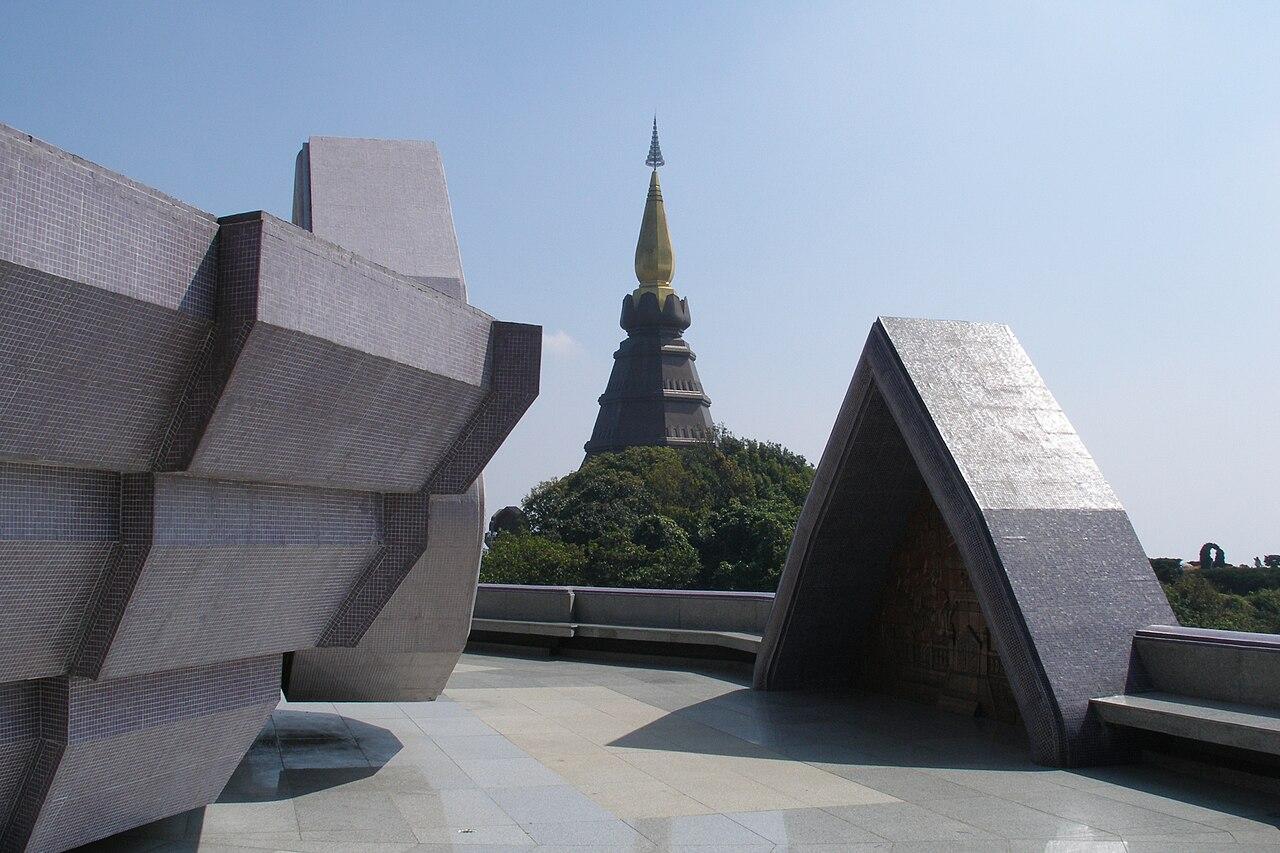
- The two royal pagodas (Phra Maha Dhatu Naphamethanidon and Naphaphonphumisiri), built for the King and Queen's 60th birthdays, with gardens and views over the hills.
- Waterfalls such as Wachirathan and Mae Klang, near the road on the way up.
- The Kew Mae Pan nature trail, a ridge walk of about 3 km with open views, when it is open.
Fees and rules
Thailand's national park fees for foreign visitors at Doi Inthanon are 300 baht for adults and 150 baht for children, plus a small vehicle fee. The royal pagodas charge a separate entrance fee. Carry cash, since card payment is rare inside the park.
The Kew Mae Pan trail is closed every rainy season, usually from around June to October, to let the forest recover, and a local guide is required when it is open. Check whether it has reopened before you plan the day around it.
When to go
November to February is the most popular time, with clear mornings and cold temperatures at the top. It can drop close to freezing at dawn, so bring a warm layer even if Chiang Mai is hot. Weekends and Thai holidays bring heavy traffic on the mountain road, so a weekday is much easier. The Chiang Mai cool season guide covers the weather in more detail.
How to get there
Most visitors join a group tour or hire a private car and driver for the day. Driving yourself is possible, but the upper road is steep and winding.
Chiang Rai
Chiang Rai is a separate province about 180 to 190 km north-east of Chiang Mai. By road that is about 3 to 3.5 hours each way, so a day trip means at least six or seven hours in a vehicle. Many people still do it as a tour, but staying overnight in Chiang Rai gives a much easier pace.
What a typical day covers:
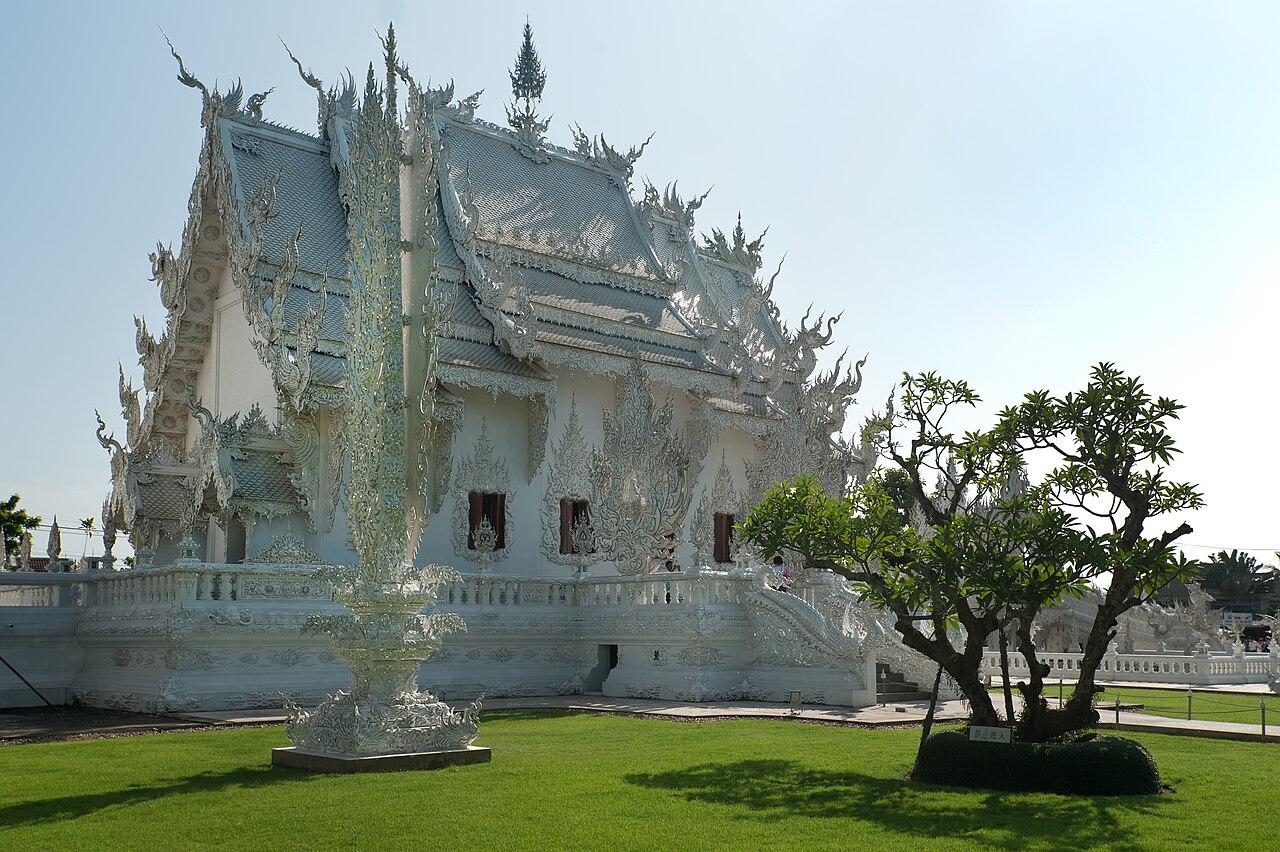
Photo: Hans-Jürgen Neubert / Wikimedia Commons, CC BY 4.0
- Wat Rong Khun (the White Temple): a white temple covered in mirrored glass, designed by the Thai artist Chalermchai Kositpipat. From 1 January 2026 the temple charges foreign visitors 200 baht, which now includes the Cave of Art. Visitors aged 70 and over and children under 120 cm enter free.
- Wat Rong Suea Ten (the Blue Temple): a newer temple with a deep blue and gold interior.
- Baan Dam (the Black House): a museum of dark wooden buildings by the artist Thawan Duchanee.
- Some tours also go to the Golden Triangle, where Thailand, Laos and Myanmar meet. That adds another hour or more each way.
Day trip or overnight?
- Day trip: works if you only want the White Temple and one or two other stops, and do not mind long drives. Start by 7am.
- Overnight: a better choice if you want the Golden Triangle, the night bazaar, or a slower look at the temples. The Green Bus between the two cities takes about 3.5 hours and runs many times a day.
Elephant sanctuaries: choosing well
Many visitors want to see elephants near Chiang Mai, and many camps call themselves sanctuaries. Practices vary a lot. Animal welfare groups generally recommend places where:
- There is no riding, with or without a seat.
- There are no performances, such as painting, tricks or shows.
- Elephants are not chained for long periods and have space to move.
- Contact is limited. The better places focus on watching elephants behave naturally, with feeding from a distance or from a platform. Some welfare-focused sanctuaries have also stopped bathing sessions with tourists.
- Group sizes are small and visits are short enough not to stress the animals.
Before booking, read the sanctuary's own description of what visitors do and look for independent reviews. Places that show visitors riding, playing in water with elephants or posing with baby elephants in close contact are worth a second look. Some sanctuaries are certified by Thai government agencies or independent welfare programmes. Ask about certification if it matters to you.
A half-day visit is often enough, and some sanctuaries combine it with a walk in the surrounding forest.
Shorter trips
If a full day in a minibus is not appealing, these are closer:
- Doi Suthep: the temple of Wat Phra That Doi Suthep on the mountain above the city, about 30 to 40 minutes by songthaew or car. Climb the staircase of about 300 steps flanked by naga serpents, or take the funicular. Combine it with Doi Pui village or the Bhubing Palace gardens.
- Mae Kampong: a village in the hills east of the city, about 1 to 1.5 hours away, known for coffee, cool air and homestays.
- Lamphun: a quiet old town about 30 to 40 minutes south, with the temple of Wat Phra That Hariphunchai.
- Chiang Dao: a mountain town about 1.5 hours north with a cave temple and hiking.
Seasons and air quality
The cool season from November to February is the most comfortable time for all of these trips. From about February to April, smoke from agricultural burning and forest fires often affects air quality across the north, and mountain views can be hazy or blocked entirely. If you are travelling in those months, the Chiang Mai burning season guide explains how to plan around it.
The rainy season from about June to October brings green landscapes and waterfalls at their fullest, but roads can be slippery and some trails close.
Tour or private driver?
- Group tours are the cheapest option, with a fixed route, a guide and hotel pickup. They tend to start early and spend limited time at each stop.
- A private car and driver costs more but lets you choose stops and timing. For a family or group of three or four, the cost per person can be similar to a tour.
- Renting a scooter works for Doi Suthep and nearby places, but long mountain roads are tiring and accidents are common.
Building the trip
Day trips fit well around a base in the city. The 3 days in Chiang Mai itinerary covers the old city, temples and markets, and you can add one or two of the trips above. If you are arriving from Bangkok, the Bangkok to Chiang Mai guide compares the options. In RoamerPlanner, add each day trip as its own day so the pickup time and driver's contact are easy to find.
Quick FAQ
What is the best day trip from Chiang Mai? For mountains and cool air, Doi Inthanon. For temples and art, Chiang Rai. For a half day, Doi Suthep.
Is a Chiang Rai day trip worth it? Yes if you start early and accept the long drive. Otherwise, stay a night.
How much is the White Temple? 200 baht for foreign visitors from 1 January 2026, including the Cave of Art.
Sources: Department of National Parks fee schedule; Doi Inthanon National Park visitor information; Wat Rong Khun fee notice of January 2026 as reported by Chiang Rai 108; Green Bus Thailand route information. Checked 27 October 2026.
Cover photo: Vyacheslav Argenberg / Wikimedia Commons, CC BY 4.0
Trips you can copy
Ready-made day-by-day plans for this place. Copy one for free and change it to fit your trip.
Turn this into a plan
Ready to turn this into a real itinerary? Plan it in RoamerPlanner.
Free. You'll sign up or log in first, then the copy is ready to edit.
Start your own plan, no account needed