Tokyo Cherry Blossom: Parks, Timing and a One-Day Route
October 27, 2026
A Tokyo cherry blossom day depends on two things: the parks people name are far apart, and Shinjuku Gyoen can require an advance reservation on the busiest blossom days. The flowering window is the last ten days of March into the first days of April, and no 2027 date is posted yet. A one-day route works if it is two outdoor places plus one indoor backup, timed around the garden's real opening hour. It does not work if it is Ueno, Shinjuku Gyoen, the Meguro River and a teamLab slot on the same date.
No official 2027 flowering day has been posted. The Japan Meteorological Agency records a sample tree at Yasukuni Shrine. It does not issue the forecast travellers used to wait for. Use the normal dates as the window, then tighten the plan when a private forecast exists.
Tokyo cherry blossom timing, in the weather office's words
Flowering is the first day five or six flowers are open on the sample tree. Full bloom is the first day about 80 percent of that tree is open. The tree has stood at Yasukuni since 1966. The statistical series starts in 1953.
The current normal, 1991-2020, is 24 March for flowering and 31 March for full bloom. The previous normal, 1981-2010, was later: 26 March and 3 April. The earliest flowering dates in the published ranking are 14 March, in 2023, 2021 and 2020. The latest flowering in that late-ranking list is 11 April 1984. The earliest full bloom listed is 21 March 2002. The latest is 17 April 1984.
So the planning window for central Tokyo is the last ten days of March into the first days of April, with a real chance of being a week early or, less often in recent years, late. This article does not quote a 2026 Tokyo flowering date, because the observatory page used here publishes normals and records rather than a 2027 forecast, and a private 2026 table should not be recycled. How the national wave moves, and how to hold refundable rooms, is in the cherry blossom 2027 Japan overview.
Shinjuku Gyoen's own spring opening is a separate calendar from the sample tree. The garden stays open every day, including Mondays, from 25 March to 24 April for cherry-blossom season. That period is published as the annual pattern on the garden's English guide. It is not a statement that the trees will be perfect on 25 March.
The parks, and the rules that change the day
Shinjuku Gyoen
From 15 March to 30 September, outside a longer midsummer window, the garden is open 09:00 to 18:00, last entry 17:30. Ordinary admission is 500 yen for adults, 250 yen for visitors 65 and over and for students 16 and over, and free for children 15 and under. A transport IC card works at the gates. E-tickets exist for ordinary entry. That purchase is not the same thing as a crowd reservation.
The garden says entry on weekends, national holidays and other busy days in blossom season may require advance reservation. For 2026 the Ministry of the Environment required a booking only on set hours: 28 and 29 March and 5 April, from 10:00 to 16:00. The 4 April requirement was dropped on 3 April 2026. Even on those days, 09:00 to 10:00 and 16:00 to 17:30 did not need a booking. Bookings for that season ran from 2 March to 5 April 2026. The 2027 reservation dates are not officially confirmed. Check the garden site in late February 2027. If your date is on the list, the 09:00 hour is the one that has, in the recent pattern, stayed open without a slot. Do not bet the day on that pattern surviving unchanged.
Outside 25 March-24 April the garden closes on Monday, or on the next weekday when Monday is a public holiday, and from 29 December to 3 January. Golden Week in early May is outside the every-day blossom window. Do not reuse this route in May without reading the closed-day line.
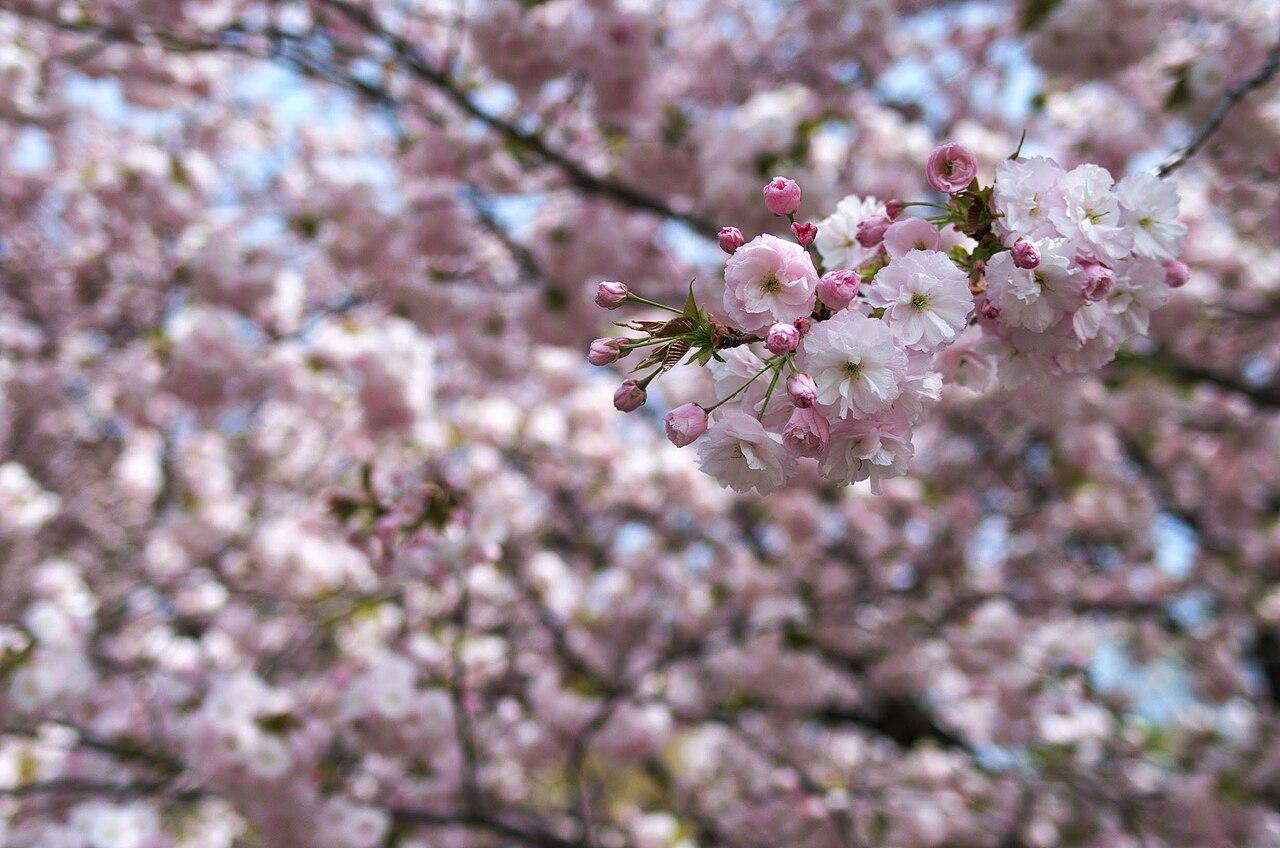
Photo: Carbonium / Wikimedia Commons, CC BY 3.0
Chidorigafuchi
The moat walk west of the Imperial Palace is the second half of a sensible one-day route, because it sits a train ride from Shinjuku rather than a second expedition across the city. Rowboats run in season. The 2027 hours and fares are not officially confirmed, so treat a boat as optional and buy it on the day if the operator is open and the queue is one you accept.
The weather-office sample tree is inside the Yasukuni grounds, next to this area. You do not need to enter the shrine to walk the moat. Night lighting along the water has been part of some recent seasons. A 2027 lighting schedule was not published at this check. If you want the photo of boats under lit trees, confirm that year's hours before you skip dinner for it.
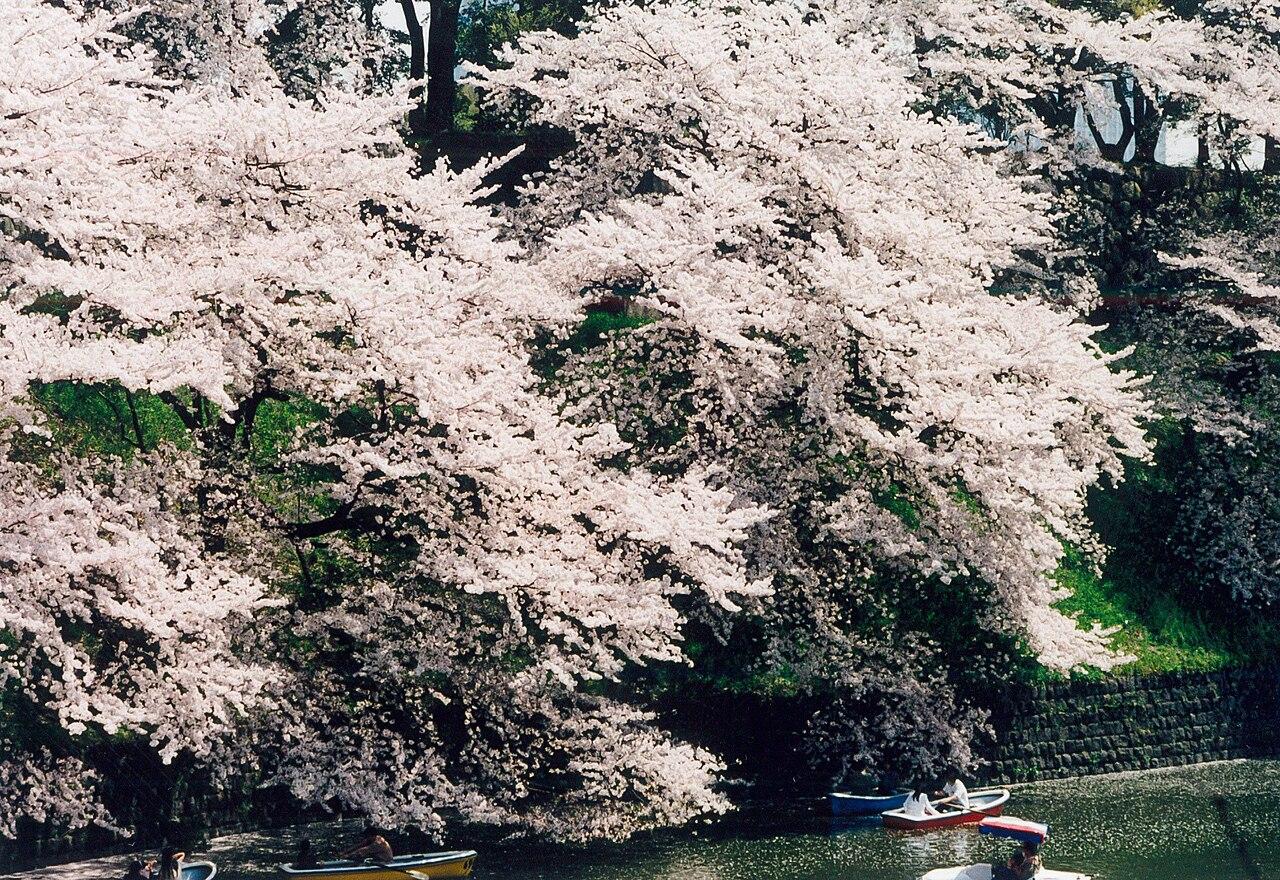
Photo: Kirin7739 / Wikimedia Commons, CC BY 4.0
Ueno, if you swap the morning
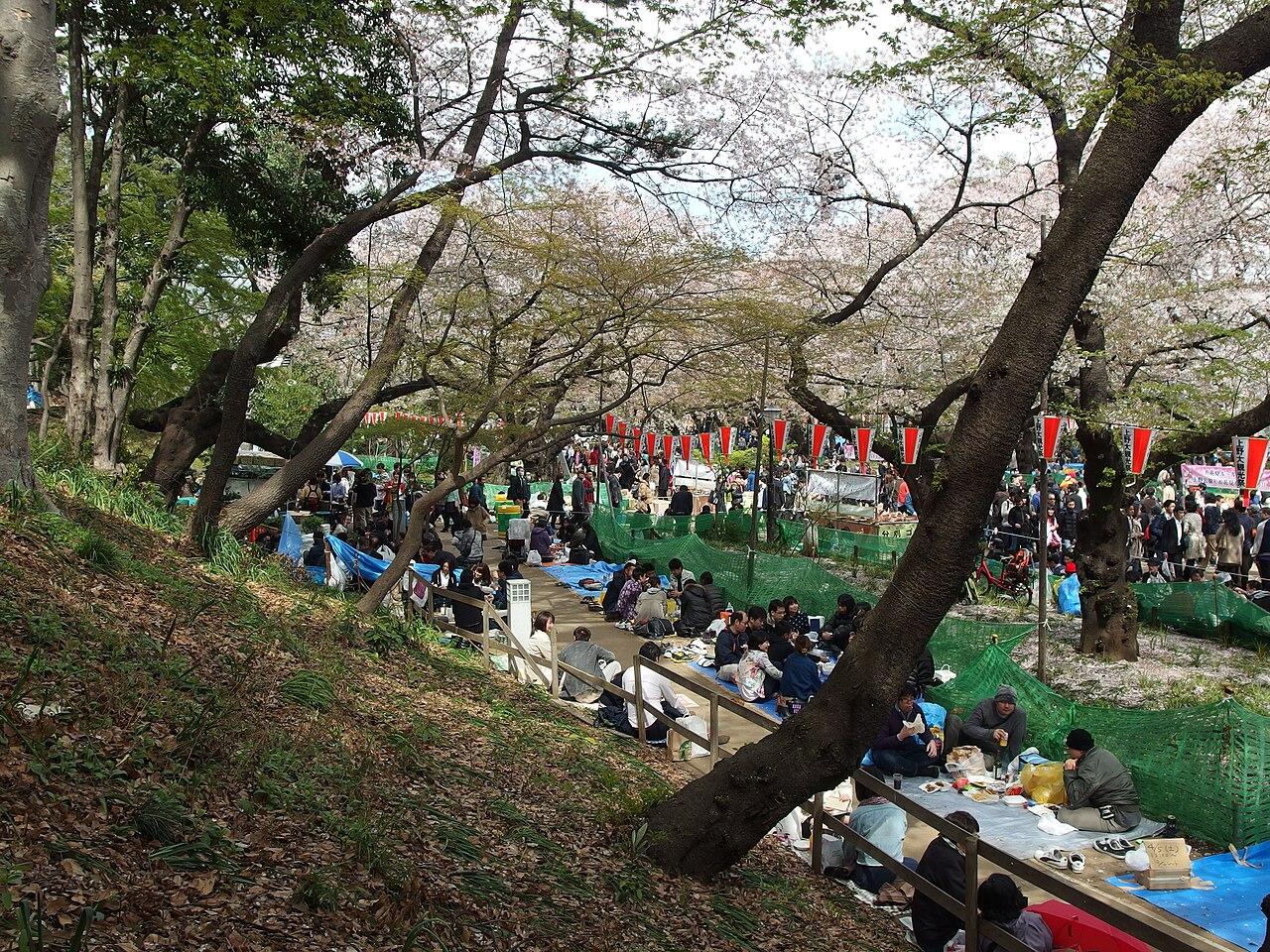
Ueno Park is public ground and does not charge a garden fee. It is also the park that fills until the main path is a slow queue. It is a good morning if Shinjuku Gyoen has a reservation rule you cannot meet, or if you are staying on the east side of the city and Shinjuku is the awkward end. It is a bad third park on the same day as Shinjuku and the moat. Lantern schedules for the Ueno blossom festival are a local announcement. The 2027 dates are not officially confirmed.
The Meguro River is a separate evening, usually another day, and only if the trees there match your dates. Leaving it off this route is the point.
Photo: Guilhem Vellut from Annecy, France / Wikimedia Commons, CC BY 2.0
The one-day route
Stay the night before in Shinjuku, Shibuya or anywhere on the JR Yamanote loop with a short walk to Shinjuku Station. Neighbourhoods for a first Tokyo trip are compared in where to stay in Tokyo. For a blossom day, the test is the morning transfer, not the nightlife.
This route assumes a date inside 25 March-24 April, so the garden is open. If your only free day is a Monday before 25 March, pick Ueno instead and do not travel to a closed gate.
Morning: Shinjuku Gyoen at opening
Be at a gate at 09:00. Shinjuku Gate, Okido Gate and Sendagaya Gate all exist; use the one that matches your station and the garden map that week. Pay the 500 yen (or the concession you qualify for) by IC card or e-ticket so the counter line is not your delay. Walk the garden while the paths are still a visit rather than a holding pattern. Leave before noon even if the trees are good. The afternoon belongs somewhere else.
Afternoon: Chidorigafuchi
From Shinjuku Station, go toward Kudanshita (the Tozai, Hanzomon and Toei Shinjuku lines meet there; JR Ichigaya is the other approach). Allow a real transfer, including the walk from the garden to the station and from Kudanshita to the water. Do not schedule a restaurant at 12:30 on the other side of Tokyo. Eat near the moat or back toward Jinbocho.
Walk the water. If boats are operating and the wait is short, take one. If the wait is long, the path is the visit. You are finished when you have done one length of the moat, not when you have also "done" the palace East Gardens. Those gardens have their own closed days (commonly Monday and Friday). Do not attach them to this route on a guess.
Evening: Jinbocho, not a third park
Jinbocho is one subway stop from Kudanshita and it is indoors: bookshops, small restaurants, a plan that still works if the wind has taken the petals or the moat was too crowded to enjoy. End there. Ueno, Asakusa and Meguro are tomorrow, or they are a different trip.
If you are building a longer Tokyo stay around this day, the 5 days in Tokyo itinerary and the 7-day Japan itinerary show where the other days can go. Put this blossom day on the date closest to full bloom once a forecast exists, and keep the other days as museums and neighbourhoods that do not care about petals.
For a movable trip, set the day in RoamerPlanner as "blossom day, shiftable" and lock the hotel nights around it as refundable. A one-day route is easy to slide. A concert ticket on the same evening is not.
What to book, and what to leave
Book the hotel first, with a cancellation rule that lets you move a night or two after winter forecasts appear. Book the garden reservation only if 2027 publishes a list and your date is on it. Do not buy a boat ticket in advance until that operator's page shows a 2027 product. Do not buy a same-day seat on a limited express out of Tokyo for the evening of this route. You will miss it, or you will cut the moat short to catch it.
If the sample tree is clearly past full bloom by the time you land, run the same geography anyway. Shinjuku Gyoen has other spring flowers after the Somei Yoshino peak, which the garden's own season notes list through April and May. The moat is less interesting once the petals are gone. In that case swap the afternoon to Jinbocho and a museum you have checked is open, and let Ueno go.
Short answers
What time does the one-day route start? 09:00 at Shinjuku Gyoen, which is the published opening from mid-March.
How much is the garden? 500 yen for adults on the garden's English admission page at this check, with the concessions above. A 2027 price change is not announced here. Look again before you travel.
Can you do Ueno and Shinjuku Gyoen properly in one day? You can enter both. You cannot do both at the hour when they are worth it, and still walk Chidorigafuchi. Choose.
Is the 2027 full-bloom date 31 March? 31 March is the 1991-2020 normal, not a forecast. The tree has flowered as early as 14 March.
Sources: Japan Meteorological Agency, Tokyo District Meteorological Observatory, sakura notes (definitions, Yasukuni sample tree, normals 1991-2020 and 1981-2010, early and late records), checked 24 October 2026; Shinjuku Gyoen National Garden, English admission guide (hours, Monday rule, blossom-season daily opening 25 March-24 April, fees); Ministry of the Environment press release on 2026 advance booking (updated 3 April 2026). 2027 flowering dates, garden reservation days, moat-boat hours and Ueno lantern dates are not officially confirmed.
Cover photo: Guilhem Vellut from Annecy, France / Wikimedia Commons, CC BY 2.0
Turn this into a plan
Ready to turn this into a real itinerary? Plan it in RoamerPlanner.
Start your own plan, no account neededBrowse sample trips