Japan Luggage Forwarding (Takkyubin): How It Works
October 30, 2026
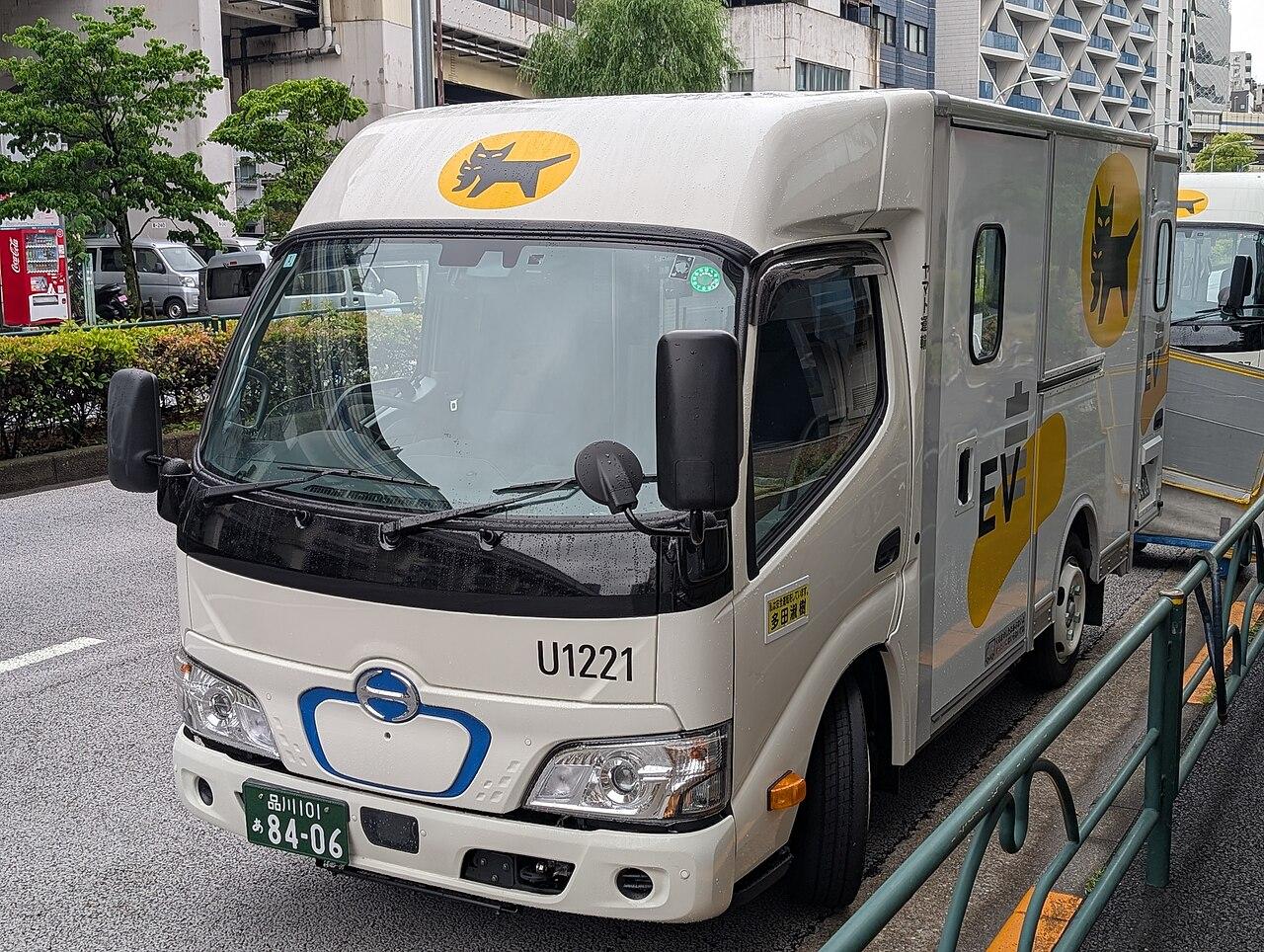
Japan luggage forwarding is a next-day service, not a same-day one. Yamato Transport, the company behind the black cat logo and the name TA-Q-BIN, will take a suitcase from a hotel desk to another hotel or to an airport, but the bag travels on a later schedule than you do. If you need the suitcase at the next hotel in the morning, it has to leave the night before. A bag going to the airport for a flight has to leave earlier than that.
How the handoff works
Most visitors never walk into a Yamato office. The hotel front desk takes the bag, fills in the waybill, and adds the charge to the room bill or takes payment on the spot. That is convenient, and it is also where a second fee can appear. Yamato's rate is one number. Many hotels add a handling fee of their own. There is no single national figure for that hotel fee, so ask what the desk adds before you let go of the bag.
You can drop the suitcase yourself at a Yamato sales office, at a convenience store that accepts TA-Q-BIN, or at an airport counter on the way home. Bringing the parcel in yourself takes 100 yen off the published rate. Kuroneko members get a further 50 yen off at a sales office. A hotel handoff does not get the 100 yen discount, because that discount is for parcels you carry into an office, an agency or a convenience store.
Price is set by size and weight together. Size is the sum of length, width and height in centimeters. If the weight limit for that size is exceeded, Yamato charges the size that matches the weight.
- Size 60: up to 60 cm, up to 2 kg
- Size 80: up to 80 cm, up to 5 kg
- Size 100: up to 100 cm, up to 10 kg
- Size 120: up to 120 cm, up to 15 kg
- Size 140: up to 140 cm, up to 20 kg
- Size 160: up to 160 cm, up to 25 kg
- Size 180: up to 180 cm, up to 30 kg
- Size 200: up to 200 cm, up to 30 kg
A full-size checked suitcase often lands at size 140 or 160. A cabin bag is often size 100 or 120. One side cannot be longer than 170 cm. Nothing over 200 cm total, or over 30 kg, is accepted.
Japan luggage forwarding prices
The cash figures below come from Yamato's rate table in force from 1 October 2025, tax included. Paying cashless shaves a few yen off: a size 140 bag from Kanto to Kansai is 2,772 yen instead of 2,780. Yamato's English rate page has lagged the Japanese table before, so if a webpage and the waybill disagree, pay the waybill. A notice after October 2025 can replace a single cell.
Kanto (Tokyo and the rest of that block) to Kansai (Kyoto, Osaka, Nara, Kobe and the rest of that block), one parcel, cash:
- Size 100: 1,650 yen
- Size 120: 2,170 yen
- Size 140: 2,780 yen
- Size 160: 3,160 yen
- Size 180: 4,480 yen
- Size 200: 5,410 yen
On that same Kanto to Kansai route, a golf bag is priced on the size 160 row, 3,160 yen. Skis are on the size 180 row, 4,480 yen.
Size 140, cash, on other routes from the same table:
- Inside Kanto, or inside Kansai: 2,630 yen
- Kansai to the Chugoku block, which includes Hiroshima: 2,630 yen
- Kanto to Kyushu: 3,250 yen
- Kanto to Okinawa: 4,030 yen
Each bag is a separate charge. Ordinary TA-Q-BIN does not halve the second suitcase. A size 140 from Tokyo to Kyoto is 2,780 yen, Kyoto or Osaka on to Hiroshima is 2,630 yen, and Hiroshima back to Tokyo is 2,930 yen. Those three labels are 8,340 yen before any hotel handling fee. On a 14-day Japan itinerary that changes hotels three times, that is the luggage line. When you lay the days out in RoamerPlanner, put the ship date on the same line as the train, so the bag is not aimed at a hotel you have already left.
The delivery date on the label
Yamato's own FAQ says a parcel takes at least one day (next-day delivery) or two days, depending on distance. Same-day delivery exists only in some areas. A Tokyo hotel to a Kyoto hotel is not a same-day shipment. The day you hand the bag over does not count as a travel day for the suitcase.
There is no single national cutoff hour. A convenience store, a sales office and a hotel desk stop accepting bags at different times, and the hotel time is often earlier because the staff have to finish the paperwork before the driver leaves. Read the date printed on the label before you leave the desk. If that date is the morning after you needed the clothes, the service has not failed. The hand-in was too late.
You can name a later delivery date than the earliest one the route allows, which is how a suitcase skips a one-night stop and meets you at the hotel after that. Ask the desk for the earliest date, then choose. Do not assume the network will store a bag for as long as you like without that date being written down.
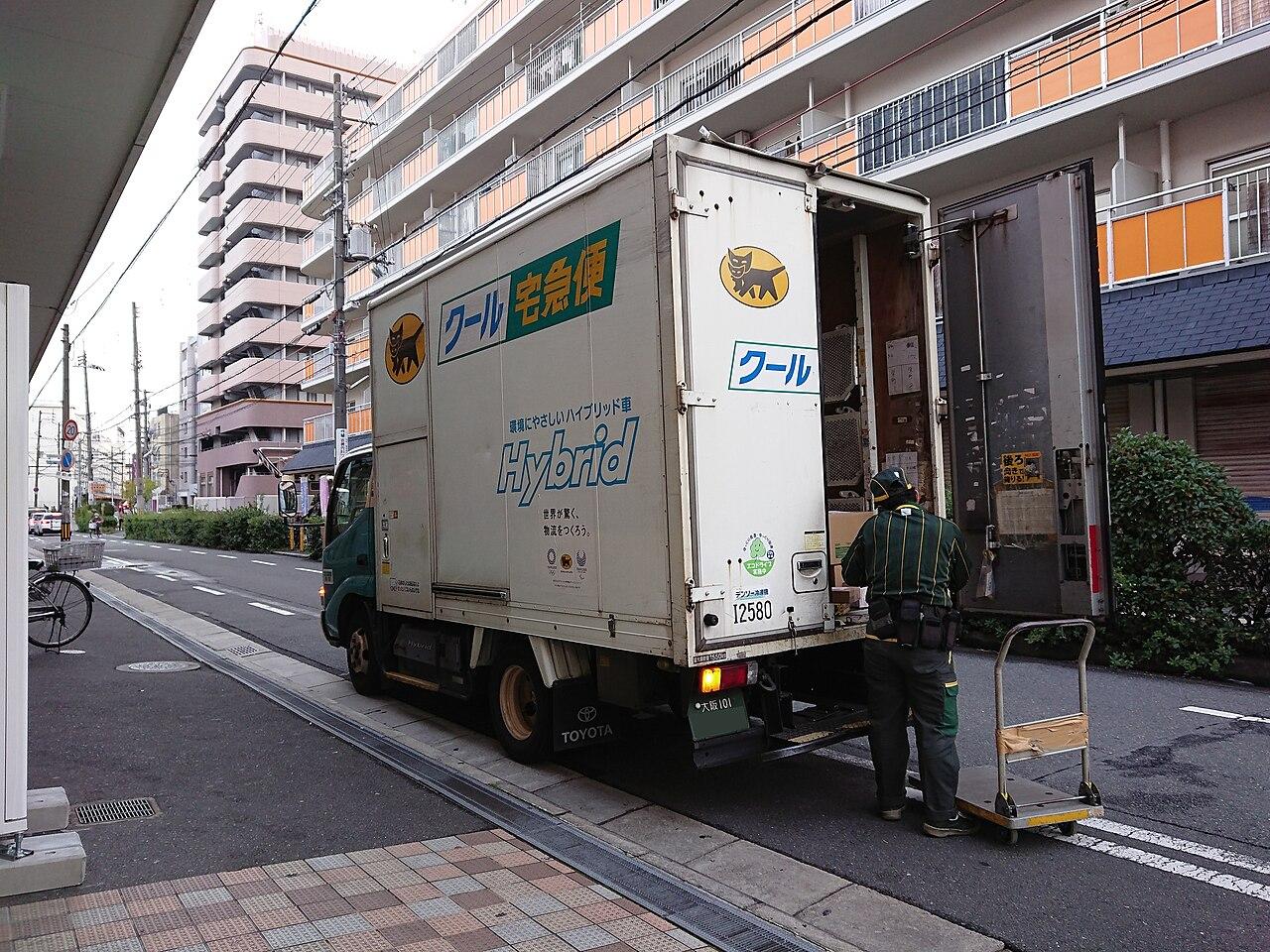
Photo: Rebirth10 / Wikimedia Commons, CC BY 3.0
Sending the bag to the airport
Airport TA-Q-BIN is a different product from a hotel-to-hotel shipment, and it is not the same thing as checking a bag with the airline. The suitcase goes to a partner counter at a participating airport, or from that counter back to an address in Japan.
For a bag going to the airport, Yamato's procedure is strict:
- Send it at least two days before the flight, or three days from some areas.
- It must arrive at the airport at least one day before departure.
- You collect it on the departure date. Yamato's condition is that you have a flight from that airport on the day you pick the bag up.
- You cannot choose a delivery time window on the way to the airport, and cash on delivery is not available in that direction.
- The departure date can be set as far as 10 days after the shipping date.
A handling fee of 660 yen, tax included, applies when the destination is an airport. Yamato's English airport page says the sample airport rates it prints already include that 660 yen, so do not add it a second time if the quote says it is inside the price. A counter-use fee of 660 yen is also charged at Kansai, Narita and Haneda. Yamato dates the Narita counter fee from 1 June 2025 and the Haneda fee from 1 July 2025. Ask which of those lines is already in the number on the screen.
Round Trip TA-Q-BIN is the return half. You drop the bag at the airport counter within one month of the outbound shipping date, without writing a new waybill or paying again at that counter. Yamato lists a 200 yen discount per parcel for the round-trip service. The return cannot use the ordinary sales-office pickup service, though you can address it to a Yamato sales office and collect it there. If you did not buy the round-trip product, you can still ship from the airport as a new parcel and pay the normal rate. On the return, Yamato's airport page adds an airport fee of 660 yen at Kansai. Treat Narita and Haneda as "check the counter," because the counter-use fee and the shipping fee are easy to mix up.
What has to stay in your day bag
Some items are refused on every route. Others are refused only when the truck route becomes a flight.
Do not put these in the forwarded suitcase:
- Cash, checks and other securities
- Credit cards and bank cards
- Your passport, or any document that is hard to replace
- A parcel whose contents total more than 300,000 yen, tax included
Aerosol cans, perfume and other liquids, lighters, and lithium batteries, including power banks, cannot go on routes that use aircraft. Yamato names flights between Okinawa and other prefectures, and between Hokkaido and Kyushu, Chugoku or Shikoku, plus some express services that fly in order to deliver the next morning. If a banned item is inside, or the contents are not clear, the parcel can come off the plane and arrive a day or more late.
From 31 December 2025, a customer without a contract with Yamato cannot send products that contain lithium batteries, such as laptops, phones, cameras and game consoles, by air. A truck route inside Honshu is not that rule. A service that might be flown is. Carry the power bank and the laptop when the next hop is Hokkaido, Okinawa, or a timed morning delivery that Yamato moves by air.
One suitcase, one spare bag
Pack medication, chargers, a change of clothes and the passport in a small bag you keep. The forwarded case is for what you can live without until the delivery date on the label.
Sagawa Express and Japan Post Yu-Pack also move suitcases, and some hotel desks use a partner other than Yamato. If the desk's quote is far above the table in this article, the gap is often the hotel fee, not a different Yamato cell. On a 7-day Japan itinerary with one hotel change, a single size 140 bag from Tokyo to Kyoto is 2,780 yen before that fee. That is a small price next to two large cases in a rush-hour station, and a bad price if the bag is a cabin case you could wheel yourself, or if you need the contents the same night.
The train ticket is a separate bill. A rail pass does not move luggage. The fare comparison for the trains is in Is the JR Pass worth it in 2026?. Ship the case on the calendar day before you ride, then check the label date once, out loud if the desk is busy, before you leave.
Sources checked 26 October 2026: Yamato cash rate PDF in force from 1 October 2025 (`kuronekoyamato.co.jp`, file `info_250501_1_1.pdf`), Airport TA-Q-BIN, airport procedure, how long delivery takes, prohibited items, and the TA-Q-BIN preparation page for the air-route limits on batteries and liquids.
Turn this into a plan
Ready to turn this into a real itinerary? Plan it in RoamerPlanner.
Start your own plan, no account neededBrowse sample trips