Italy in Spring: Weather and Crowds in Rome, Florence and Venice
October 28, 2026
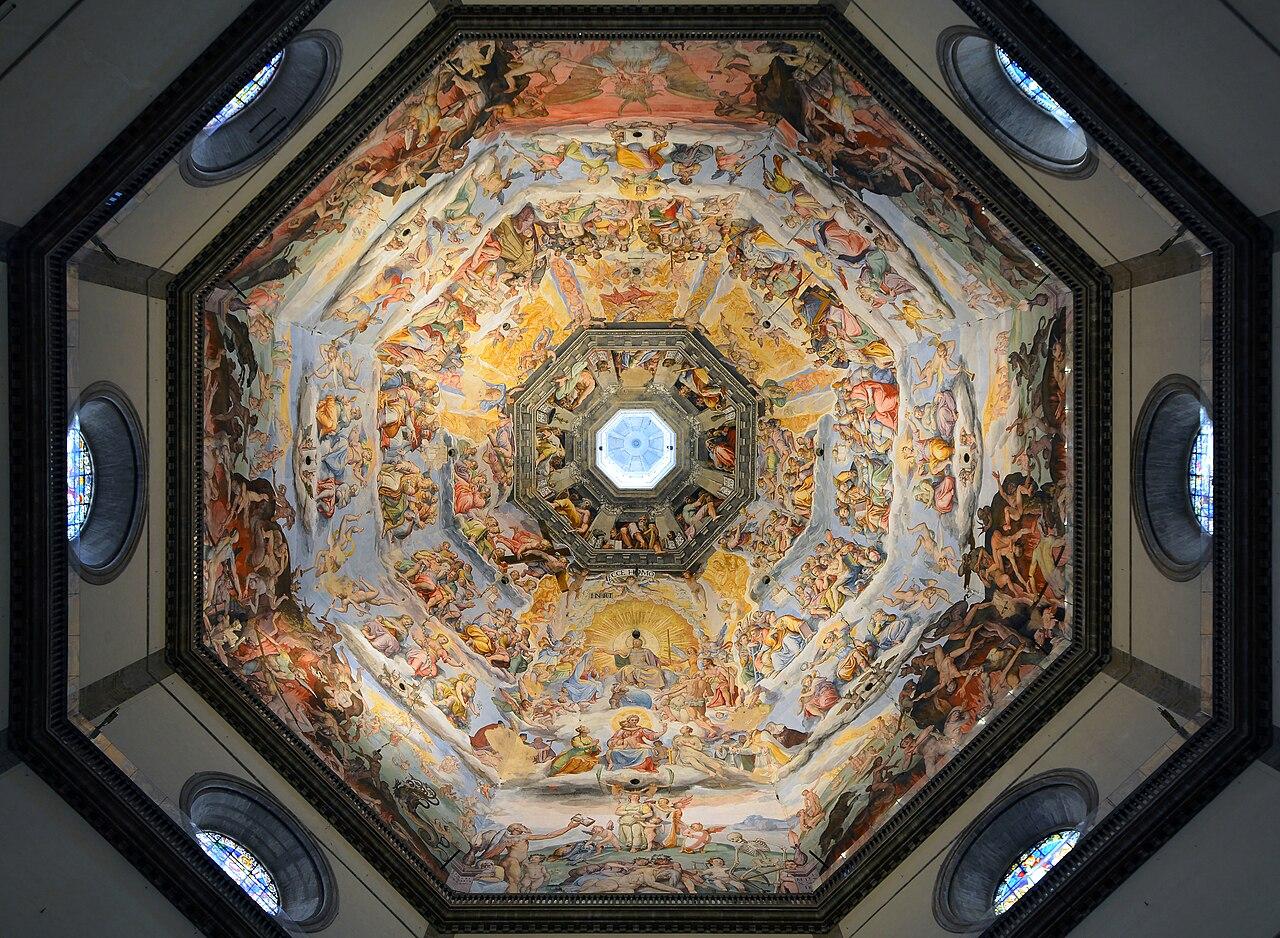
Italy in spring is three different climates in one season. Rome is already mild in March and warm by May. Florence stays cooler at night and wetter through April. Venice is the coldest of the three in March and the one most likely to feel like winter if you arrive for Easter. The 2027 holiday sits at the end of March, which matters more for crowds than for the monthly averages.
Italy in spring, city by city
The figures below are 1991-2020 normals from Italy's submission to the World Meteorological Organization, as published in the NCEI station files. Rome is Ciampino (16239), Florence is Peretola (16170), and Venice is Tessera (16105). All three are airport stations. The historic centre is not identical: Florence's centre often feels a little warmer than Peretola, and Venice's alleys are less windy than the airport on the lagoon edge. Use the numbers for packing and for choosing a month, not as a forecast for a single afternoon.
Rome
March at Ciampino: mean maximum 15.8°C, mean minimum 5.9°C, mean 10.7°C. Rain 59 mm on about 6.9 days with at least 1 mm. Sunshine about 203 hours.
April: mean maximum 18.8°C, mean minimum 8.6°C, mean 13.6°C. Rain 69 mm on about 7.4 days. Sunshine about 221 hours.
May: mean maximum 23.3°C, mean minimum 12.6°C, mean 18.0°C. Rain 57 mm on about 5.5 days. Sunshine about 277 hours. May is the first month that feels like a long outdoor day without a coat on your arm the whole time. March still has cool nights. A room with a decent blanket matters more than air conditioning.
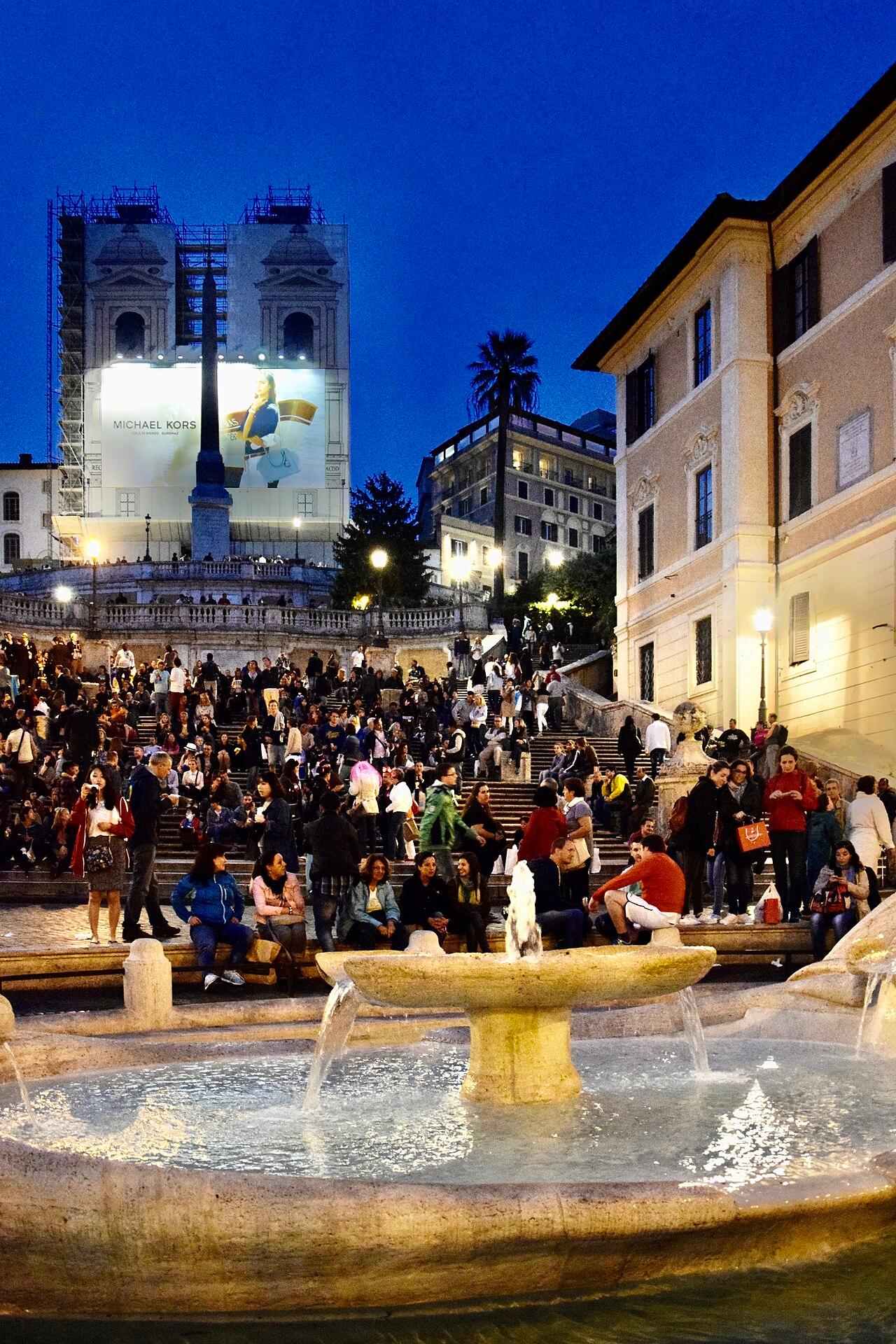
Photo: Ank Kumar / Wikimedia Commons, CC BY-SA 4.0
Florence
March at Peretola: mean maximum 16.2°C, mean minimum 5.1°C, mean 10.7°C. Rain 61 mm on about 7.0 days with at least 1 mm.
April: mean maximum 20.0°C, mean minimum 8.1°C, mean 14.0°C. Rain 67 mm on about 8.7 days. This is the wettest of the three spring months here, and the rain comes as showers more than as a week of grey. The Uffizi queue does not care. Book the time anyway.
May: mean maximum 24.3°C, mean minimum 11.9°C, mean 18.3°C. Rain 63 mm on about 7.6 days. Days are warm enough for the Oltrarno in shirtsleeves, and evenings still drop. A light layer for dinner outdoors is the piece people leave at home.
The regional agency LaMMA publishes a Florence table drawn from Aeronautica Militare data for the same 1991-2020 period. Its April mean maximum is 19.9°C and its rainfall 67 mm, in line with the WMO file. Where the two differ by a tenth, this guide follows the WMO station file.
Venice
March at Tessera: mean 9.0°C, mean minimum 4.4°C. The published daily maximum normal for March is missing in that WMO file, so this guide does not invent one. Rain 60 mm on about 5.2 days with at least 1 mm. Early March can feel raw on the water even when Rome is pleasant at lunch.
April: mean maximum 17.6°C, mean minimum 8.8°C, mean 13.3°C. Rain 70 mm on about 8.0 days. This is the wettest spring month of the three at this station.
May: mean maximum 22.2°C, mean minimum 13.5°C, mean 18.2°C. Rain 80 mm on about 7.5 days. Warmer, and not dry. A waterproof layer still earns its place on a boat day.
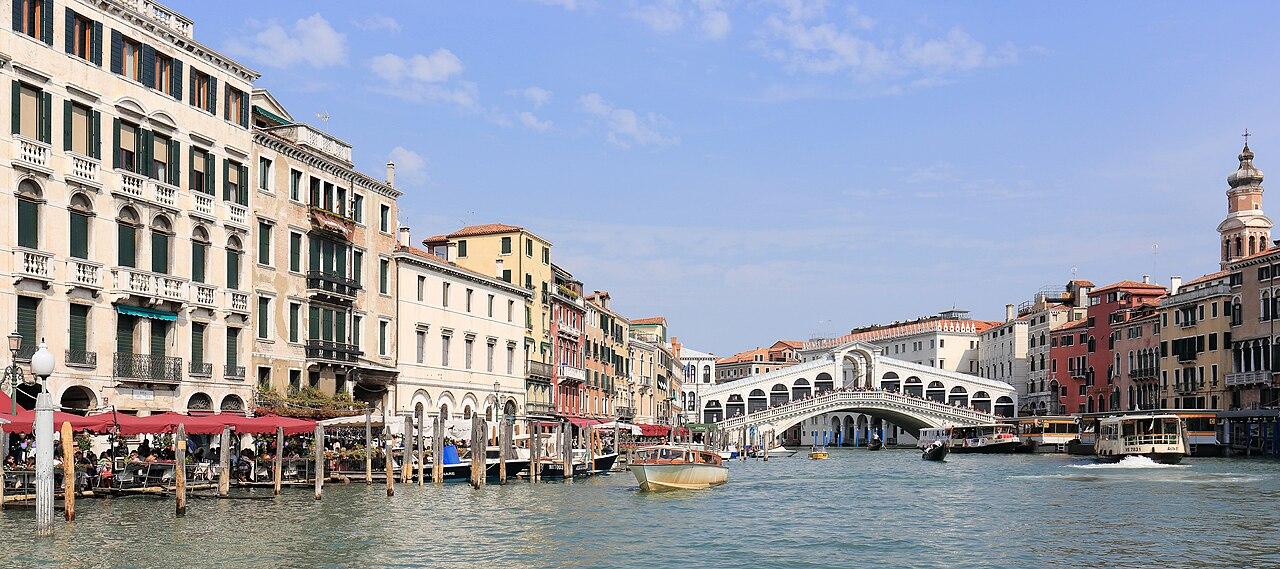
Photo: Martin Falbisoner / Wikimedia Commons, CC BY-SA 4.0
Crowds follow the holiday, not the blossom
Western Easter in 2027 is Sunday 28 March, with Easter Monday on 29 March. That Monday is a public holiday in Italy. The last week of March is the crowd spike for this particular spring, especially in Rome, where the religious calendar and the tourist calendar are the same week. Florence and Venice feel it too, because people add them to a Holy Week trip or flee Rome for the Monday.
25 April is Liberation Day, every year. In 2027 it falls on a Sunday. Do not assume an extra weekday off unless a specific notice says so. 1 May is Labour Day, a Saturday in 2027. Bridges around those dates depend on how schools and employers treat the weekend, and the 2027 school calendar was not confirmed from a ministry page for this article. If you need a quiet museum week, avoid the days touching Easter and check the school break before you call mid-April empty.
A useful split:
- March before Palm Sunday (21 March 2027): cooler, fewer holiday crowds, shorter evenings. Better if you like churches without a cordon and you do not mind a coat.
- Holy Week and Easter Monday: Rome first, everything booked, prices up. Go then only if the ceremonies are the reason.
- April after Easter Monday: the practical shoulder. Weather is unsettled, especially in Florence and Venice, and the holiday peak has passed. This is the month to choose if you want all three cities without standing in a Good Friday crowd.
- May: warmer and busier, with longer days. Book the timed tickets earlier than you would in early April. It is still short of July heat at these stations.
There is no official "best week" ranking from the tourism ministry that this guide can quote. The choice is which problem you would rather have: cold evenings, holiday crowds, or a higher chance of a warm afternoon with a fuller square.
What to book before you argue about the weather
Timed entry is the part that sells out, not the weather. For a first trip the usual pressure points are the Vatican Museums, the Colosseum and Forum, the Uffizi, and Accademia or St Mark's in Venice. Each uses its own official ticket channel. Reseller pages that add a large fee are optional, not required. Prices change. Read them on the day you pay, and do not trust a number printed in an old guide.
Trains between the three cities are frequent and do not need a rail pass for a simple Rome-Florence-Venice line. Buy the dated ticket if you want a reserved seat on a Frecciarossa. Regional trains are the cheaper, slower backup when a high-speed train is priced like a flight. The walking order inside each city is already laid out in the 10-day Italy itinerary and in 10 days in Italy. Spring does not change the geography. It changes how long you will happily stand outside, and whether Easter Monday deletes a museum.
If Rome is the only city, the 3 days in Rome itinerary is the short version. In late March 2027, swap any Vatican Museums visit off Easter Sunday. The museums' standing rule closes them on Sundays, and the free last Sunday of March 2027 collides with Easter, so it does not become a free opening. Details of that week sit with the Easter planning, not with the climate table.
You can keep the three-city order in RoamerPlanner and move a museum when a Holy Week closure appears, instead of rebuilding the route.
How to pack for all three without a second suitcase
One coat that blocks wind, not a down parka and not a summer jacket alone. March in Venice is the reason. May in Rome is why it should pack small.
A layer you can take off at midday. The gap between the morning minimum and the afternoon maximum is often around 10°C in these normals. Churches are cool even when the square is warm. Bare shoulders are turned away at basilica doors in every month. A scarf is the lightest fix.
Shoes that cope with wet stone. April's rainy-day counts are not a monsoon. They are enough to make smooth marble and Venice paving slick. A second pair is worth it if the first pair is fashion over grip.
An umbrella that fits in a day bag, and a hat for May afternoons in Rome. Sunscreen matters in May more than in March. You do not need formal rain trousers for a city trip.
A sane order if you have ten days
South to north matches the temperature gradient in March and April: Rome while you are still willing to walk in the cool, Florence in the middle, Venice last when you care most about a mild day on the water. North to south also works if your flight home is from Rome. Do not put Venice on the coldest days of a March trip if the point of Venice, for you, is sitting outside. Put it in May, or accept the coat.
Two nights is tight in each city once you count train days. The ten-day outline exists so you do not discover that on the platform. Spring rain is a reason to keep one indoor morning unbooked, not a reason to add a fourth city.
Day trips from Rome to Florence read well on a map and feel short only on the fast train. In Holy Week the seats go first. If Easter 2027 is inside your Rome block, do not also day-trip on Good Friday or Easter Sunday.
Short FAQ
Is April in Italy rainy? At these three stations, April is a mid-range rain month, not the driest and not the storm season. Florence and Venice show more days with at least 1 mm than Rome. Pack for showers. Do not cancel the month for them.
Does spring mean warm sea swimming? Not in Rome, and not as a plan for Venice. These are city trips. Sea temperatures lag the air. If a beach day is the goal, this is the wrong season and the wrong itinerary.
Which city is quietest in spring? None of the three is quiet in Holy Week. Outside that week, early March is the calmer end and May the busier end. "Quiet" still means queues at the five or six headline tickets.
Are the airport figures good enough? They are the official normals. They will not catch a single warm week or a flood tide in the lagoon. Check a forecast three days out, and keep the ticket bookings tied to opening hours rather than to a hoped-for sky.
Sources
Checked 24 October 2026. WMO 1991-2020 climate normals via NCEI station files: Roma/Ciampino 16239, Firenze/Peretola 16170, Venezia/Tessera 16105 (March daily maximum normal for Tessera not published in that file). LaMMA Florence 1991-2020 table, citing Aeronautica Militare, used as a cross-check. Easter Sunday 28 March 2027 from the USCCB liturgical calendar following the General Roman Calendar. Italian school-holiday dates for spring 2027 were not confirmed from a ministry calendar. Venice high-water rules for a specific week are not covered here.
Cover photo: Livioandronico2013 / Wikimedia Commons, CC BY-SA 4.0
Turn this into a plan
Ready to turn this into a real itinerary? Plan it in RoamerPlanner.
Start your own plan, no account neededBrowse sample trips