Chiang Rai in Cool Season: White Temple, Phu Chi Fa Mist and a 3-Day Plan
November 18, 2026
Planning Chiang Rai in cool season is mostly about mornings. From December into January the north of Thailand has its clearest, freshest weather, the mountain viewpoints fill with mist at dawn, and the temples outside town are pleasant to walk around in the middle of the day. It is also the busiest stretch of the year, so a little planning goes a long way. This guide covers when the cool season is at its best, what the main sights cost now, how to fit in a Phu Chi Fa sunrise, and a simple 3-day plan.
For a full outline you can copy and edit, see the 3 days in Chiang Rai sample trip.
When Chiang Rai in cool season is at its best
The cool season in northern Thailand runs roughly from November to February. December and January are the coldest months, with chilly early mornings in the mountains and mild, sunny afternoons in town. That is when the famous sea of mist at viewpoints like Phu Chi Fa is most likely.
Two things to keep in mind:
- Mountain mornings are cold. Town feels like a light-jacket evening. A viewpoint at dawn can feel close to freezing to someone used to Bangkok. Bring a warm layer, a hat and something for your hands.
- The season ends with smoke. From around February, crop burning across the north can bring haze, and March and April are often the worst months for air quality. If clear views matter to you, aim for December or January. Our guide to Chiang Mai's burning season explains the pattern, which is similar in Chiang Rai.
Weekends and Thai public holidays, especially the New Year period, bring many domestic visitors. Rooms near the viewpoints are the first to go, so book those early.
What's on this cool season
The province's big winter event is the Chiang Rai ASEAN Flower Festival 2026, announced by the Chiang Rai Provincial Administrative Organisation for 24 December 2026 to 10 January 2027 at the riverside garden on the Kok River in town. This year's theme is a "sweet garden" with flower displays, lights and photo zones in three areas, and the organisers have linked it with a site in Mae Sai district in the far north. Evenings are the nicest time to visit, when the lights are on and the air is cool.
In town, the Golden Clock Tower at the centre has a short music and light show in the evenings, and the night bazaar close by is an easy dinner stop. Both work well after a day out.
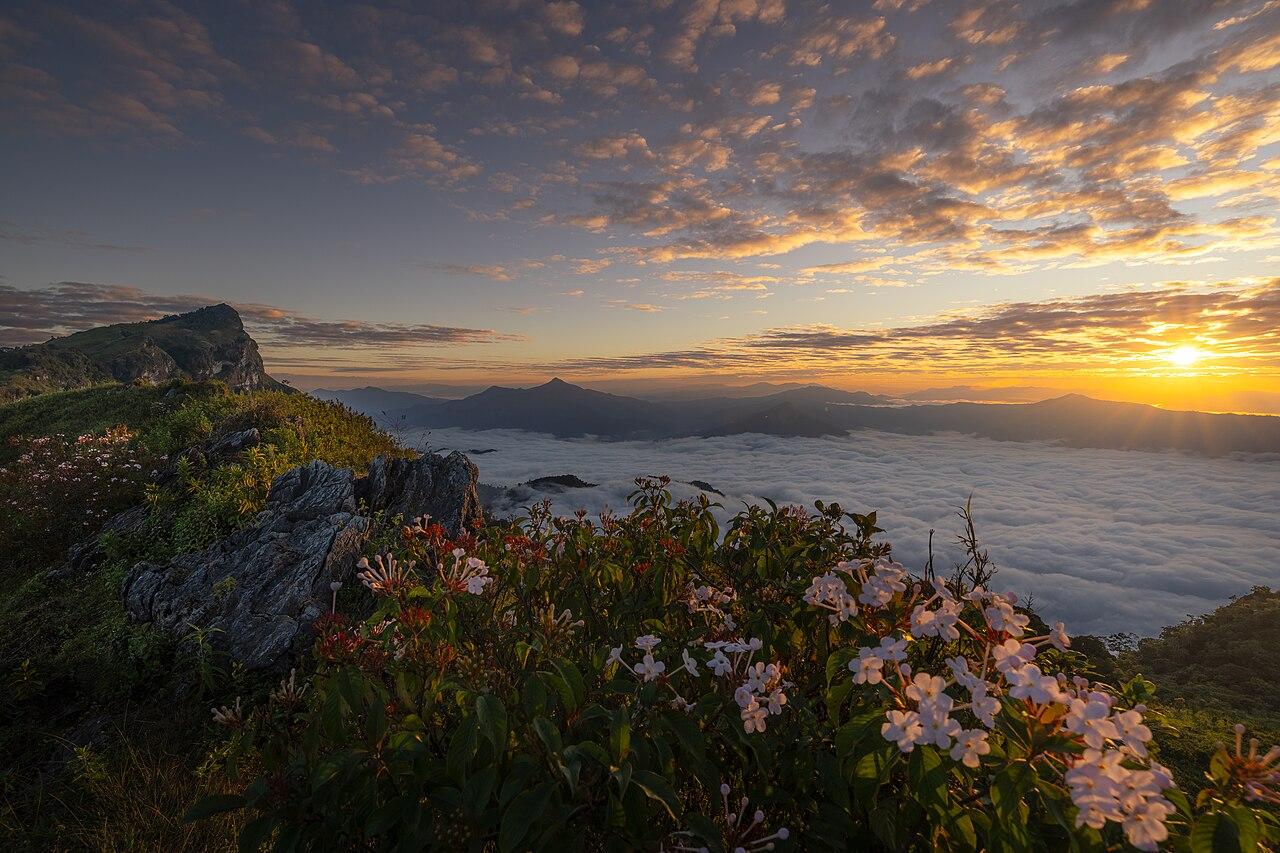
Photo: PONGSATHORNCH09041980 / Wikimedia Commons, CC BY-SA 4.0
Phu Chi Fa sunrise: how to plan it
Phu Chi Fa is a cliff-edge viewpoint on the Thai side of the border with Laos, in the mountains east of Chiang Rai city. On a good morning you look down over a valley filled with cloud as the sun comes up behind the hills.
- Getting there. It is a long drive, usually around two to three hours from Chiang Rai city. Most people either stay overnight in the villages below the viewpoint or join a tour that leaves town in the middle of the night. Staying nearby makes for a much calmer morning.
- The last stretch. From the car park it is a short but steep walk up to the top. In peak season local pickups shuttle people part of the way. Allow time and bring a light.
- No guarantee of mist. Mist depends on the night's temperature and humidity. December and January give you the best odds, but some mornings are clear and some are fogged in completely. If you can, give yourself a spare morning.
- Crowds. On holiday weekends the viewpoint can be very busy. A weekday visit is noticeably quieter.
If the drive feels like too much, Doi Tung and the Mae Fah Luang garden north of town give you cool mountain air and good views with a shorter trip.
The main temples and what they cost
Chiang Rai's best-known sights are modern works rather than ancient ruins, which is part of what makes the city different from Chiang Mai.
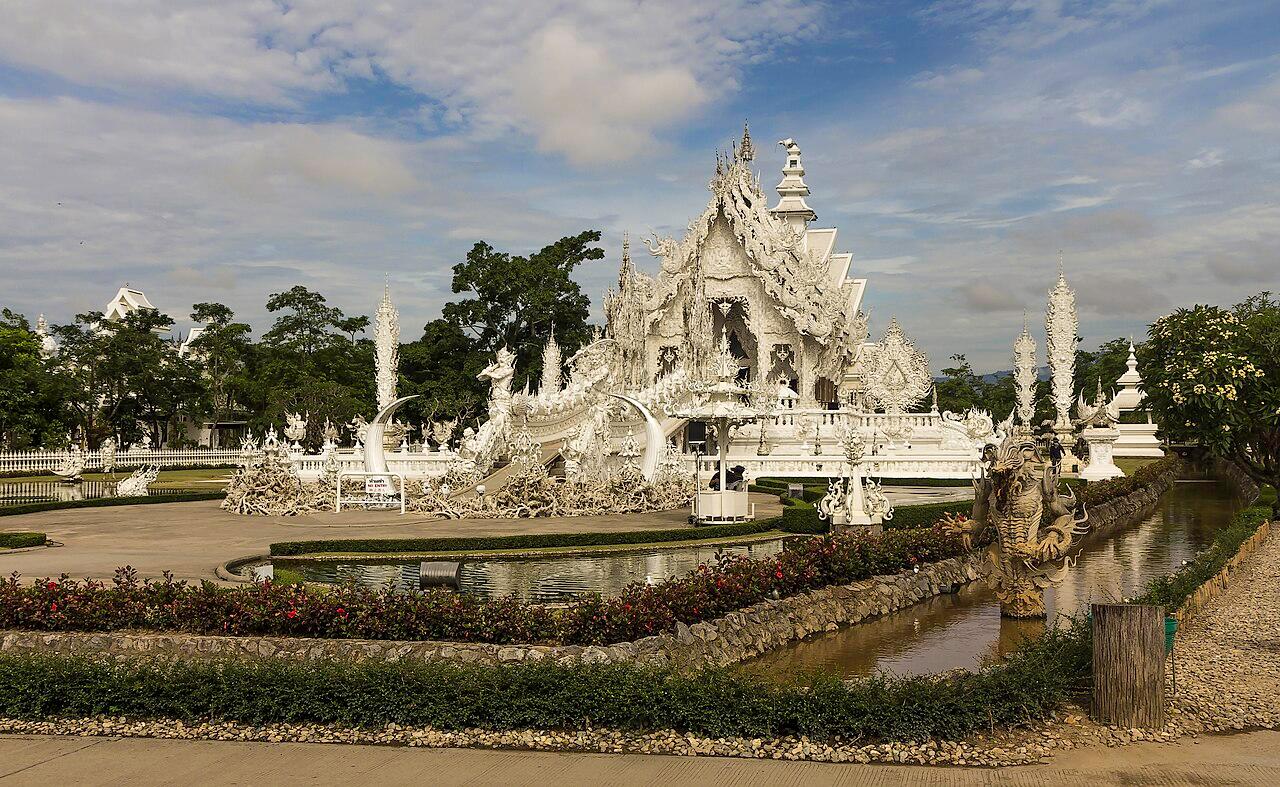
- Wat Rong Khun (White Temple). The all-white temple designed by artist Chalermchai Kositpipat is just south of town. Under a fee notice issued in January 2026, the entry fee for foreign visitors is 200 baht, which now includes the Cave of Art. Seniors aged 70 and over and children up to 120 cm enter free. It opens in the morning and closes late afternoon, a little later at weekends. Go at opening time to avoid the tour buses.
- Wat Rong Suea Ten (Blue Temple). A striking blue and gold temple on the edge of town, free to enter. It is a short visit, so pair it with something else.
- Baan Dam Museum (Black House). Artist Thawan Duchanee's collection of dark wooden buildings north of town. It charges a small entry fee and is closed in the evening.
- Singha Park. A large tea and farm park south of town, good for cycling and a slow afternoon in the cool season.
Fees and hours change from time to time, so check the latest notices before you go, especially at the White Temple.
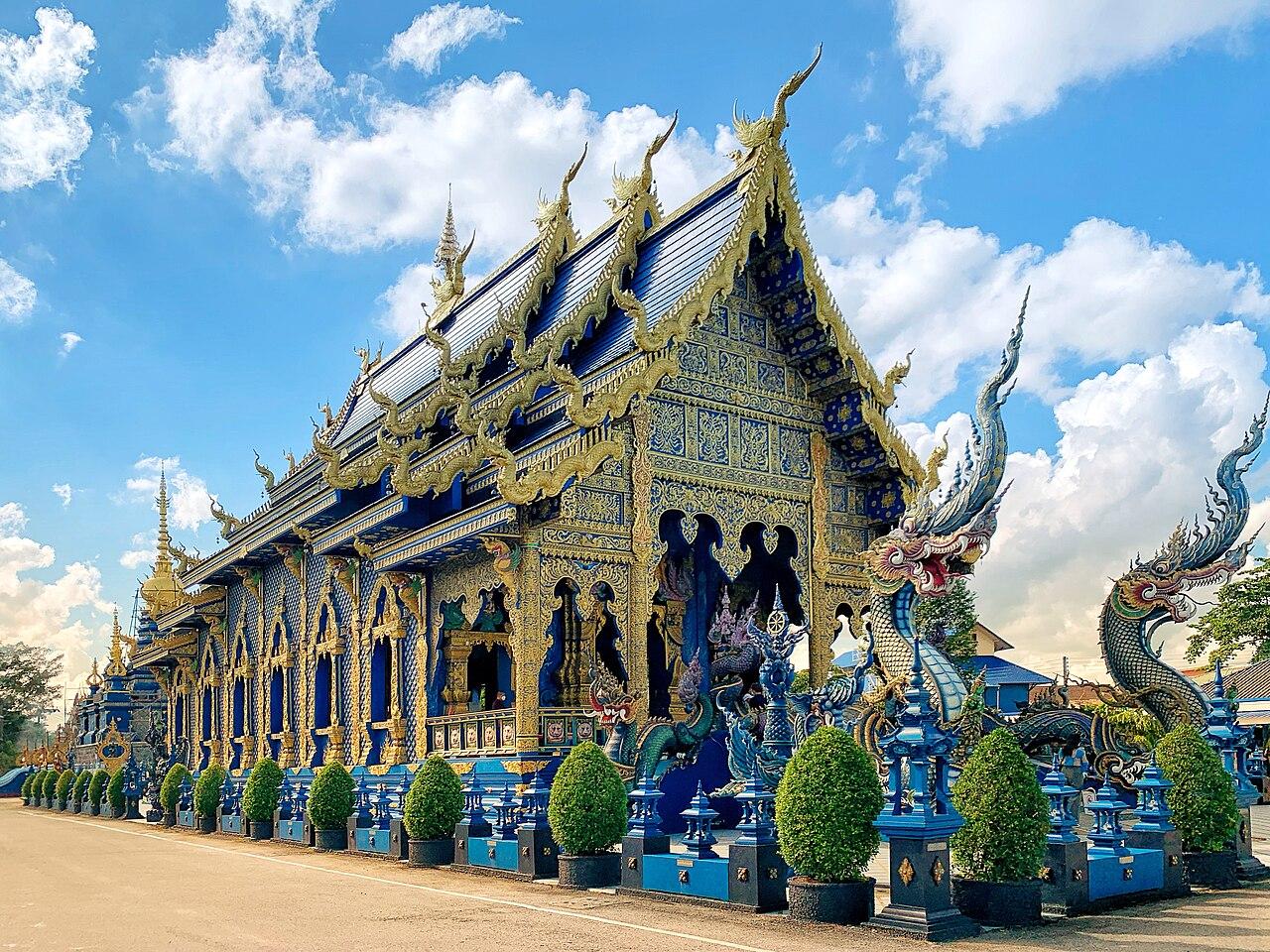
Photo: Chainwit. / Wikimedia Commons, CC BY-SA 4.0
A 3-day Chiang Rai plan for the cool season
Day 1: town and temples
- Morning: White Temple at opening time, then on to Singha Park for lunch and a bike ride if the weather is good.
- Afternoon: Blue Temple, which is quick and easy to add on the way back.
- Evening: the Clock Tower show and dinner at the night bazaar. During the flower festival, walk over to the riverside garden instead.
Day 2: Black House and the far north
- Morning: Baan Dam Museum.
- Midday: drive north to Doi Tung for the gardens and the royal villa area, or continue to the Golden Triangle viewpoint, where Thailand, Laos and Myanmar meet on the Mekong.
- Evening: back in town, or move to a guesthouse in the mountains if you want to do Phu Chi Fa the next morning.
Day 3: Phu Chi Fa sunrise
- Before dawn: walk up to the viewpoint and wait for the light.
- After sunrise: breakfast in the village, then a slow drive back, stopping at viewpoints along the road.
- Afternoon: rest, or head to the airport or bus station.
If you only have two days, skip the Golden Triangle and keep the White Temple and Phu Chi Fa.
Getting to Chiang Rai
- By air: Mae Fah Luang-Chiang Rai International Airport has direct flights from Bangkok and is a short drive from town.
- By bus from Chiang Mai: regular buses run between the two cities and take a few hours. It is a simple way to link the two, and many people combine them in one trip.
- Getting around: Grab and local taxis work in town. For the temples outside the centre and the mountains, a car with driver or a rental car is the easiest option. Mountain roads are steep and winding, so take care if you drive yourself.
If you are coming from Chiang Mai, our 3 days in Chiang Mai itinerary pairs well with this plan, and our guide to day trips from Chiang Mai explains why Chiang Rai is better as an overnight stay than a rushed day trip.
What to pack
- A warm layer and a hat for mountain mornings
- Long trousers or a long skirt and covered shoulders for temples
- Sunscreen for the bright, dry afternoons
- A small torch for the Phu Chi Fa walk
- Cash for small entry fees and village stalls
Quick FAQ
Is December or January better? Both are good. December is busier around the New Year holiday. January is a little quieter after the first week and often just as clear.
Can I see Phu Chi Fa on a day trip from Chiang Mai? Technically yes, but it means leaving in the middle of the night and many hours in a car. Staying in Chiang Rai or near the viewpoint is much more comfortable.
Is Chiang Rai worth it if I have already seen Chiang Mai? Yes, if you like art, mountain scenery and a smaller, slower city. The temples here feel very different.
You can keep your Phu Chi Fa night, temple order and bus or flight details together in RoamerPlanner, then share the plan with whoever is travelling with you.
Sources: Wat Rong Khun fee notice for foreign visitors (January 2026, via Chiang Rai 108); Chiang Rai Provincial Administrative Organisation and TAT Chiang Rai announcement of the Chiang Rai ASEAN Flower Festival 2026 (via Nakorn Chiang Rai News, 30 October 2026). Checked 13 November 2026.
Cover photo: Stefan Fussan / Wikimedia Commons, CC BY-SA 3.0
ดูบทความและแพลนเที่ยวไทยทั้งหมด
ทริปที่คัดลอกไปใช้ได้
แผนเที่ยวรายวันพร้อมใช้สำหรับที่นี่ คัดลอกได้ฟรีแล้วปรับให้เข้ากับทริปของคุณ
เปลี่ยนบทความนี้เป็นแผนทริป
อยากเอาเรื่องนี้ไปใส่ในแพลนเที่ยวจริงไหม วางแผนต่อใน RoamerPlanner ได้เลย
เริ่มวางแผนของคุณเอง ไม่ต้องสมัครก่อนดูทริปตัวอย่าง