Langkawi in Dry Season: Cable Car, Mangroves and Duty-Free Island Days
November 19, 2026
Langkawi is at its most reliable in the dry season, roughly December to March, when the sea on the west coast is calm, boat trips run most days and the views from the cable car are clearer. It is an easy island to plan: one main airport, a handful of beach areas, and a short list of sights that fill three days well. This guide covers when to go, the current cable car ticket options, how the mangrove and island-hopping boats work, what duty-free status actually means for visitors, and a relaxed 3-day plan.
For a ready-made outline, start from our 3 days in Langkawi sample trip and adjust it to your flight times.
When to visit Langkawi
Langkawi sits in the Andaman Sea near the Thai border and shares the same pattern as Phuket and Koh Lipe:
- December to March: the driest and calmest stretch. Most visitors come now, and school holidays and Chinese New Year (6 February in 2027) push up room prices.
- April to May: hotter, with more afternoon showers starting. Still workable and often cheaper.
- June to November: the wetter southwest monsoon. Rain usually comes in bursts rather than all day, but seas are rougher and some boat trips may not run.
If you are combining Langkawi with Thai islands, the ferries across to Koh Lipe operate mainly in the dry season. Our Koh Lipe season guide explains how that crossing works.
Getting to Langkawi
- By air: Langkawi International Airport is on the west side of the island, close to Pantai Cenang. Direct flights run from Kuala Lumpur, Penang and Singapore, and the flight from KL takes around an hour.
- By ferry: boats run from Kuala Perlis and Kuala Kedah on the mainland to Kuah jetty on the east side of the island. Kuala Perlis is the shorter crossing. There are also ferries from Penang in some seasons, and crossings to and from Satun and Koh Lipe in Thailand.
There is very little public transport on the island. Most visitors use Grab, which works well, or rent a car. Driving is on the left and roads are generally quiet outside Kuah and Cenang.
Langkawi cable car and the Sky Bridge
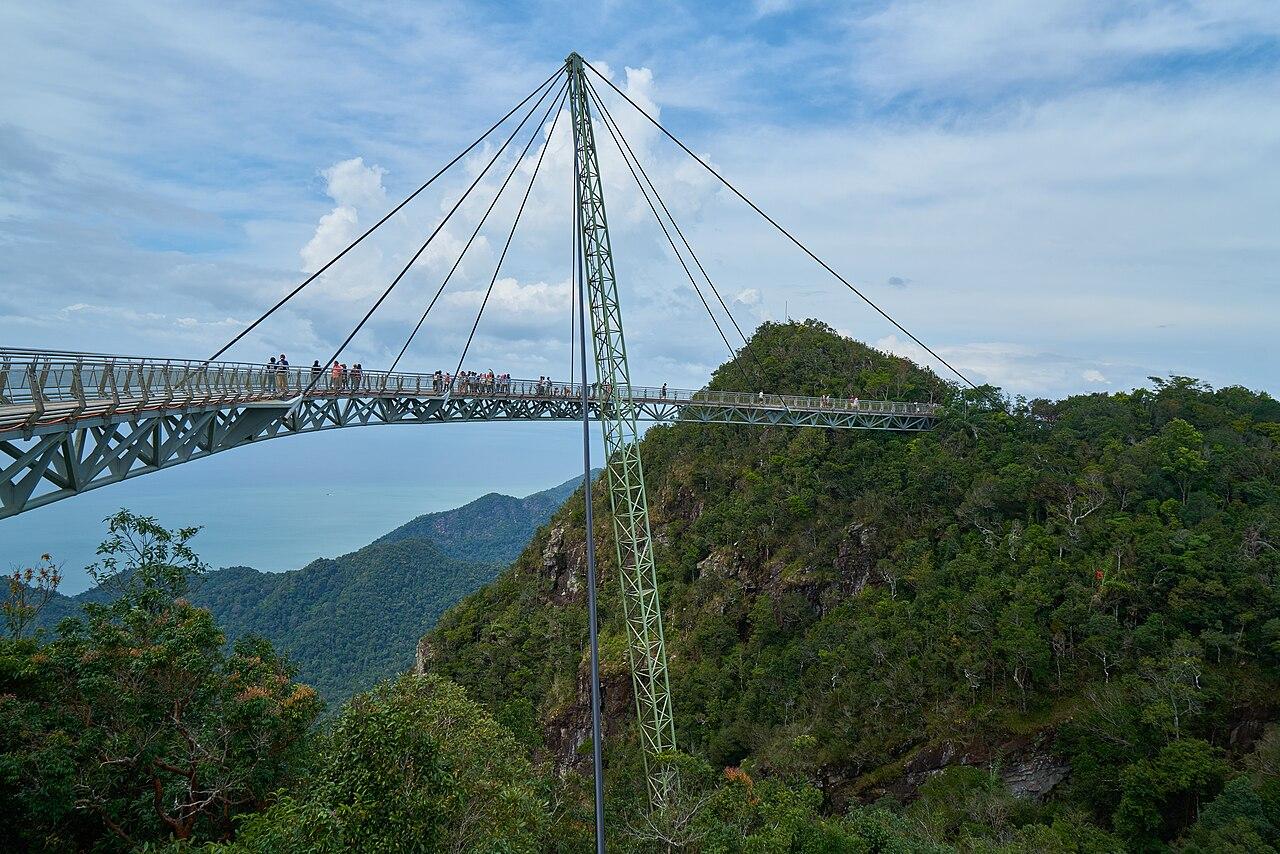
The SkyCab climbs from the Oriental Village at the foot of Gunung Mat Cincang to a top station at about 700 metres. On a clear morning you can see across to the Thai islands.
Ticket options, checked on the official booking site in November 2026 for non-Malaysian visitors:
- Standard SkyCab ticket: about RM85 for adults and RM65 for children aged 3 to 12. It includes three small attractions at the base village.
- SkyCab plus Sky Bridge combo: a few ringgit more, around RM89 for adults. The Sky Bridge, a curved walkway hanging over the forest, is not in the standard ticket. You reach it from the middle station by a forest path or a small inclined lift.
- Faster or premium cabins: glass-floor and private gondolas, plus an express queue add-on, cost more.
Prices for Malaysian residents are lower. Tickets are for a fixed date and time slot, and the cable car closes for regular maintenance, often opening later on one weekday each week. Check the official operating calendar the evening before, and go early, since mornings are clearer and queues are shorter.
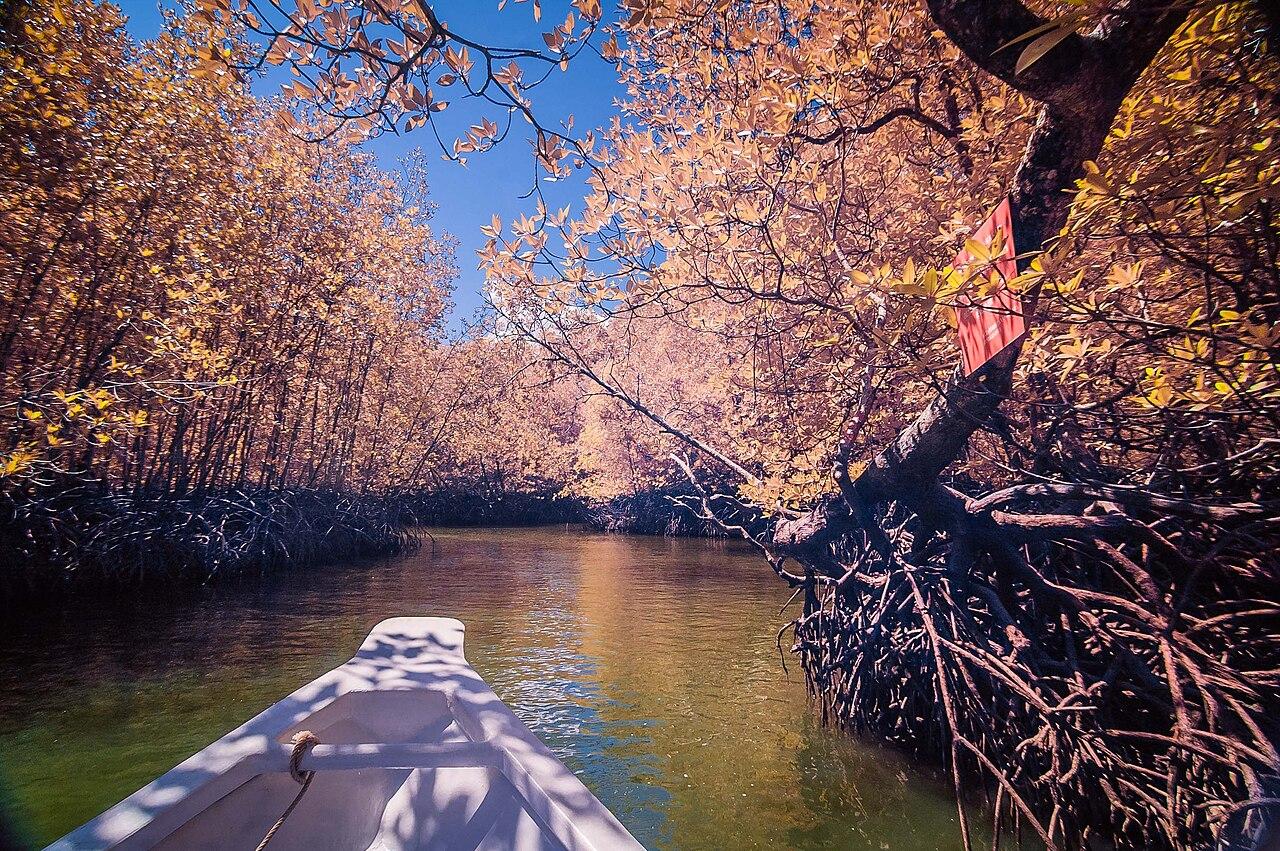
Photo: Leonardo0511 / Wikimedia Commons, CC BY-SA 4.0
Kilim mangroves and island hopping
Kilim Karst Geoforest Park
The northeast corner of Langkawi is a maze of limestone cliffs and mangrove channels, part of the island's UNESCO Global Geopark. Boat tours leave from the Kilim jetty and usually include:
- A slow ride through the mangrove channels.
- A stop at a bat cave.
- Eagle watching, where boats gather to see brahminy kites and white-bellied sea eagles. Responsible operators no longer feed the birds, so ask before you book.
- A floating fish farm, sometimes with a lunch stop.
Shared boats are cheaper, while a private boat for a small group gives you more control over timing. Morning tours are cooler and the light is better for photos.
Island hopping from Cenang
The classic island-hopping trip leaves from Pantai Cenang and stops at Pulau Dayang Bunting, with its freshwater lake for swimming, then a beach on Pulau Beras Basah and eagle watching on the way back. The lake has its own small gate fee, so carry cash. This is the trip that depends most on calm seas, which is another reason the dry season is the best time to go.
What duty-free means in Langkawi
Langkawi has been a duty-free island for decades. In practice, this matters most for:
- Alcohol, chocolate and tobacco, which are noticeably cheaper than on the mainland.
- Some household goods and cookware, which Malaysian visitors often stock up on.
Electronics and fashion are not always cheaper than in Kuala Lumpur or abroad, so compare before you buy. If you fly or sail on to mainland Malaysia, customs allowances limit how much duty-free alcohol and tobacco you can take with you, so check the current rules if you plan to buy a lot.
Also note that Malaysia charges a tourism tax on hotel rooms for foreign visitors, collected per room per night by the hotel. It is usually added at check-in rather than included in the online price.
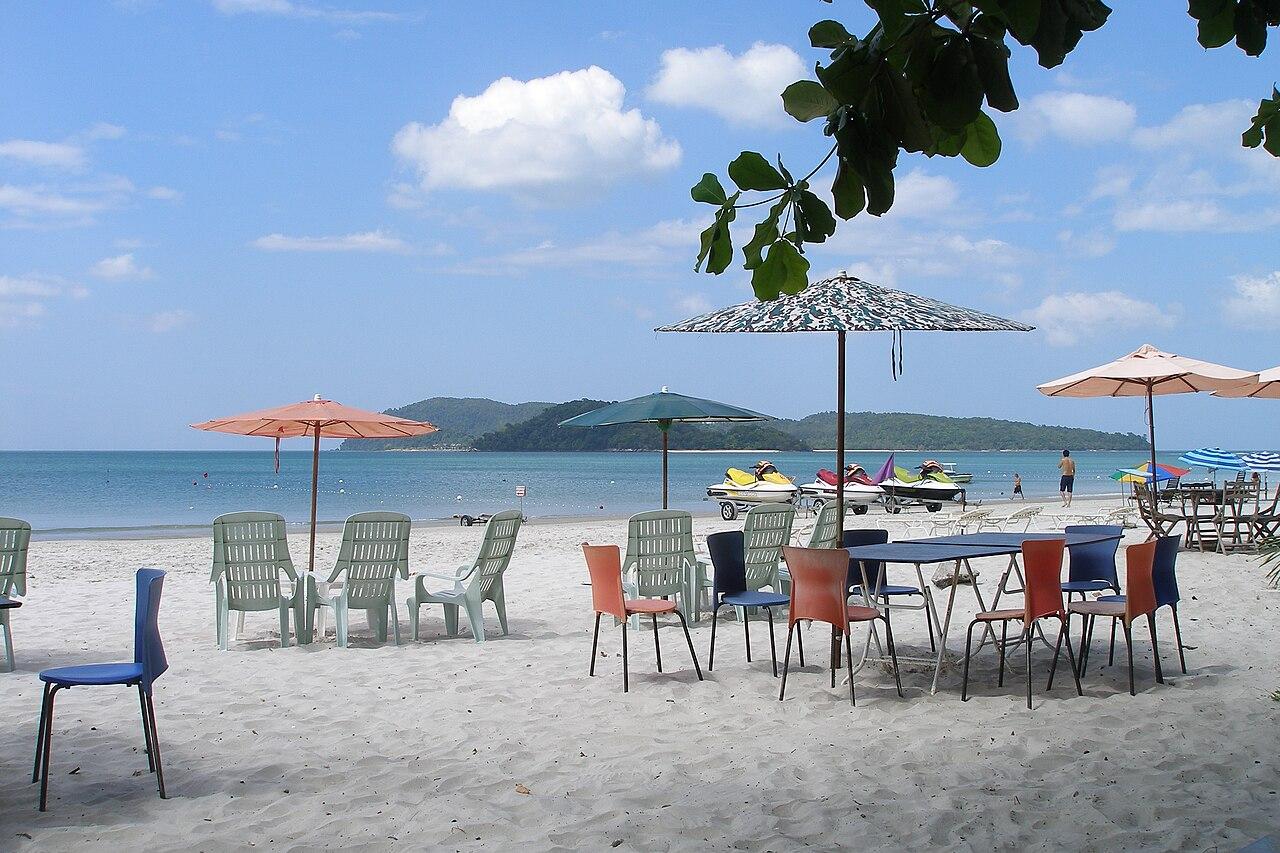
Photo: Khairil Yusof from Malaysia / Wikimedia Commons, CC BY 2.0
Where to stay
- Pantai Cenang: the busiest beach area, close to the airport, with the most restaurants and a long sandy beach. Good for a first visit.
- Pantai Tengah: just south of Cenang, a little quieter, with a mix of resorts and restaurants.
- Kuah: the main town and ferry port. Practical for shopping and ferries, but not a beach base.
- Datai Bay and Tanjung Rhu: quiet, upmarket resorts on the north coast, surrounded by forest. You will need a car or taxis to go anywhere else.
A 3-day Langkawi plan for the dry season
Day 1: arrive and settle into Cenang. Fly in, check in, and spend the afternoon on Pantai Cenang. Watch the sunset from the beach and eat at one of the night markets that rotate around the island on different days of the week.
Day 2: cable car and the west. Go up the SkyCab as early as your ticket allows, walk to the Sky Bridge if you bought the combo, and visit the Seven Wells waterfall nearby. In the afternoon, drive or take a Grab to Pantai Kok or relax back at the hotel.
Day 3: Kilim mangroves or island hopping. Choose one boat trip in the morning. Kilim works in most weather, while island hopping is best when the sea is flat. Finish with a visit to Kuah or the duty-free shops before your flight.
If you have a fourth day, add a relaxed day at Tanjung Rhu or a second boat trip.
Combining Langkawi with other places
Langkawi fits well into a longer Malaysia trip. Penang is a short flight or a seasonal ferry away, and George Town's food and heritage make a good contrast with the island. See our 3 days in Penang sample trip, and if you are travelling in February, our guide to Penang at Chinese New Year. Kuala Lumpur is the main hub for flights home; the 3 days in Kuala Lumpur sample trip covers the capital.
Quick FAQ
Is Langkawi good in December? Yes. It is the start of the best weather, but the Christmas and New Year weeks are busy and more expensive.
How many days do I need? Three days covers the main sights at a relaxed pace. Add a day if you want more beach time.
Do I need a car? Not necessarily. Grab is easy in the main areas. A car helps if you stay in the north or want to explore at your own pace.
Is the Sky Bridge always open? No. It closes in bad weather and during maintenance, so check the official operating calendar before you go.
You can keep your flights, ferry times and boat bookings together in RoamerPlanner, which helps when a boat trip has to move to another day.
Sources: official Langkawi SkyCab booking site and Panorama Langkawi operation calendar; Langkawi UNESCO Global Geopark information; Royal Malaysian Customs duty-free guidance; Malaysia tourism tax guidance. Checked 15 November 2026.
More about Malaysia: all articles and trip plans
Trips you can copy
Ready-made day-by-day plans for this place. Copy one for free and change it to fit your trip.
Turn this into a plan
Ready to turn this into a real itinerary? Plan it in RoamerPlanner.
Start your own plan, no account neededBrowse sample trips