El Nido Island Hopping: Tours A to D Compared for the Dry Season
November 19, 2026
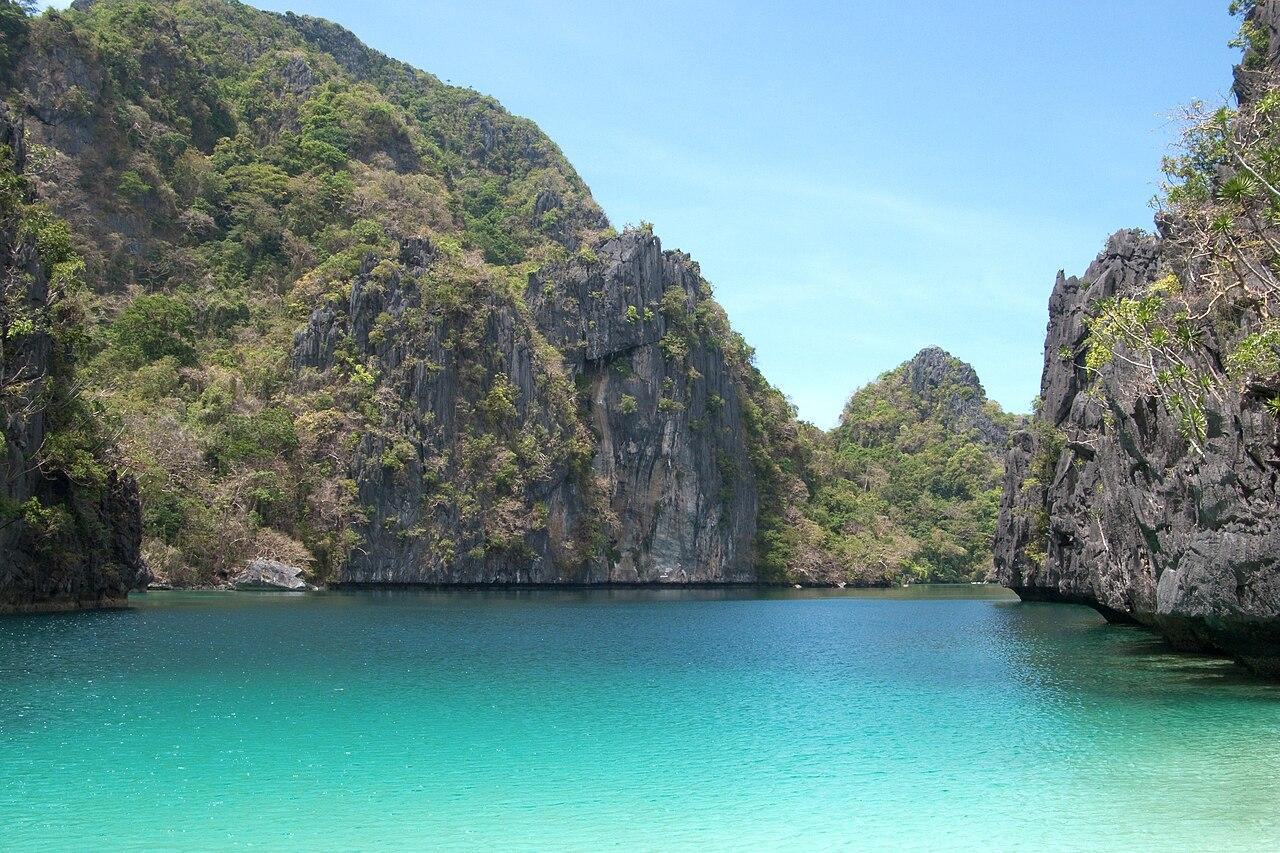
El Nido island hopping is the reason most people make the long trip to the top of Palawan, and the four standard boat routes, called Tours A, B, C and D, look confusingly similar on a shop board. They are not. Each one covers a different corner of Bacuit Bay, two of them include a lagoon with its own entry limits, and one is far more likely to be cancelled when the wind picks up. This guide compares the four tours, explains the fees you pay on top, and shows how to fit two or three of them into a short stay during the dry season, which usually runs from about December to May.
If you want a day-by-day outline to start from, our 4 days in El Nido sample trip follows the same order as the plan further down.
How El Nido island hopping works
The municipality sets the routes, so every agency sells the same four tours with only small differences in stops and lunch. Shared boats leave from the town beach or nearby Corong-Corong around 9 in the morning and come back in the late afternoon. A typical shared tour includes the boat, a guide, a buffet lunch on a beach and drinking water. Masks and snorkels are included by some operators and rented by others for a small extra charge.
You normally book the day before, at your hotel or at one of the many agencies on the main streets. There is little reason to prepay online weeks ahead for a shared tour, but private boats and peak weeks (Christmas to New Year, Chinese New Year and Holy Week) are worth arranging earlier.
The order of stops on the day is the guide's call. It depends on tide, wind and where the other boats are. That is normal and usually helps you avoid the worst crowding.
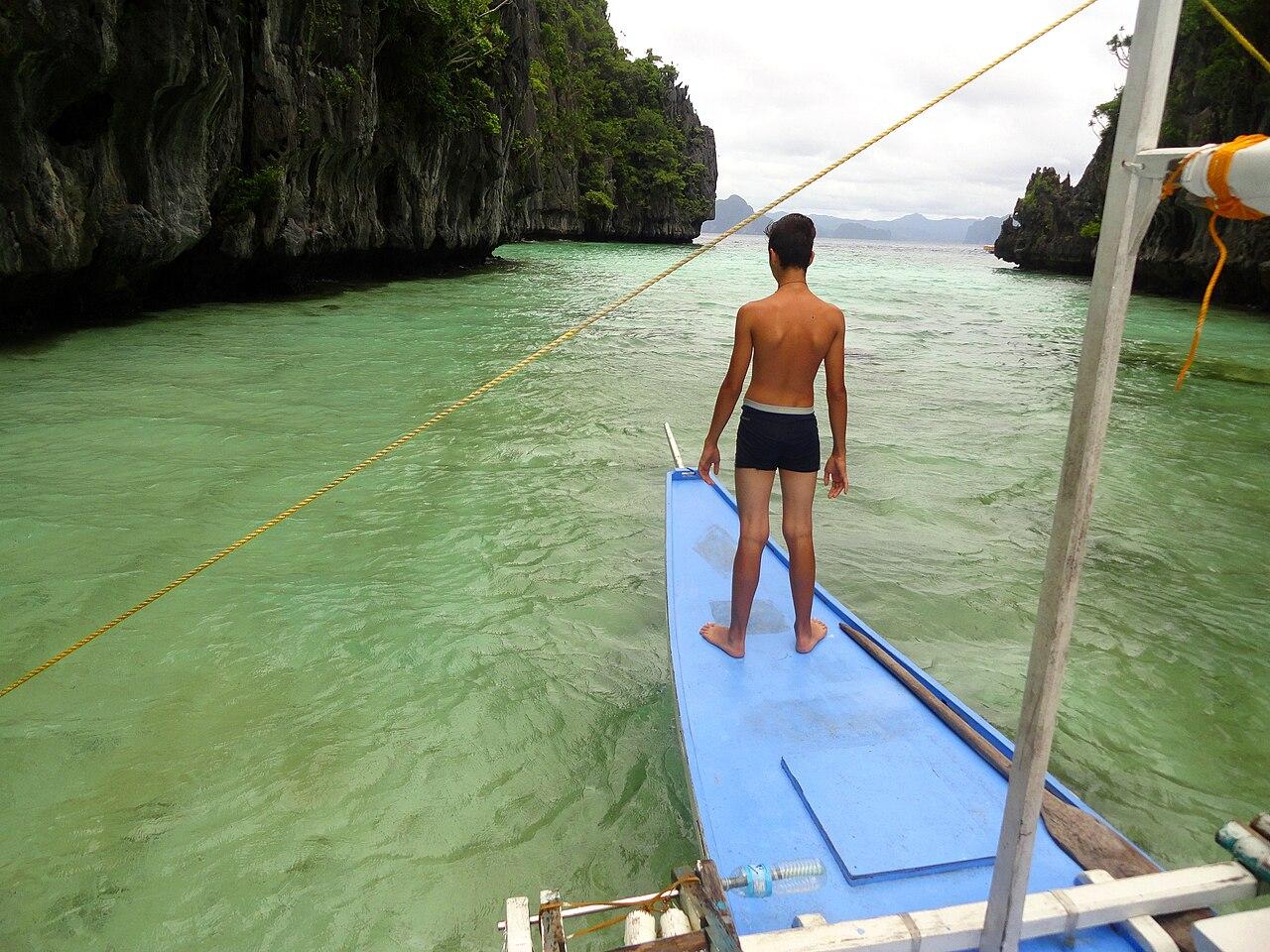
Photo: Fabio Achilli from Milano, Italy / Wikimedia Commons, CC BY 2.0
Tour A, B, C and D compared
Tour A: lagoons and the classic cliffs
Tour A is the one in most photos. It usually includes the Big Lagoon on Miniloc Island, the Secret Lagoon (you squeeze through a gap in the rock), Shimizu Island for snorkelling and Seven Commandos Beach. It is the most popular route and the most crowded, but the stops are close to town and inside the sheltered part of the bay, so it is the tour most likely to run in marginal weather.
Best for: a first tour, and anyone who only has time for one.
Tour B: caves and a sandbar
Tour B covers Snake Island, with a long curving sandbar that shows best at low tide, Cudugnon Cave, Cathedral Cave, Entalula Island and Pinagbuyutan. It has fewer famous names, which is why it is often calmer. There is a small privately charged entry at Cudugnon Cave.
Best for: a second day, families and people who prefer beaches and short walks to long swims.
Tour C: outer islands and the hidden beaches
Tour C heads further out to Helicopter Island, Hidden Beach, Secret Beach, Matinloc Shrine and Star Beach or Talisay Beach. It has some of the best snorkelling in the bay and needs the most swimming. It is also the most exposed route, so when the sea is rough it is the first tour to be stopped or changed. Matinloc Shrine charges its own small entry fee.
Best for: confident swimmers with a spare day in the plan.
Tour D: the quiet one with the Small Lagoon
Tour D usually includes the Small Lagoon on Miniloc, Cadlao Lagoon and a few beaches such as Paradise Beach and Pasandigan. It is the quietest of the four and pairs well with A, since the Small Lagoon is a calmer, kayak-only version of the same scenery. Some operators include the Small Lagoon on D and some do not, so check before you pay.
Best for: a slow day, or a second lagoon without the Tour A crowd.
What El Nido island hopping costs
Prices are set by the agencies and change with the season, so treat these as a guide checked in November 2026:
- Shared tours: roughly 1,300 to 1,700 Philippine pesos per person, with Tour C usually the most expensive. A few sellers quote more because they include the fees.
- Eco-Tourism Development Fee: 400 pesos per visitor, paid once in cash and valid for about 10 days of tours. Keep the receipt, because you will be asked for it again.
- Lagoon fees: about 200 pesos per person for the Big Lagoon and the same for the Small Lagoon, collected separately for the protected area.
- Kayak rental: a few hundred pesos per kayak inside the lagoons, paid on the spot.
- Private boats: from roughly 13,000 pesos per boat for a day, which can make sense for a group of six or more and lets you leave earlier than the shared fleet.
Bring enough cash. Card payment is patchy outside the bigger operators, and the town ATMs can run low at weekends.
Lagoon slots
The Big Lagoon and Small Lagoon run on time slots with a limit on visitors and kayaks per slot, set by the protected area board, and agencies book these on your behalf. You cannot visit both lagoons on the same day. If an agency cannot get a lagoon slot, it may offer a version of Tour A or D without it at a lower price. Ask which version you are buying.
When to go: the dry season
The calmest and driest months are usually from about December to May. The northeast monsoon, called amihan, can bring windy days from December to February, and those are the days when Tour C is most often cancelled. February to April tends to have the steadiest sea and the most reliable boat days. March and April are also the busiest and most expensive months, and Holy Week fills the town with domestic travellers. In 2027 Easter Sunday falls on 28 March.
From June to October, the southwest monsoon brings more rain, more swell and more cancelled tours. Rooms are cheaper, but you need more spare days for the same number of boat trips.
Getting to El Nido
There are two usual ways in:
- Fly to Lio Airport, a few kilometres north of town. Flights from Manila no longer leave from NAIA. Since the end of March 2026, Cebu Pacific's turboprop flights to El Nido use Clark International Airport, about 90 kilometres north of Metro Manila, so allow time for the road trip to Clark. There are also flights from Cebu and a few other islands.
- Fly to Puerto Princesa and take a van or bus north. The road trip takes about five to six hours. Shared vans are cheap and run from early morning, and most arrive at the transport terminal in Corong-Corong rather than in town.
The fast ferry from Coron is another option if you are combining the two, but it depends on the weather.
Philippine immigration uses the free online eTravel form for arrivals. Fill it in within the few days before your flight on the official government site, not a paid lookalike.
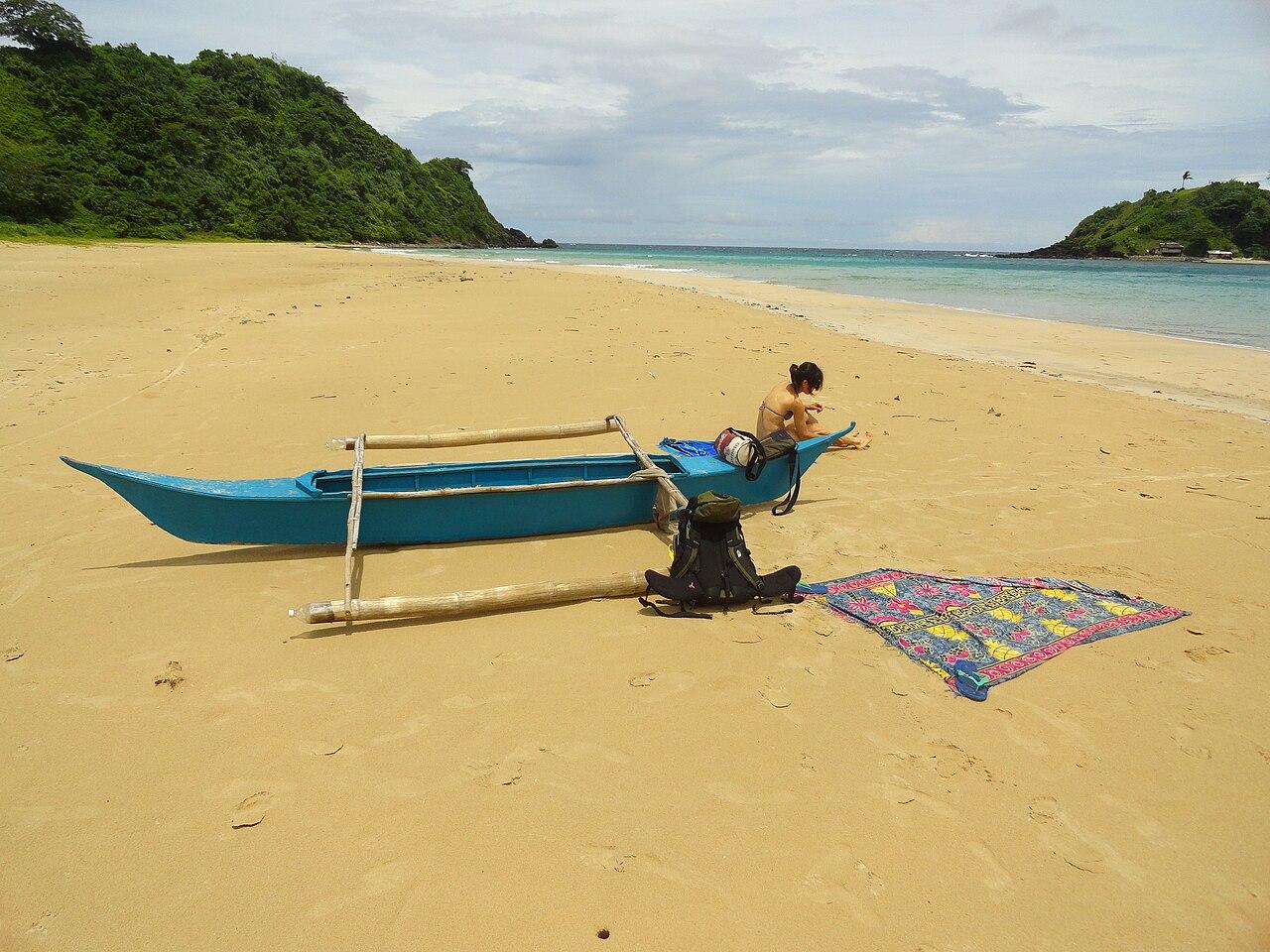
Photo: Fabio Achilli from Milano, Italy / Wikimedia Commons, CC BY 2.0
A 4-day El Nido plan that leaves room for weather
Four days is the most useful length. It lets you do the two or three tours you care about and still have a buffer if the sea closes.
Day 1: arrive and look around. Arrive by plane or van, settle in, and book Tour A for the next morning. Walk the town beach at sunset or take a tricycle to Las Cabanas Beach.
Day 2: Tour A. Do it first because it is the tour most likely to run, and it gives you the lagoon most people come for. If your agency offers an early departure, take it.
Day 3: Tour C or Tour B. Try Tour C if the sea is calm. If the guides say it is too rough, switch to Tour B, which stays more sheltered, and try C again on day 4.
Day 4: Tour D, Nacpan Beach or a rest day. If you still have energy, Tour D gives you the Small Lagoon. If not, go north by tricycle or scooter to Nacpan Beach, a long, open beach about an hour from town with a small entrance fee at the checkpoint. Fly or drive out the next morning.
Planning a longer Philippines route? The 3 days in Boracay sample trip and our guide to Boracay peak season cover another island that is at its best in the same months. If you pass through Cebu in January, read about Sinulog 2027 before you book.
Where to stay
- El Nido town: closest to the boats, restaurants and agencies. Noisy and busy, but the most practical for a short stay.
- Corong-Corong: about ten minutes south, with quieter guesthouses and sunset views across the bay. Boats can pick you up from the beach here.
- Las Cabanas and Marimegmeg: further south again, with resorts on the sand and good sunsets. You will need tricycles to get into town.
Note that local authorities have advised against swimming in the water directly in front of the town in recent years because of drainage problems. The beaches and tour sites in the bay are the places to swim.
Small things that help
- Wear reef shoes. Many stops involve walking over coral rubble or sharp rock.
- Pack a dry bag for your phone and cash.
- Use reef-safe sunscreen and a rash guard, since you spend hours in the sun.
- Drones are tightly restricted near Lio Airport and inside the protected area, so ask before flying one.
Quick FAQ
Which tour should I do if I only have one day? Tour A. It has the Big Lagoon and is the most likely to run.
Is Tour C worth the risk? For snorkelling and the outer beaches, yes, but book it with a spare day behind it.
Can I do two tours in one day? Not with shared tours. A private boat can mix stops from different routes, but you still cannot visit both lagoons on the same day.
You can keep your flight, van time, tours and backup days together in RoamerPlanner, which makes it easy to swap two days around when the weather changes.
Sources: El Nido operator rate cards for Tours A to D and the Eco-Tourism Development Fee; El Nido protected area lagoon fee and slot notices as published by local operators; Cebu Pacific and Philippine news reports on the move of turboprop flights from NAIA to Clark from 29 March 2026; Philippine eTravel official system. Checked 15 November 2026.
Cover photo: Vyacheslav Argenberg / Wikimedia Commons, CC BY 4.0
More about Philippines: all articles and trip plans
Trips you can copy
Ready-made day-by-day plans for this place. Copy one for free and change it to fit your trip.
Turn this into a plan
Ready to turn this into a real itinerary? Plan it in RoamerPlanner.
Start your own plan, no account neededBrowse sample trips