Carry On Only Packing List for Two Weeks That Fits Real Airlines
November 8, 2026
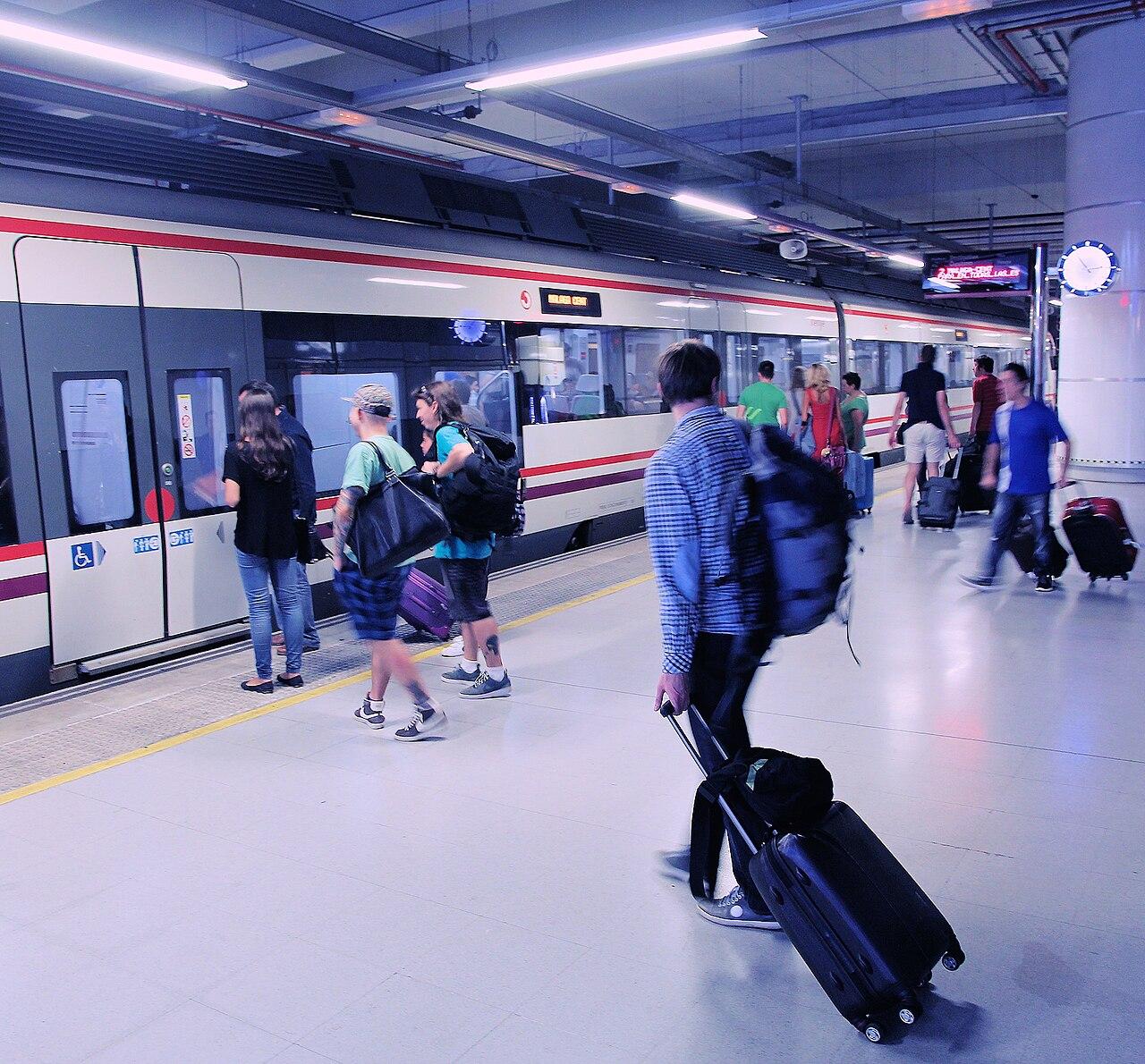
A carry on only packing list fails when the bag fits one airline and fails the next. There is no single global cabin size, and shop labels that say "cabin approved" are not a contract with your carrier. Measure your bag against the operating airline on each ticket, including fare brand, before you commit to two weeks with no hold luggage.
Carry on only packing list: size and weight first
IATA publishes a common reference of 56 x 45 x 25 cm including wheels and handles, and states that allowances remain airline specific. Check three facts on your booking, not on the bag tag from a shop:
1. Maximum dimensions (and whether wheels and handles count: they usually do) 2. Weight limit, if any, and whether it is per bag or combined with a personal item 3. Whether your fare includes an overhead bag or only an under-seat personal item
Examples from airline help pages (recheck before you fly; fares change):
- Ryanair: small under-seat bag 40 x 30 x 20 cm on standard fares; a second cabin bag up to 55 x 40 x 20 cm and 10 kg needs Priority & 2 Cabin Bags.
- easyJet: free small bag 45 x 36 x 20 cm up to 15 kg; large cabin bag 56 x 45 x 25 cm up to 15 kg is paid or tied to certain fares and membership.
- British Airways: cabin bag up to 56 x 45 x 25 cm plus a smaller bag up to 40 x 30 x 15 cm (weight limits on BA pages are comparatively high for hand baggage; still lift what you pack).
- Emirates (economy, typical published cabin rule): often around 55 x 38 x 20 cm with a 7 kg cabin limit: harsh for a heavy roller.
- Singapore Airlines: often a linear total around 115 cm with a 7 kg economy cabin limit on many routes.
If your trip mixes a low-cost European hop and a long-haul with a 7 kg cabin cap, pack to the stricter weight. A bag that is "cabin sized" for BA can still be gate-checked on Ryanair if you lack the right add-on.
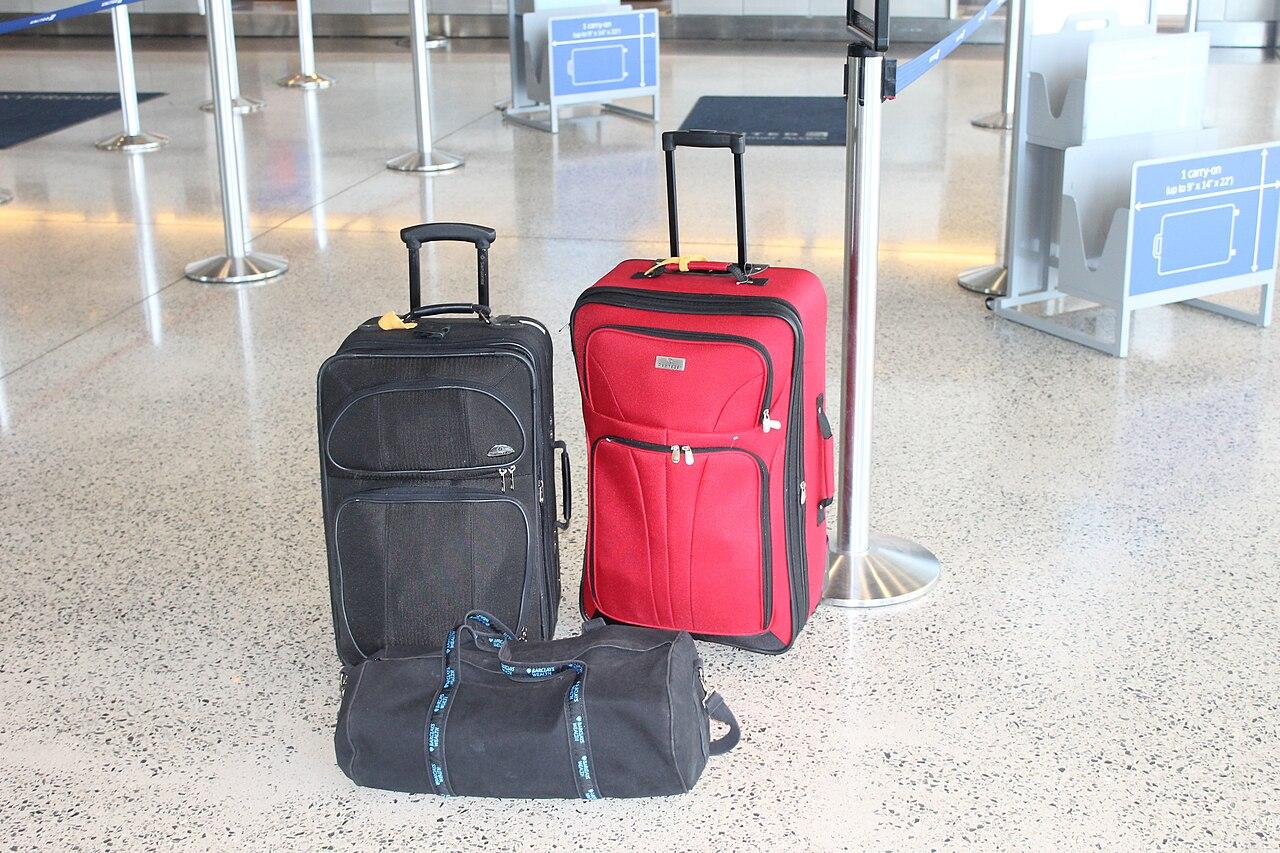
Photo: Billy Hathorn / Wikimedia Commons, CC BY 3.0
What two weeks in one cabin bag usually means
Plan on laundry, not on fourteen complete outfits. For a temperate city trip:
- 5 to 6 tops you can layer
- 2 bottoms (one can be the travel pair)
- 1 light sweater or overshirt
- 1 packable rain shell
- 7 to 8 sets of underwear and socks (or fewer plus sink wash)
- 1 pair of walking shoes worn on the plane; flip-flops or light sandals only if the destination needs them
- Sleepwear that also works as lounge wear
- Toiletries in containers of 100 ml or less inside a 1 litre resealable bag where that security rule applies
- Medications, chargers, power bank (spare lithium batteries stay in the cabin: IATA safety guidance keeps spares out of checked bags)
- Tiny laundry kit: drain plug if needed, travel detergent sheets, 4 to 6 pegs or clips, a thin line
Skip "just in case" bulky shoes. Skip duplicate jackets. Skip full-size toiletries you can buy on day two.
Tropical two-week list swaps the sweater for sun protection and insect repellent where relevant, and leans harder on breathable fabrics that dry overnight.
Capsule packing by laundry day
Wash every 4 to 5 nights in the sink or a machine if the hotel has one. Fabrics that dry overnight (merino blends, many travel synthetics, thin cotton) earn their place. Jeans are optional; they dry slowly and cost space.
Wear the bulkiest shoes and jacket on travel days. Put liquids and batteries where security can see them. Keep a clean shirt near the top for the flight home.
A sample weight discipline for a 7 kg airline:
- Bag empty: know your number (many rollers already weigh 2 to 3 kg)
- Shoes on feet: 0 on the scale
- Liquids minimal
- Laptop: decide if the trip needs it; it can blow a 7 kg budget alone
If your carrier allows 10 kg or has no published cabin weight, you can keep a slightly thicker layer or a second pair of shoes. Do not assume US domestic habits (often size-focused, weight rarely enforced the same way) apply on Asian or Gulf carriers.
Security and gate realities
Liquids rules still catch people: many airports enforce the 100 ml container / 1 litre bag pattern. Medications and baby food often have exemptions, but declare them and carry documentation when relevant.
Gate staff may measure bags in a metal frame. Soft bags that slump through at home can bulge when stuffed. Pack with the frame in mind: hard edges and overstuffed outer pockets fail first.
If cabin bins are full, even a compliant bag can be tagged for the hold at the gate. Keep essentials (meds, documents, one change of clothes, valuables) in the personal item under the seat so a last-minute gate check does not strand them.
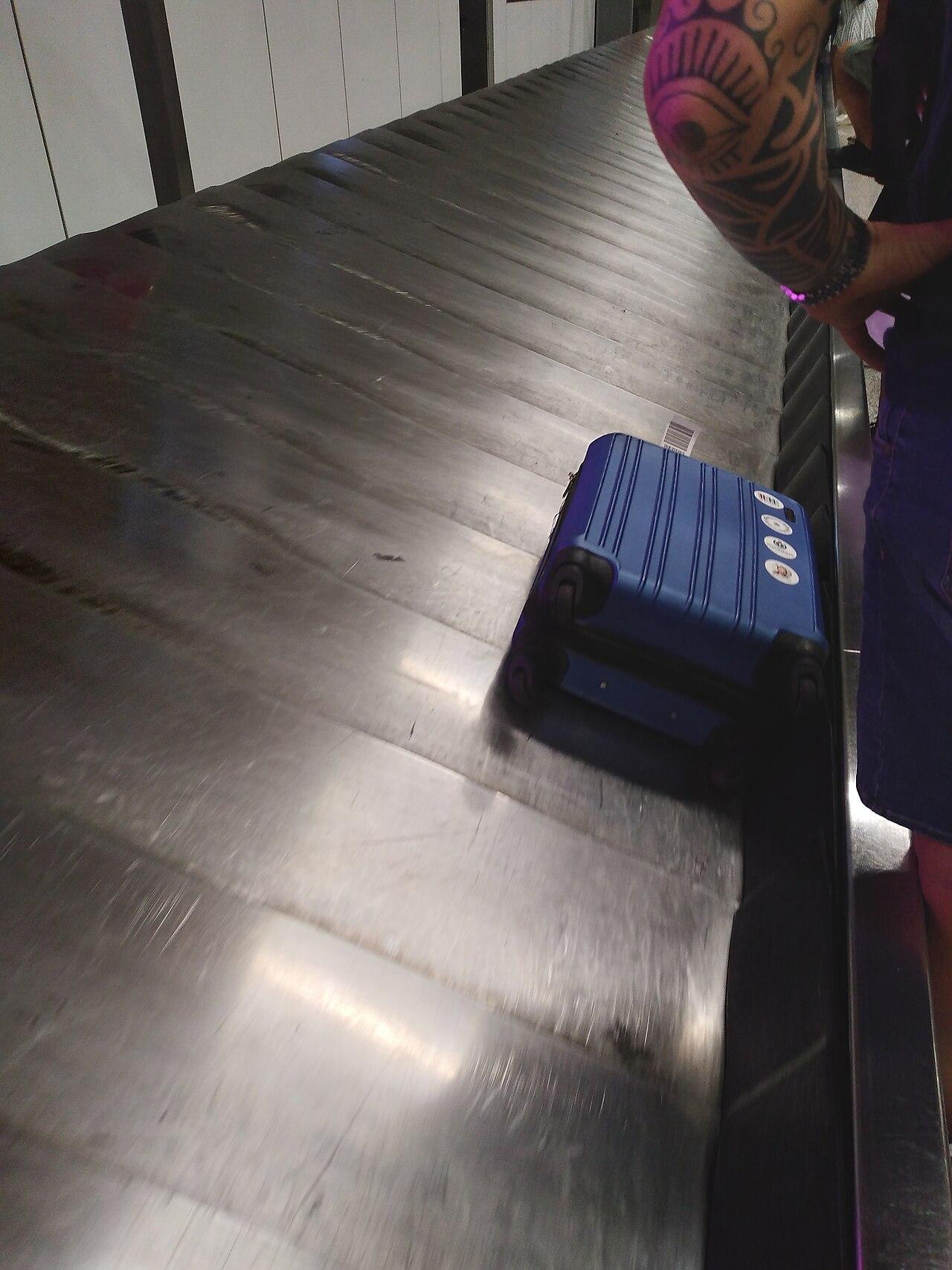
Photo: CAPTAIN RAJU / Wikimedia Commons, CC BY-SA 4.0
Two-week checklist (edit for climate)
Documents and tech. Passport, visas or authorisations, cards, phone, charger, cable, power bank, earbuds, adaptor.
Clothes. Tops x5 to 6, bottoms x2, underwear x7, socks x7, sleep layer, rain shell, optional light mid-layer, swimsuit if needed, belt if you wear one.
Toiletries. Toothbrush, toothpaste mini, deodorant mini, sunscreen mini, moisturiser mini, razor, solid shampoo bar or mini bottles, contacts or glasses kit, period products, blister plasters.
Other. Compact umbrella or shell, reusable foldable tote for day use, laundry kit, pen, any required medicines.
Use the site travel packing checklist as a living list, then delete anything that does not match the climate. City winter layers for Tokyo, Seoul, London or Paris need more bulk; see the winter city-break packing notes. Japan travellers who want less daily hauling often ship a bag ahead with takkyubin-style forwarding and keep only a cabin bag on train days.
When carry-on only is the wrong call
Sports gear, winter boots for serious snow, formal events needing multiple outfits, or travelling with infants can break the model. A cheap hold bag on a long-haul with a 7 kg cabin limit can be less stressful than cutting a laptop and all spare shoes. Also watch connection rules: some itineraries through the US or Canada treat bags differently on each leg.
Can one packing list work for every airline? No. Build the clothes list once, then resize the bag and total weight to the strictest airline on the ticket.
Is a backpack better than a roller for cabin only? Backpacks flex through frames more easily and leave hands free on stairs. Rollers are easier on flat airports. Soft-sided rollers are a middle path. Pick based on stations and cobblestones, not aesthetics.
How do I handle laundry on a two-week cabin trip? Wash every few nights, choose quick-dry fabrics, and book at least one stay with a machine if you hate sink laundry. Hotel bags of detergent exist; so do supermarket sachets.
Sources: IATA Passenger Baggage Rules (cabin reference 56 x 45 x 25 cm; airline-specific allowances; spare lithium batteries in cabin; liquids screening summary). Ryanair Help Centre bag policy (40 x 30 x 20 cm small bag; 55 x 40 x 20 cm / 10 kg with Priority & 2 Cabin Bags). easyJet cabin bags page (45 x 36 x 20 cm free; 56 x 45 x 25 cm large). British Airways baggage essentials (56 x 45 x 25 cm plus 40 x 30 x 15 cm). Carrier pages for Emirates and Singapore Airlines cabin weight/size should be rechecked for your route and fare. Checked 4 November 2026.
Cover photo: Marek Ślusarczyk (Tupungato) Photo portfolio / Wikimedia Commons, CC BY 3.0
Trips you can copy
Ready-made day-by-day plans for this place. Copy one for free and change it to fit your trip.
Turn this into a plan
Ready to turn this into a real itinerary? Plan it in RoamerPlanner.
Start your own plan, no account neededBrowse sample trips