Khao Yai Weekend from Bangkok: Cool Season, Wildlife and Where to Stay
November 10, 2026
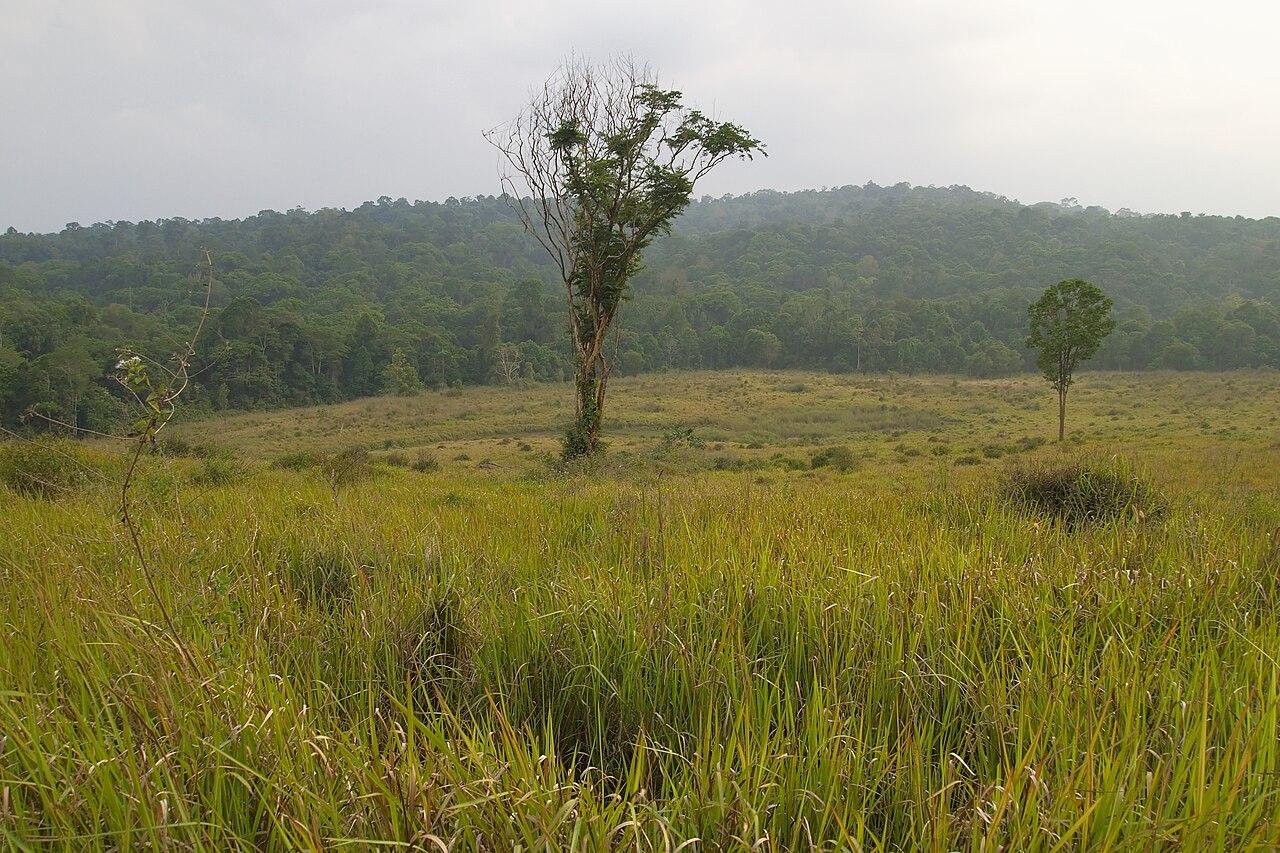
A Khao Yai weekend is the easiest nature trip from Bangkok, and the cool season from November to February is the most comfortable time to do it. The national park is about three hours' drive from the city, so you can leave on a Saturday morning and be watching for hornbills by lunch. The main things to plan are transport, because sights inside the park are far apart, and a room outside the gate, because Bangkok families fill them on holiday weekends. This guide covers what is open after the late 2026 floods, how to get there, where to stay and a simple two-day plan.
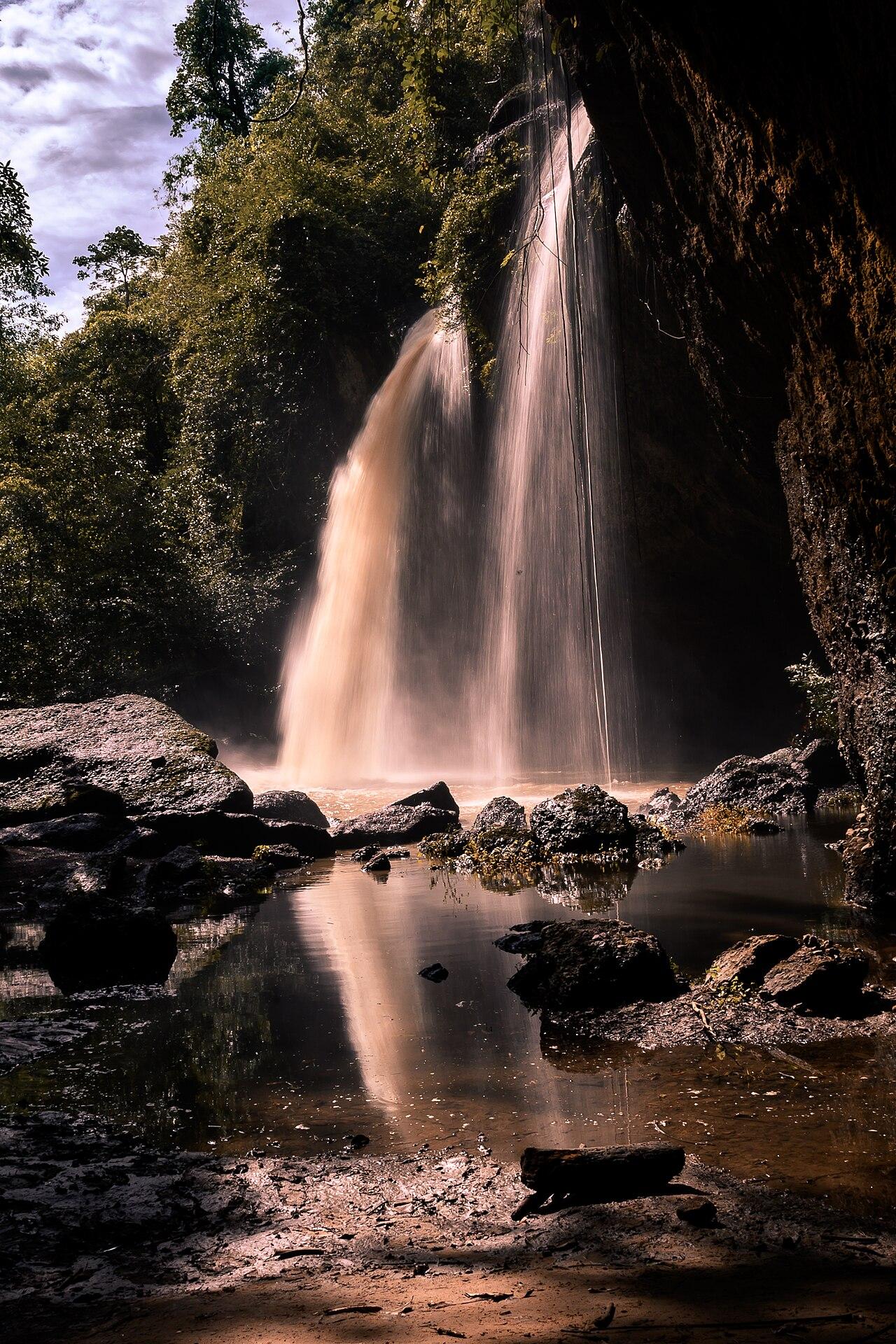
Photo: Khajonrat.K / Wikimedia Commons, CC BY-SA 4.0
What to know before you go this season
Heavy rain in late September 2026 closed the whole park for about ten days. According to the Department of National Parks, Khao Yai reopened for day visitors and campers on 6 October 2026, but two areas stayed closed for repairs: the road up Khao Khiao, which leads to the Pha Diao Dai and Pha Trom Chai viewpoints, and the Kaeng Hin Phoeng rapids. The floods also damaged the bridge on the path to Haew Narok waterfall. The park had not given reopening dates when we checked, so call the visitor centre before you go if any of these are on your list.
The rest of the main road, the visitor centre, Haew Suwat waterfall, the short forest trails, the campsites and the night safari were operating as normal.
Two more things shape a weekend here:
- Weekends are busy. Friday evening and Saturday morning bring queues at the Pak Chong gate and full car parks at the waterfalls. If you can move your trip to a Sunday and Monday, do it.
- Fees are paid each day. Foreign adults pay 400 baht and children under 14 pay 200 baht, plus a small fee for a car. One ticket covers a single day, so if you sleep outside the park and come back the next morning, you pay again.
Getting there from Bangkok
By car. This is the simplest option. Take the motorway towards Nakhon Ratchasima, leave at Pak Chong and follow Thanarat Road to the northern gate. Without traffic it is a drive of around three hours. A car also lets you stop at viewpoints and pull over safely when elephants are on the road.
By train or bus to Pak Chong. Trains on the northeastern line leave from Krung Thep Aphiwat Central Terminal and stop at Pak Chong. Buses and vans also run from Bangkok's northern bus terminal. From Pak Chong you still need a way into the park. A local bus runs to the gate, but inside the park the sights are spread along a long road, so most people without a car hire a driver or join a day tour from town.
From Bangkok as a tour. Day trips exist, but you spend most of the day in a van. If you can only go for one day, leave very early.
Where to stay for a Khao Yai weekend
There are two ways to do it.
Inside the park. The park has lodges and campsites, booked through the national parks online system. Lodges go quickly for holiday weekends, and the main campsite at Lam Ta Khong is popular with Thai families in the cool season. Staying inside means you are already there at dawn, when the forest is most active, and you avoid paying the entrance fee twice. Nights are cool, so bring a warm layer.
Outside the gate, along Thanarat Road. Most visitors stay in the resorts and small hotels between Pak Chong town and the northern gate. This road has cafés, farm stays and family resorts, and many places are a short drive from the park. It is the better choice if you want a comfortable room, a pool for children or more food options. Book early for long weekends and the New Year period.
If you are planning around a Thai public holiday, check the dates first. Every long weekend is busy here.
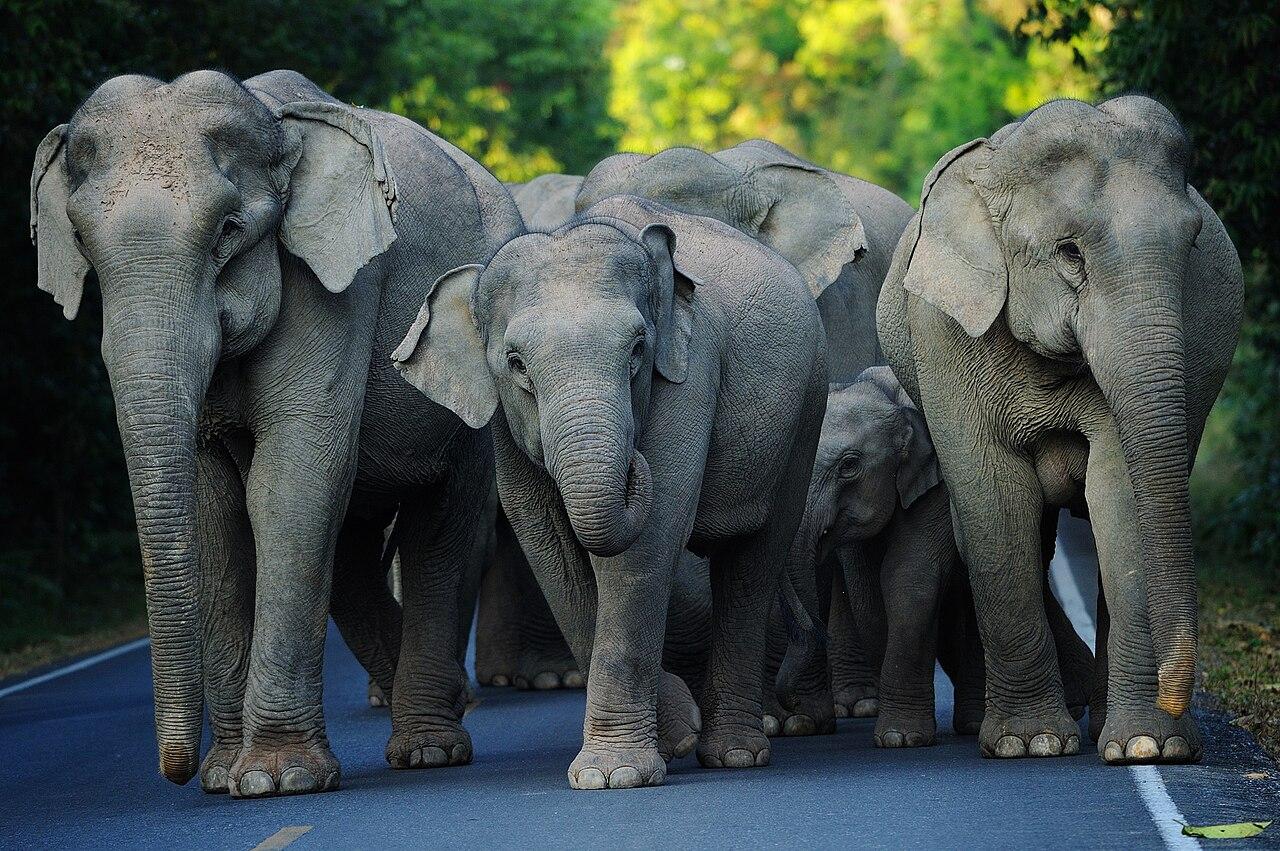
Photo: tontantravel / Wikimedia Commons, CC BY-SA 2.0
Wildlife: what you might see and how to behave
Khao Yai is the most reliable place near Bangkok to see wild animals. Many visitors see macaques, deer and hornbills, and wild elephants often walk along the main road, especially in the late afternoon. Gibbons are easier to hear than to see, usually in the morning.
The park's rules for elephants on the road are worth reading before you drive:
- Stop well back, at least 30 metres, and keep the engine running.
- Do not sound the horn, flash lights or get out of the car.
- If the elephant comes towards you, reverse slowly.
- Wait until it has left the road before you pass.
Do not feed any animal. The macaques at the car parks know that bags and open car windows mean food.
Night safari. You cannot drive around looking for animals after dark on your own. Instead, rangers run short spotlight trips in an open truck from the visitor centre in the early evening. You book and pay at the visitor centre on the same day, before it closes for bookings in the late afternoon. It is a pick-up truck shared by your group, so it works well for families.
A simple two-day plan
Day 1: arrive, waterfall and an evening safari
- Morning: drive from Bangkok and enter through the Pak Chong gate before the late morning queue. Stop at the visitor centre to check current closures, register for any trail and book the night safari.
- Midday: walk the short loop to Kong Kaew waterfall near the visitor centre, then drive to Haew Suwat, the waterfall most people know from photos. It is a short walk from the car park. Swimming is not allowed.
- Afternoon: stop at the Nong Phak Chi watchtower for a chance to see deer, gaur or elephants at the grassland edge. Late afternoon is often the best time.
- Evening: night safari from the visitor centre, then dinner and the night outside the park, or at your lodge if you booked one.
Day 2: early forest, then home
- Early morning: if you stayed inside the park, walk one of the short trails at dawn. Some trails need a ranger guide; ask at the visitor centre the day before. If you stayed outside, be at the gate when it opens.
- Late morning: visit Pha Kluai Mai, a small waterfall by the campground, and the Sai Sorn reservoir trail.
- Afternoon: leave before mid-afternoon to beat the Sunday traffic back to Bangkok, or stop at a winery or farm café on Thanarat Road on the way.
If the Khao Khiao road has reopened by the time you go, swap the second morning for the drive up to Pha Diao Dai, the park's best-known sunrise viewpoint. Check with the park first.
What to pack
- A warm layer for early mornings and night safaris in December and January
- Long trousers and closed shoes for trails
- Leech socks if you go after rain
- Insect repellent
- Cash for fees, though the park also has an e-ticket app
- Water and snacks; food stalls exist, but the park is large
Alcohol is not allowed anywhere in the park, and drones need permission.
Combining Khao Yai with Bangkok
Khao Yai works well as a two-day break in the middle of a longer Bangkok stay. Spend the first days in the city with our 3 days in Bangkok itinerary, drive out for the weekend, then come back for your flight. Our sample 2 days in Khao Yai trip shows the route as a day-by-day plan you can copy and change in RoamerPlanner. If you are deciding where to go in the cool season more widely, read our guide to Thailand in December.
Quick FAQ
Is a Khao Yai weekend worth it without a car? Yes, but hire a driver or join a tour from Pak Chong. The main sights are many kilometres apart along one road.
Will I see elephants? Often, but never guaranteed. Late afternoon on the main road and the grasslands near Nong Phak Chi give the best chances.
Is the park open after the 2026 floods? Most of it reopened on 6 October 2026. The Khao Khiao road with Pha Diao Dai and the Kaeng Hin Phoeng rapids stayed closed for repairs, and the Haew Narok path was damaged. Check with the park before you go.
How cold does it get? Days are pleasant in the cool season, but early mornings and nights in the forest feel cold, especially in December and January. A fleece or light jacket is enough.
Sources, checked 4 November 2026: Khao Yai National Park official site (entry fees, trails, night safari, lodges); Department of National Parks announcements on the September 2026 flood closure and the 6 October 2026 reopening. Reopening dates for the Khao Khiao road, Kaeng Hin Phoeng and the Haew Narok path were not announced at the time of writing.
Cover photo: Vyacheslav Argenberg / Wikimedia Commons, CC BY 4.0
Trips you can copy
Ready-made day-by-day plans for this place. Copy one for free and change it to fit your trip.
Turn this into a plan
Ready to turn this into a real itinerary? Plan it in RoamerPlanner.
Start your own plan, no account neededBrowse sample trips