How to Plan a Trip Day by Day: A Simple Method and a Free Template
October 19, 2026
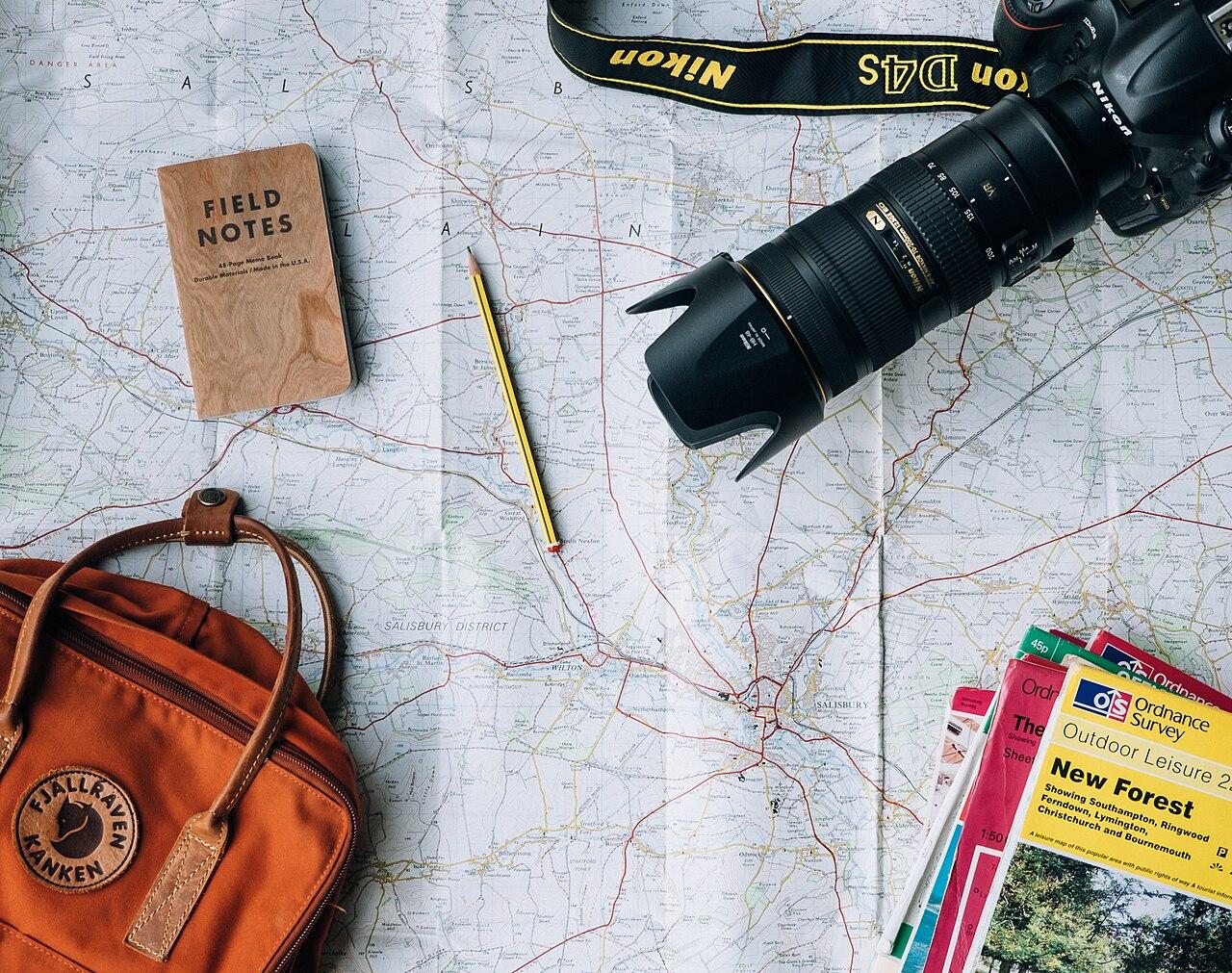
Knowing how to plan a trip day by day is mostly about order. Most people start with a long list of places and try to squeeze them into the calendar. It works better the other way round: fix the things that can't move, group everything else by area, and leave room for the day to go wrong. This guide walks through a simple six-step method you can use for a weekend or a three-week trip, plus a free template to put it in.
Why a day-by-day plan helps
A rough list is fine for a city you know. For a new place, a day-by-day plan saves you from three common problems:
- Zigzagging. Visiting one museum in the north, then lunch in the south, then back north again eats hours.
- Missed openings. Many sights close one day a week or need a timed ticket booked in advance.
- Decision fatigue. Deciding everything on the spot, every morning, is tiring, especially with a group.
A plan doesn't mean a rigid schedule. Think of it as a sensible default you can change.
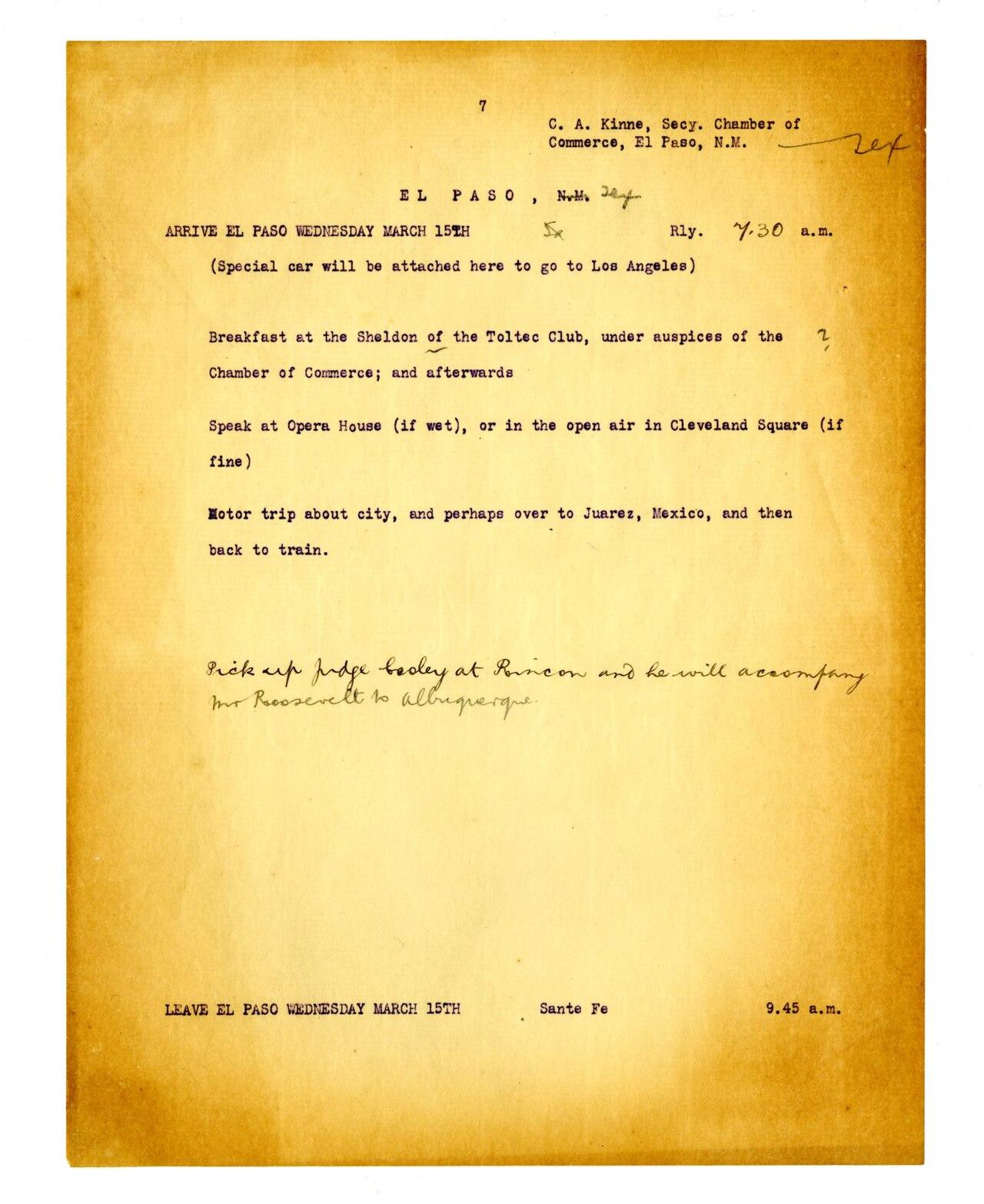
Photo: daily itinerary prepared for Theodore Roosevelt, 1911, via Wikimedia Commons, public domain
How to plan a trip in six steps
Step 1: Write down your fixed points
Start with everything that has a date and time and can't easily move:
- Flights, trains and ferries
- Hotel check-in and check-out
- Tours, shows and restaurants you have booked
- Timed-entry tickets, such as some popular museums and towers
- Events and festivals with set dates
Put these into your calendar first. They are the skeleton of the trip.
Step 2: List what you want to see, then rank it
Make a list of places and activities. Then mark each one:
- Must do: you would be disappointed to miss it.
- Nice to do: good if there is time.
- Maybe: ideas you found but are not sure about.
Be honest. A trip with ten must-dos a day is a trip where nothing is enjoyed properly.
Step 3: Group places by area
Put every place on a map. You will see clusters: the old town, the museum district, the waterfront. Each cluster is roughly half a day or a day.
Assign clusters to days, starting with the ones closest to your fixed points. If you arrive at 3 pm, spend that evening near your hotel. If a museum is closed on Mondays, its cluster goes on another day.
Step 4: Give each day a shape
A day that works usually has:
- One main thing in the morning, when you have energy and before crowds arrive.
- A lighter afternoon, with a long lunch, a walk, or something indoors if it is hot or raining.
- A loose evening: dinner, a viewpoint, a night market.
Two or three main things per day is plenty for most people. Note opening hours next to each item so you don't arrive at a closed door.
Step 5: Add buffers and travel time
This is the step most plans skip. Add:
- Travel time between areas, using a realistic estimate, not the best case.
- A buffer of 30 to 60 minutes on days with a fixed booking.
- A slow day every three or four days on a longer trip, for rest, laundry or catching up on something you missed.
- A rain plan for outdoor days: one indoor option nearby.
The first and last days need the most buffer. Arrival days rarely go to plan, and on departure day you want time to get to the airport without stress.
Step 6: Keep bookings and details in one place
Put confirmation numbers, addresses, check-in times and tickets next to the day they belong to. When you are standing at a station with a dying phone, you don't want to search three email inboxes.
This is also the point where a shared plan helps if you travel with others. Everyone can see the same version, and nobody has to ask "what time is the train?" in the group chat.
A free day-by-day itinerary template
You can do all of this in a notebook or a spreadsheet. A simple layout for each day:
- Date and base: where you sleep that night.
- Fixed bookings: time, what, confirmation number.
- Morning: main activity, opening hours, how to get there.
- Afternoon: lighter activity, lunch idea.
- Evening: dinner, optional extras.
- Notes: rain plan, things to carry, reminders.
If you would rather not build it from scratch, our free travel itinerary template follows this structure, and it works on your phone during the trip.
Common mistakes to avoid
- Planning every hour. Leave gaps. Some of the best moments on a trip are unplanned.
- Ignoring opening days. Check weekly closing days and public holidays at your destination.
- Underestimating distances. Two places that look close on a map can be 40 minutes apart by public transport.
- Too many hotel changes. Moving every night costs half a day each time. For a city break, one base is usually enough.
- Forgetting energy levels. Jet lag, heat and walking 20,000 steps a day add up. Plan lighter days after long travel days.
- Not sharing the plan. If you travel with others, agree on the must-dos early so nobody feels left out.
Example: three days in a city
Here is how the method looks for three days in Rome:
- Fixed points: arrival on day 1 at noon, a timed ticket for the Vatican Museums on day 2 at 9 am, departure on day 3 at 6 pm.
- Day 1, around the centre: check in, then the Pantheon, Piazza Navona and Trevi Fountain in the late afternoon, which are close together.
- Day 2, Vatican side: Vatican Museums and St Peter's in the morning, a slow afternoon in Trastevere, dinner nearby.
- Day 3, ancient Rome: Colosseum and Roman Forum in the morning (book ahead), lunch, then a buffer before the airport.
The 3 days in Rome itinerary is built this way, and you can open the 3 days in Seoul itinerary to see the same method applied to a very different city.
Planning with RoamerPlanner
If you prefer an app, RoamerPlanner lets you build the plan day by day, keep flights, hotels and bookings under each day, see places on a map and share the trip with the people you travel with. You can start from one of our ready-made itineraries and change it, or start from a blank trip.
FAQ
How far ahead should I plan a trip? Book fixed points like flights and hotels as soon as your dates are set, especially for busy seasons. The detailed day-by-day plan can wait until two to four weeks before you go.
How many things should I plan per day? Two or three main activities is a good default. Add more only if they are in the same area.
Should I plan every day of a long trip? Plan the first few days and any day with bookings in detail. Keep later days looser and fill them in as you go.
What is the easiest way to keep travel bookings organised? Attach each booking to the day it belongs to, in one shared place. Whether that is a document, a spreadsheet or an app matters less than keeping everything together.
Cover photo: Annie Spratt via Wikimedia Commons, CC0
想把这次住宿排进真正的行程里?去 RoamerPlanner 规划吧。
打开 RoamerPlanner