Ayutthaya from Bangkok: Cool Season Temples and a 2-Day Plan
November 17, 2026
Ayutthaya from Bangkok is one of the easiest heritage trips in Thailand, and the cool season is the most comfortable time to do it. From November to February the air is drier and the days are less harsh than in the hot season, which matters when you are walking or cycling between brick temples with little shade. You can see the core of the historical park in a long day. Two days is better, because it gives you a sunset at Wat Chaiwatthanaram and a quieter morning among the ruins.
This guide covers how to get there, official ticket prices, which temples to put first, and how to choose between a day trip and an overnight stay. A ready outline is on our 2 days in Ayutthaya page. It also sits naturally next to a 3 days in Bangkok plan.
Ayutthaya from Bangkok: trains, vans and boats
The simplest public route is the train. Frequent services run from Krung Thep Aphiwat Central Terminal (Bang Sue) to Ayutthaya. The journey is usually around one and a half to two hours, depending on the service, and the station in Ayutthaya is a short tuk-tuk or motorbike-taxi ride from the park. Buy tickets at the station or through official channels, and allow extra time at Bang Sue, which is a large station.
Minivans and buses also run from Bangkok and can be slightly faster door to door, at the cost of Bangkok traffic. A private car is useful if you are a family, want to include Bang Pa-In Palace on the same day, or prefer not to think about the last train back.
River boats and cruise day trips exist on the Chao Phraya, often with a buffet and a tighter temple list. They can be a pleasant way to travel, but they are slower and less flexible once you are on board. If the ruins are the main point, train plus a bicycle or tuk-tuk in the park is the more efficient combination.
For a day trip, start early. You want to be in the park by opening time, or close to it, and to leave a margin for the return. For an overnight stay, take a mid-morning train, use the afternoon and the next morning, and go back after lunch on the second day.
Tickets, hours and how the park works
Ayutthaya Historical Park is a UNESCO site made up of many temples, some inside a central island and some across the rivers that wrap the old city. The Fine Arts Department's official park page, checked on 12 November 2026, lists these basics:
- Open daily, 08:00 to 18:00
- Foreign visitors: 80 baht per site, or 300 baht for a flat-rate ticket
- Thai visitors: 10 baht per site, or 40 baht for a flat-rate ticket
The flat-rate ticket is the one to buy if you plan to enter several of the ticketed ruins, which you should. A few places on a wider circuit have their own booths; keep the ticket handy. Some temples and the outer sites can take extra time to reach, so do not assume the 300 baht pass covers every religious site in the province.
Dress modestly, as you would at any Thai temple: shoulders and knees covered, shoes off when required. The park is a mix of ruin and active worship. Sunrise and late afternoon are the most comfortable times in any season; in the cool months midday is still possible, but you will be glad of water and a hat.
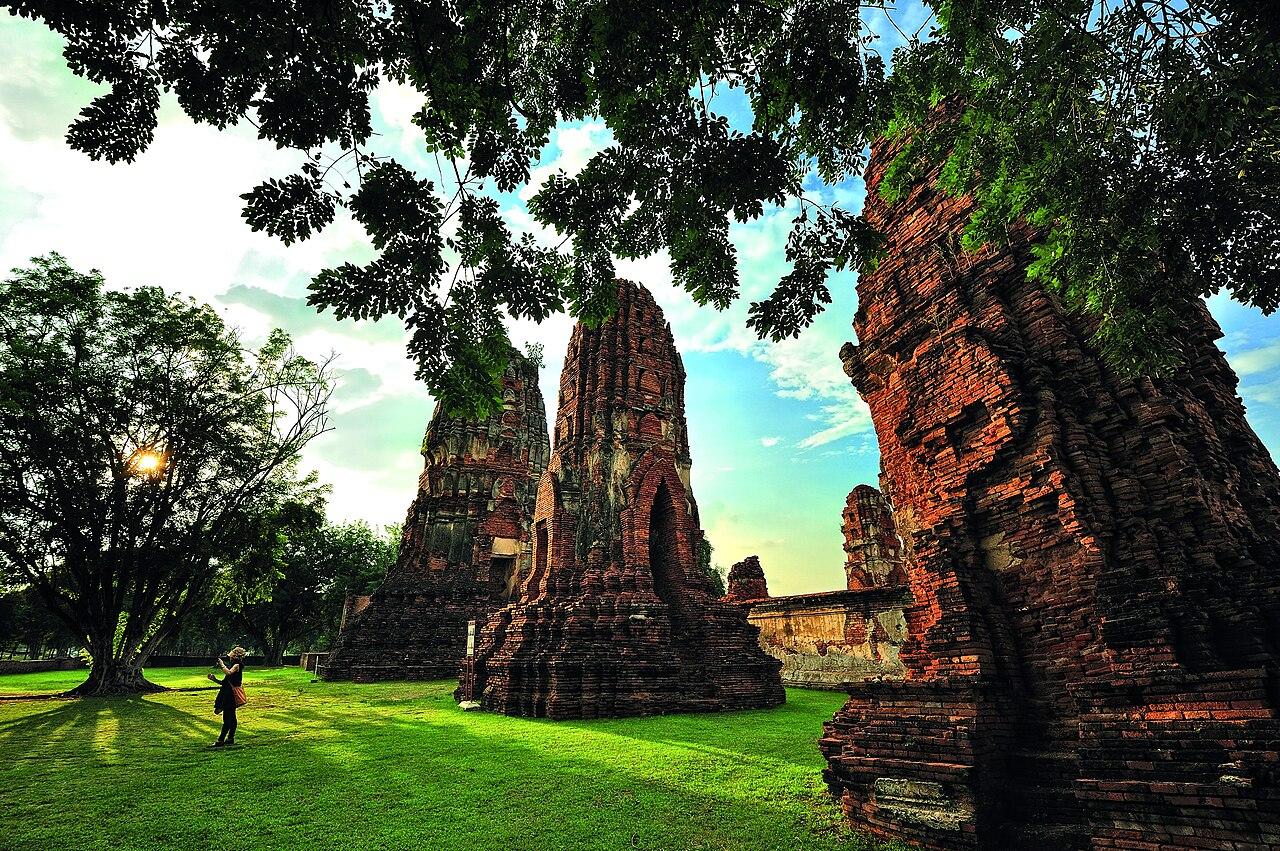
Photo: Mr.Peerapong Prasutr / Wikimedia Commons, CC BY-SA 4.0
Which temples to see, and in what order
You will not see every ruin, and you do not need to. A first visit can be built around four places.
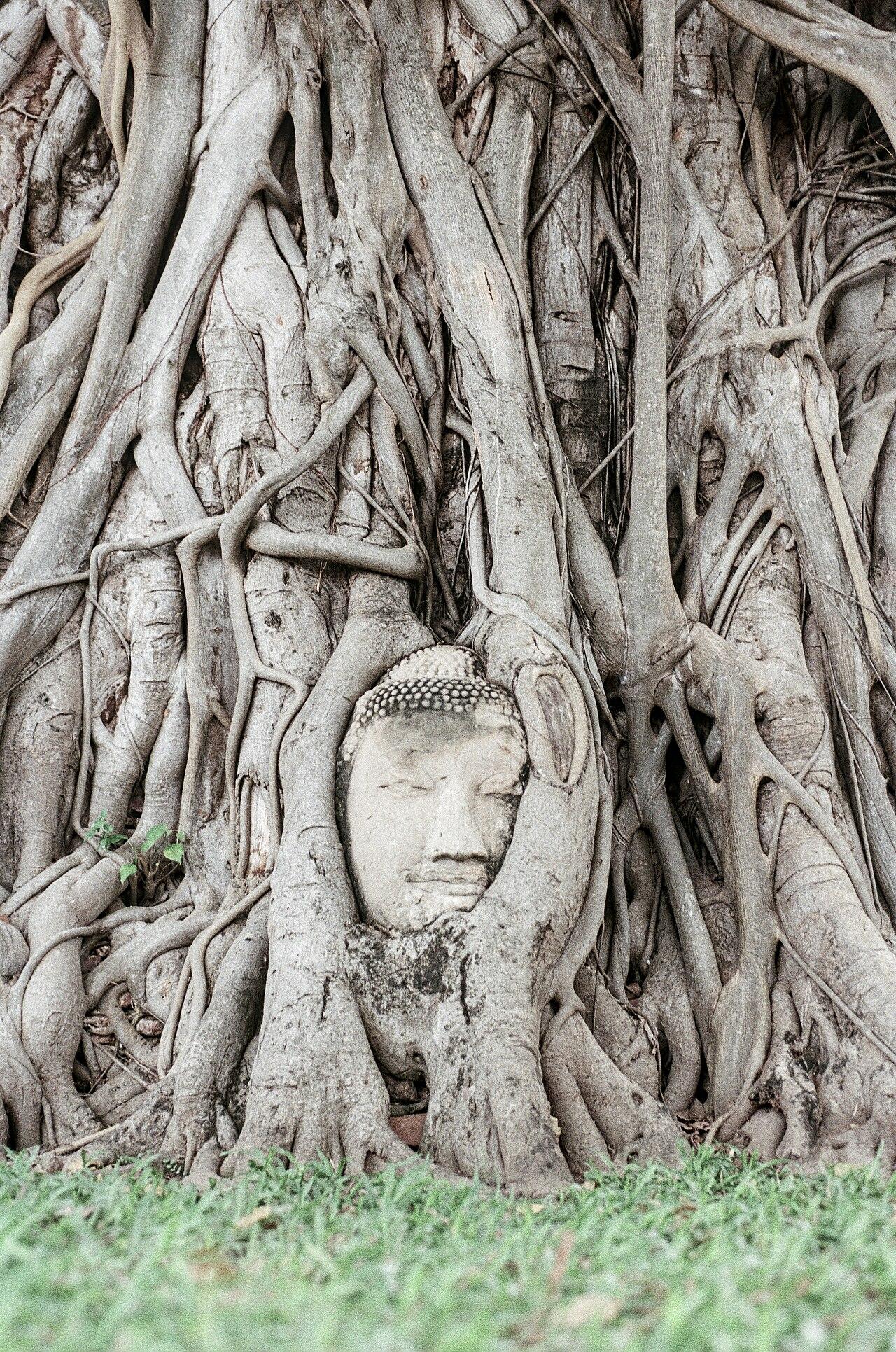
Wat Mahathat is the one most people recognise, because of the stone Buddha head in the tree roots. The rest of the complex is worth more than that single photograph. Go early if you want a quieter look at it.
Wat Phra Si Sanphet, in the old royal palace area, has the distinctive row of large Sri Lankan-style chedis. It is central, open, and easy to combine with Wat Mahathat and Wat Ratchaburana on foot or by bike.
Wat Ratchaburana is close by, with a prang you can usually enter, and it helps to see these three as a cluster rather than as separate expeditions.
Wat Chaiwatthanaram, on the west bank of the river, is the sunset temple. The laterite prang and surrounding towers sit in an open setting that holds the late light well. It is a short ride from the central island, and it is the main reason to stay into the evening, or to stay overnight.
If you have a second morning, add Wat Phra Ram or cycle a wider loop of the island, and only then consider further sites such as Wat Yai Chai Mongkhon, southeast of the station. Elephant rides are offered in and around the park; many visitors prefer to walk or cycle, and you should make your own decision with current welfare standards in mind.
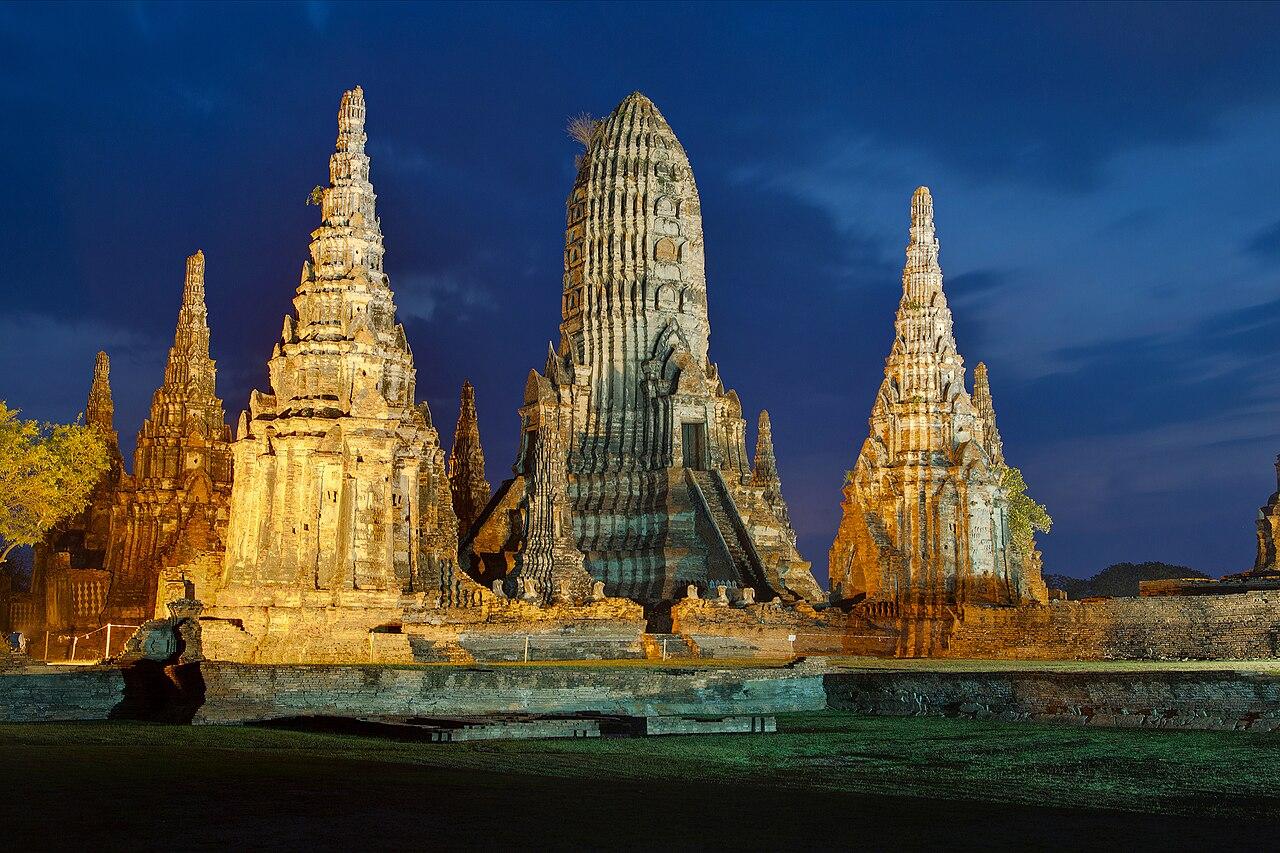
Photo: JJ Harrison (https://www.jjharrison.com.au/) / Wikimedia Commons, CC BY-SA 3.0
Day trip or two days?
A day trip works if you have only one free day in Bangkok, start early, buy the flat-rate ticket, see the central cluster, and finish at Wat Chaiwatthanaram before you go back. You will be tired, and you will miss the early morning quiet. It is still a good day.
Two days is the better version. Stay near the old city, walk or cycle at the beginning and end of the day, and use the middle of the day for a slower lunch and a museum or a rest. The two-day Ayutthaya plan is built that way. You can drop it next to a Bangkok stay in RoamerPlanner, then add a second up-country trip such as Kanchanaburi or Sukhothai if you have more time.
In the cool season, bicycles are the most pleasant way to move between the central temples. Hire shops are easy to find, and the island is flat. Tuk-tuks are better if you are a group, if the heat builds, or if you want to include the far-side temples without doubling back. Agree the fare or the hourly rate before you start.
Practical extras
- Take water and sun protection even in December and January. Shade is uneven.
- The town has plenty of ordinary restaurants; you do not need to eat at the park gates.
- Bang Pa-In Palace, south of Ayutthaya, is an optional add-on if you have a car and an extra half-day. It is a different kind of visit, more formal and less ruined, and it is not a substitute for the historical park.
- If you are travelling onward in Thailand, Ayutthaya is also a stop on the northern and northeastern railway, which can save a return to Bangkok.
Quick answers
How long is the journey from Bangkok? By train, typically around one and a half to two hours from Krung Thep Aphiwat, plus local transfer time.
How much are tickets for foreign visitors? 80 baht per site, or 300 baht for a flat-rate ticket, according to the Fine Arts Department's official park page, checked on 12 November 2026. Hours are 08:00 to 18:00 daily.
Is a day trip enough? Yes, if you start early and focus on the central temples plus Wat Chaiwatthanaram. Two days is more comfortable.
Do you need a guide? No, but a good one adds context. If you go independently, a simple map and the official site names are enough for a first visit.
When is the best time of year? The cool season, from November to February, is the most comfortable for a day spent outdoors among the ruins.
Sources
Checked 12 November 2026. Opening hours and admission fees: Fine Arts Department, Ayutthaya Historical Park official page (virtualhistoricalpark.finearts.go.th): daily 08:00-18:00; foreign visitors 80 baht per site or 300 baht flat rate; Thai visitors 10 or 40 baht. Train departure station and typical journey length are described in general terms; check the official SRT timetable for the specific service on your day. Individual temple entry practices and any temporary closures should be confirmed at the ticket booths.
Cover photo: Jatoo / Wikimedia Commons, CC BY-SA 4.0
可复制的行程
这里有现成的每日行程。免费复制,再按你的旅行修改。