Angkor Wat Temple Pass and Sunrise: How to Plan 3 Days in Siem Reap
November 18, 2026
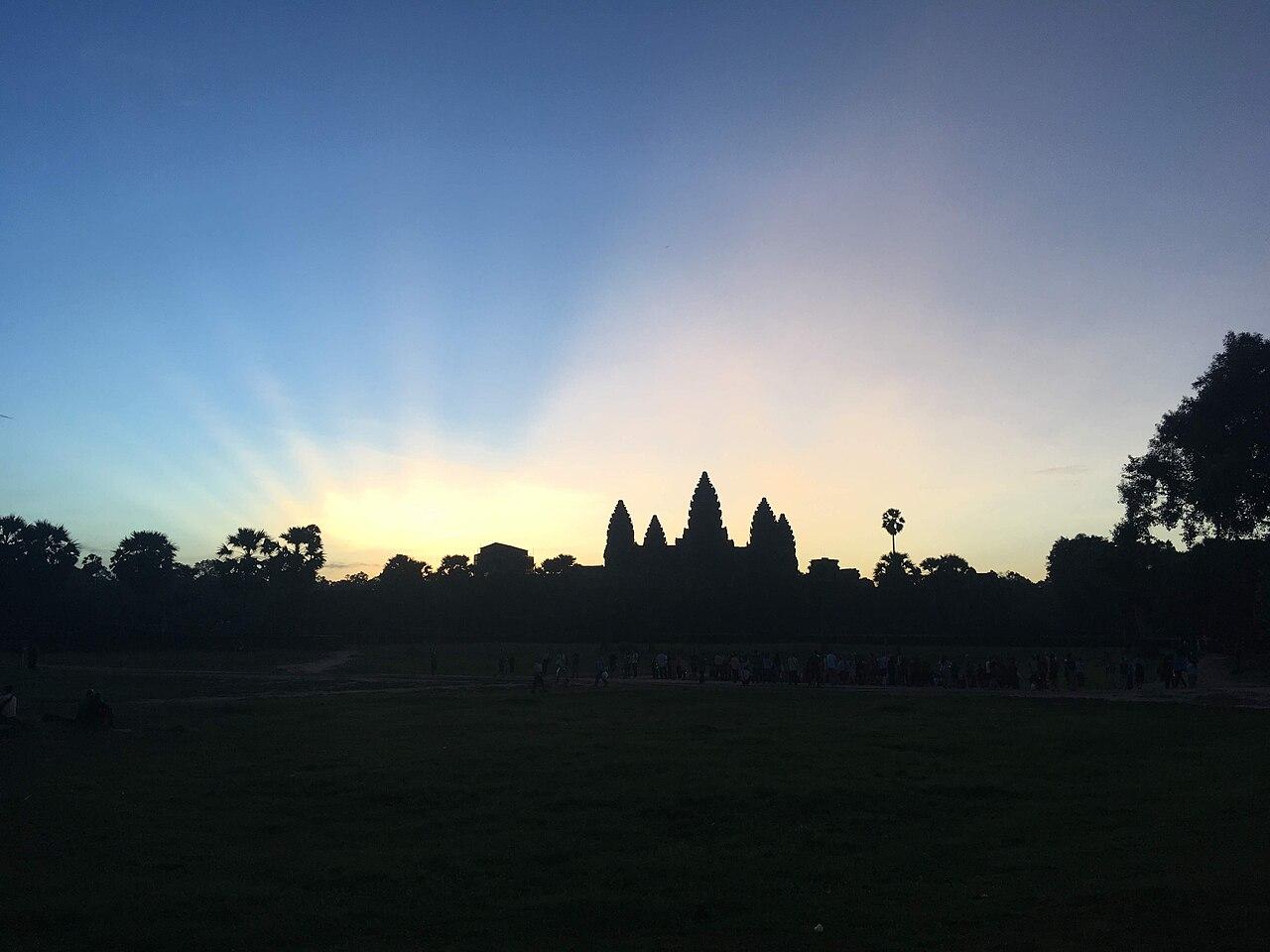
Most first visits to Angkor go better when you sort the angkor wat temple pass before you sort anything else. The pass you choose decides how many mornings you get in the park, whether you can see the outer temples at all, and how hard each day has to be. This guide covers the three official passes, how sunrise at Angkor Wat actually works, a realistic 3-day plan from Siem Reap, and a few travel rules that changed recently.
If you want a ready-made outline to adjust, our 3 days in Siem Reap sample trip follows the same shape as the plan below.
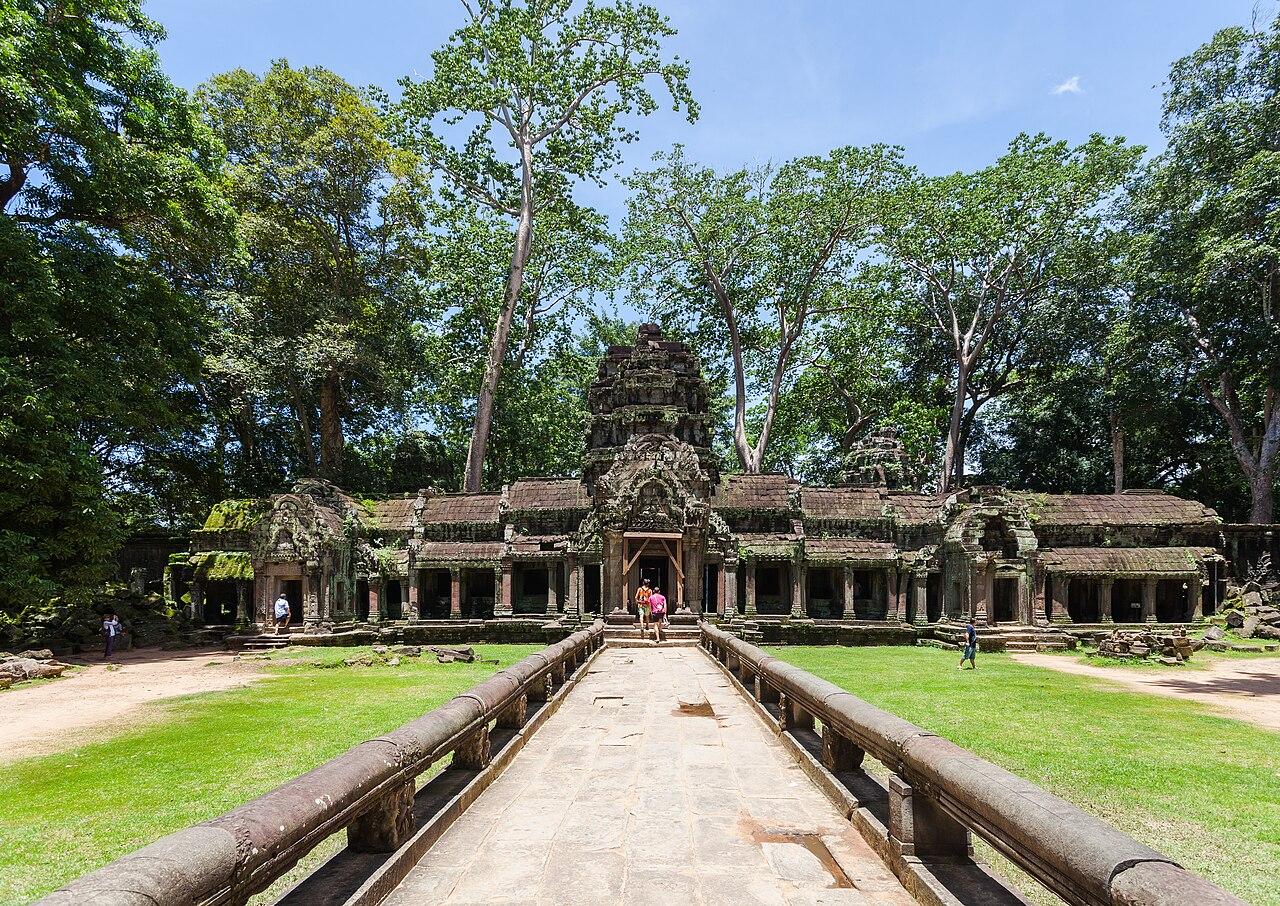
Photo: Diego Delso / Wikimedia Commons, CC BY-SA 3.0
Angkor Wat temple pass options and prices
Tickets are sold by Angkor Enterprise, the state body that runs the park. When we checked its official ticket page in November 2026, the Angkor Archaeological Park passes were:
- 1-day pass: US$37, valid on one day.
- 3-day pass: US$62, usable on any three days within a 7-day window.
- 7-day pass: US$72, usable on any seven days within a 30-day window.
The jump from one day to three is small, and that is the main reason most people who come for Angkor end up glad they bought the 3-day pass. One day covers the famous core, but it means a very early start, midday heat and no time for the outer temples. Three days lets you split the park into calmer blocks and still keep afternoons free.
A few rules worth knowing:
- Where to buy. Only Angkor Enterprise sells valid passes: at the main ticket office on Road 60, about 4 km from central Siem Reap, at its official counters, or through its own online shop, which sends an e-ticket by email. Passes bought from other sellers are not valid.
- Photos. The 1-day pass no longer needs a photo. The 3-day and 7-day passes still include face capture, and the photo is printed on the ticket, so the person using it has to be there when it is issued, or upload a photo when buying online.
- Children. Children under 12 are exempt, but staff may ask for a passport as proof of age.
- Late-afternoon bonus. If you buy a pass for the next day after 4:45 pm, you can enter that same evening for sunset and still have the full next day.
- Opening hours. The official listing shows entry from 5:00 am and closing at 6:30 pm for the main park. Some individual temples open later and close earlier.
Prices and rules change from time to time, so check the Angkor Enterprise site again a week or two before you go.
How sunrise at Angkor Wat works
Sunrise is the moment most people picture, and it is busy. A few things make it easier:
- Get there early. Drivers usually leave hotels between about 4:30 and 5:00 am. You walk in across the causeway in the dark, so a small torch or phone light helps.
- Pick your spot. The classic view is from the left-hand pond in front of the temple, where the towers reflect in the water. It fills first. The right-hand pond is quieter and the view is almost the same.
- Manage expectations. In the cool season the sky is often clear, but haze or cloud can flatten the colours. The temple itself is worth seeing whatever the sky does.
- Stay after. Most of the crowd leaves for breakfast soon after the sun is up. That is a good time to walk the galleries and the long bas-relief walls while it is still cool.
The upper level of Angkor Wat has a separate queue, a modest dress rule and limited numbers at once. It also closes on some Buddhist holy days, so do not save it for your last morning.
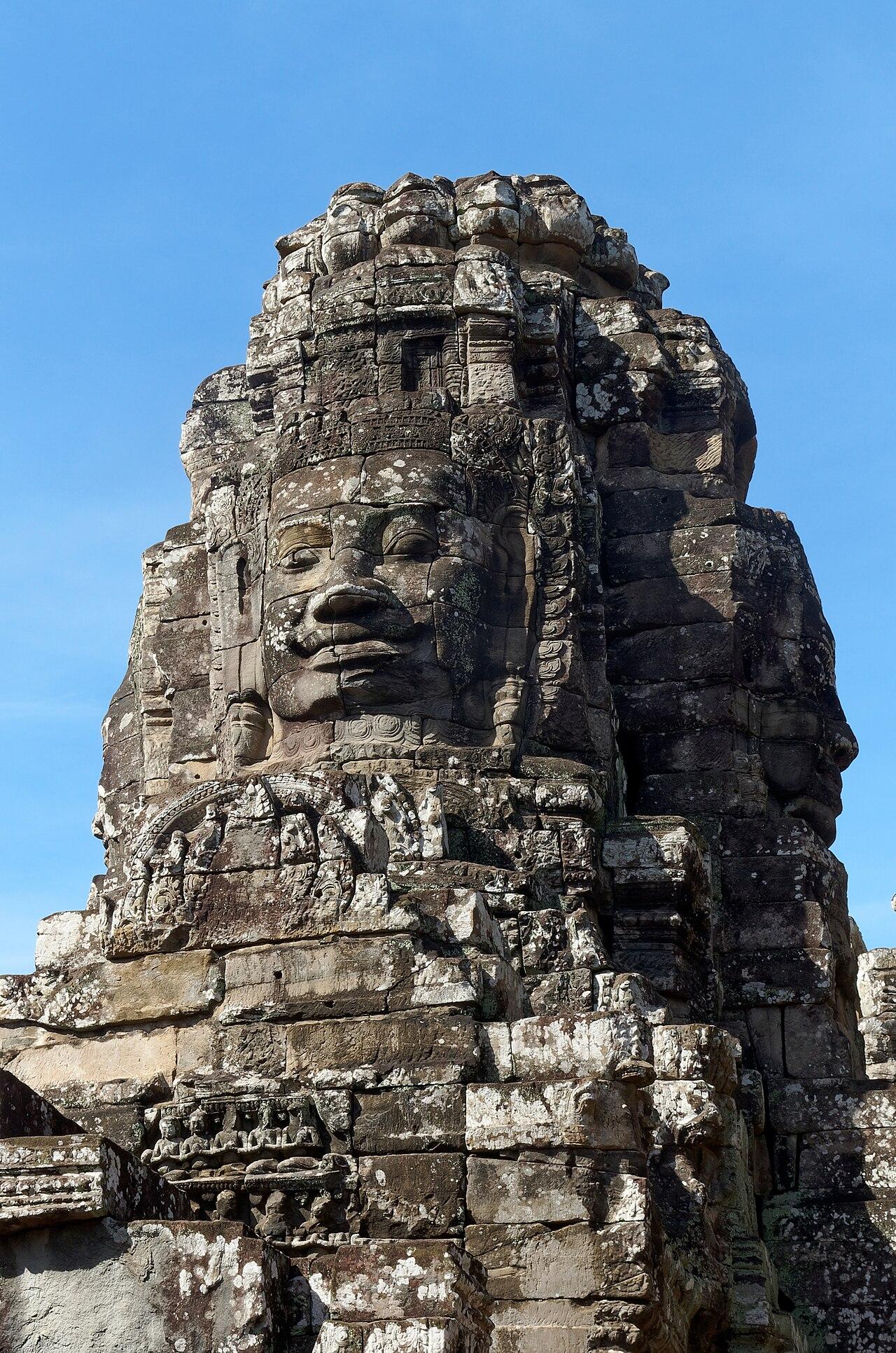
Photo: Jakub Hałun / Wikimedia Commons, CC BY-SA 4.0
A 3-day Angkor plan from Siem Reap
This plan assumes a 3-day pass, a tuk-tuk or car with driver each day, and a return to town for lunch and a rest. It keeps the hardest early start to one day.
Day 1: Angkor Wat and Angkor Thom
- Sunrise at Angkor Wat, then explore the temple once the crowd thins.
- Late morning: Angkor Thom. Enter through the South Gate, with its rows of stone figures on the bridge. Spend most of your time at the Bayon, the temple of carved faces, then walk to the Baphuon and the Terrace of the Elephants.
- Afternoon: back to Siem Reap to eat and rest. If you still have energy, the old market area and the riverside are pleasant in the evening.
Day 2: Ta Prohm and the small circuit
- Early morning: Ta Prohm, the temple where trees grow through the walls. It is popular with tour groups from mid-morning, so arriving near opening time makes a real difference.
- Then: Ta Keo, Banteay Kdei and the reservoir at Srah Srang, all close together on the small circuit.
- Sunset (optional): Pre Rup is a good, less crowded choice. Phnom Bakheng has a cap on the number of visitors at the top, so expect to queue or arrive early.
Day 3: Banteay Srei and the grand circuit
- Morning: Banteay Srei, a small temple about an hour's drive north with very fine pink sandstone carving. It is outside the main loop, so add it to a day with a car.
- On the way back: Preah Khan, Neak Pean and Ta Som on the grand circuit, which see far fewer visitors than the core temples.
- Evening: a slow last dinner in town, or a show if you have the energy.
If you prefer a gentler pace, take a 7-day pass and spread the same stops over four or five mornings. It costs only a little more.
When to go: cool season and crowds
The cool, dry months from about November to February are the most comfortable time for long temple days, and also the busiest. Mornings are fresh and the afternoons are warm rather than draining. From March to May the heat builds and midday visits become hard work. The wet season, from around June to October, brings green landscapes, fuller moats and fewer visitors, with rain usually in heavy afternoon bursts rather than all day.
Whatever the month, the same rhythm works best: temples early, a long lunch break, and one more visit late in the afternoon.
Getting there and entry rules
Siem Reap is now served by Siem Reap Angkor International Airport (SAI), which replaced the old airport near town. It is further out, roughly an hour by road, so build that into your first and last day and book a transfer or the airport shuttle in advance.
Two current points for planning:
- Cambodia e-Arrival. Foreign visitors arriving by air are asked to complete the free Cambodia e-Arrival card online in the days before arrival. It is separate from the visa. Check the official site and your government's travel advice for the current window and visa rules for your passport.
- No overland route from Thailand for now. All land border crossings between Thailand and Cambodia, including Poipet, were closed when we checked in November 2026, with no reopening date announced. If you are combining Siem Reap with Bangkok, plan to fly. Several governments also advise against travel near the border area, so read your own country's advice.
If you are linking Cambodia with Thailand, our 3 days in Bangkok itinerary works well on either side of a Siem Reap stay. For the capital, see the 2 days in Phnom Penh sample trip.
Practical tips for temple days
- Dress: shoulders and knees covered for all temples, and especially for the upper level of Angkor Wat. A light scarf and loose trousers solve most problems.
- Water and shade: carry more water than you think. Shade inside the temples is patchy.
- Footwear: steep, uneven steps are common. Shoes with grip are better than sandals.
- Transport: a tuk-tuk for the day is the usual choice for the small circuit. For Banteay Srei and the grand circuit, a car with air conditioning is worth the extra cost in the heat.
- Guides: a licensed guide adds a lot on the first day, when the history and carvings are new. Many people go on alone after that.
- Keep the ticket safe. It is checked at most temples, and a lost pass is not replaced.
Angkor pass FAQ
Is the 1-day pass enough? It is enough to see Angkor Wat, the Bayon and Ta Prohm if you start early and move quickly. It is not enough to see the outer temples without rushing.
Do I need to use the 3-day pass on consecutive days? No. Any three days within the 7-day window count.
Can I buy the pass online? Yes, through the official Angkor Enterprise website, which issues an e-ticket. Avoid third-party sellers.
Is sunrise worth it? For most people, once. If you are not an early riser, the late-afternoon visit with a next-day pass is a good alternative, and Ta Prohm at opening time can feel just as special.
You can save your temple order, pickup times and transfer details in RoamerPlanner so your driver plan and pass dates stay in one place.
Sources: Angkor Enterprise official ticket page and FAQ; Royal Embassy of Cambodia border crossing list (as of October 2026); Bangkok Post, 1 November 2026, on the Thailand-Cambodia border; Cambodia e-Arrival official site; Government of Canada travel advice for Cambodia. Checked 13 November 2026.
Cover photo: Christophe95 / Wikimedia Commons, CC BY-SA 4.0
可复制的行程
这里有现成的每日行程。免费复制,再按你的旅行修改。