Where to Stay in Seoul: Myeongdong vs Hongdae vs Insadong vs Gangnam
October 21, 2026
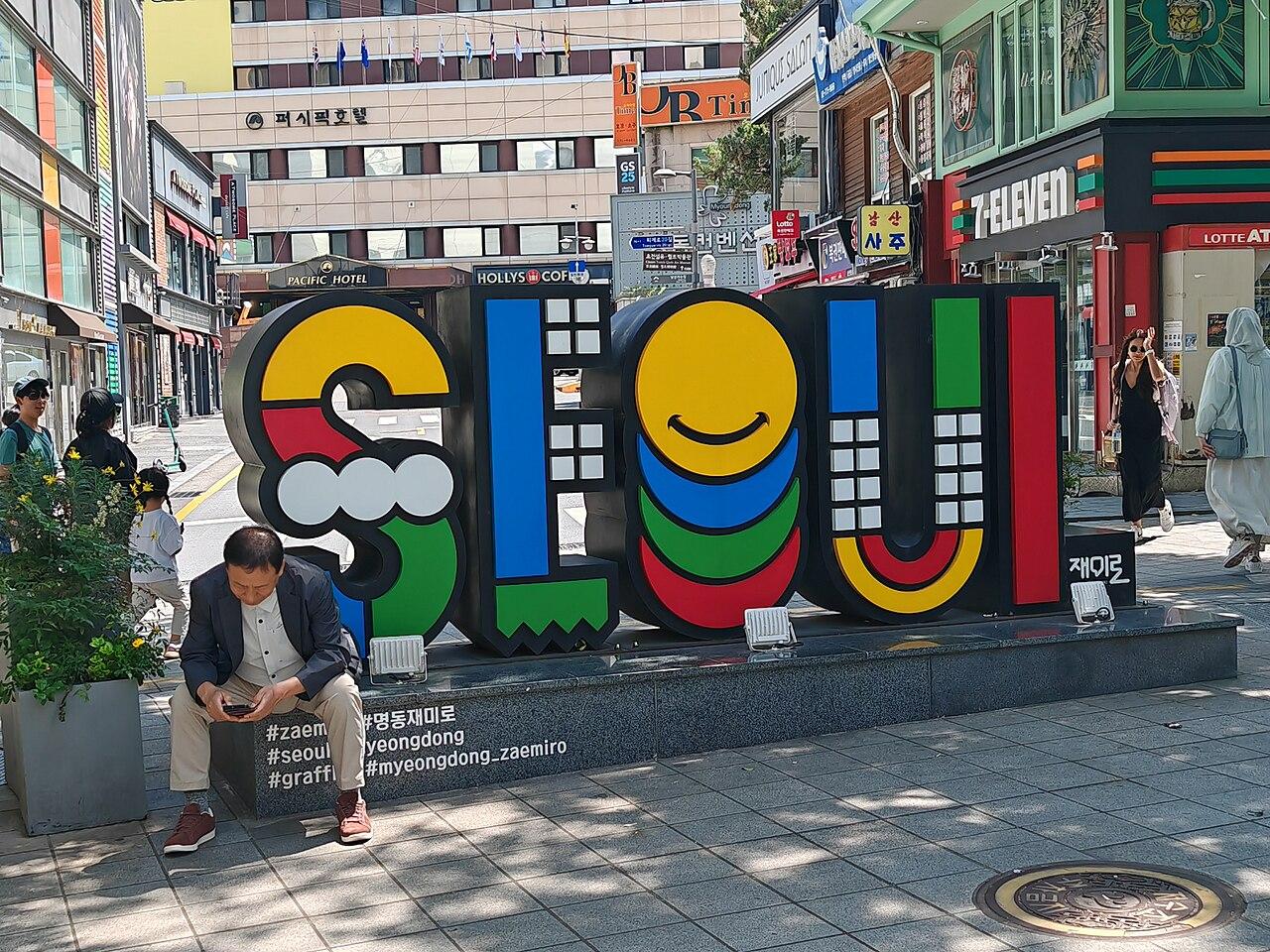
If you are deciding where to stay in Seoul, most first trips come down to four areas: Myeongdong, Hongdae, Insadong and Gangnam. They sit on different sides of the city, and each one changes how your days feel. This guide compares them in plain terms so you can book a base that matches what you want to do.
The short answer
- Myeongdong: central, easy for shopping and short stays. Strong metro links and lots of food nearby.
- Hongdae: cafes, nightlife and a younger feel. Direct Airport Railroad access from Incheon.
- Insadong (and Jongno nearby): palaces, galleries, tea houses and quieter walks. Best for culture-heavy days.
- Gangnam: modern hotels, COEX, clinics and south-of-the-river plans. Less ideal if your list is mostly old Seoul.
For a first visit focused on palaces and markets, Myeongdong or Insadong usually saves the most time. Choose Hongdae if evenings matter more than morning palace walks. Choose Gangnam if your trip is built around meetings, shopping malls or appointments south of the Han River.
Where to stay in Seoul: Myeongdong for a first hub
Myeongdong sits in Jung-gu, between City Hall, Namdaemun and Namsan. Myeongdong Station (Line 4) and Euljiro 1-ga (Line 2) put you on two of the system's busiest lines. From here, Jongno, Insadong and Gwanghwamun are short rides or long walks rather than cross-city journeys.
Why people stay here
- Street food, cosmetics shops and department stores are on your doorstep.
- Airport buses and many city routes stop nearby, so arrival day is simpler.
- You can walk toward Namsan, Namdaemun Market or Cheonggyecheon without planning a long transfer.
What to know
- The main streets stay crowded into the evening. If you sleep lightly, pick a room set back from the neon strip and read recent noise reviews.
- It can feel tourist-heavy. That is useful for convenience, less so if you want a quiet residential base.
- Hotel prices rise on weekends and around major holidays. Book early for cherry blossom and autumn foliage weeks.
Who it suits: first-timers, short trips (two to four nights), shoppers, travellers who want one central pin on the map.
Hongdae: cafes, nights and airport rail
Hongdae (around Hongik University Station) sits in Mapo-gu, west of the city centre. The station connects Line 2, the Gyeongui–Jungang Line and the Airport Railroad (AREX). That last link is why many arrivals choose it: you can ride from Incheon Airport without changing trains on the all-stop AREX service.
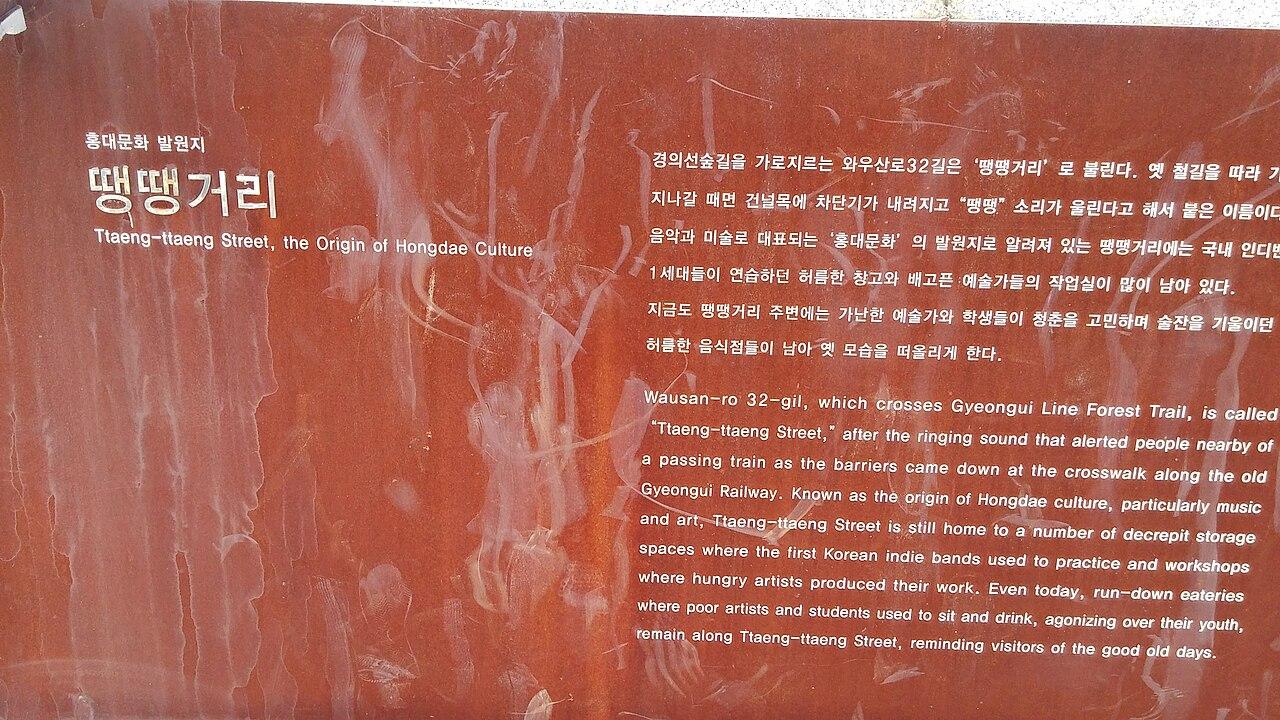
Photo: Christian Bolz / Wikimedia Commons, CC BY-SA 4.0
Why people stay here
- Independent cafes, street performers and late food options keep evenings easy.
- Nearby pockets such as Yeonnam-dong, Hapjeong and Mangwon add quieter walks and markets within a short hop.
- Accommodation ranges from hostels to design hotels, often at lower rates than Myeongdong for similar quality.
What to know
- Palaces and Insadong sit on the other side of a Line 2 ride. Plan culture days as full half-days, not quick stops between brunch and shopping.
- Weekend nights are loud near the main party streets. Stay closer to the station exits that face quieter blocks if that matters.
- Subway stations in Seoul are large. Check which exit your hotel lists before you drag luggage upstairs.
Who it suits: nightlife, cafe hopping, younger travellers, anyone who wants a simple airport-to-hotel transfer.
Insadong and Jongno: culture within walking distance
Insadong is a pedestrian-friendly lane of craft shops, galleries and tea houses between Anguk Station (Line 3) and Jonggak (Line 1). It sits next to Jogyesa Temple and within easy reach of Gyeongbokgung, Changdeokgung and Bukchon Hanok Village. VisitKorea and most city guides treat this Jongno cluster as the classic "old Seoul" base.
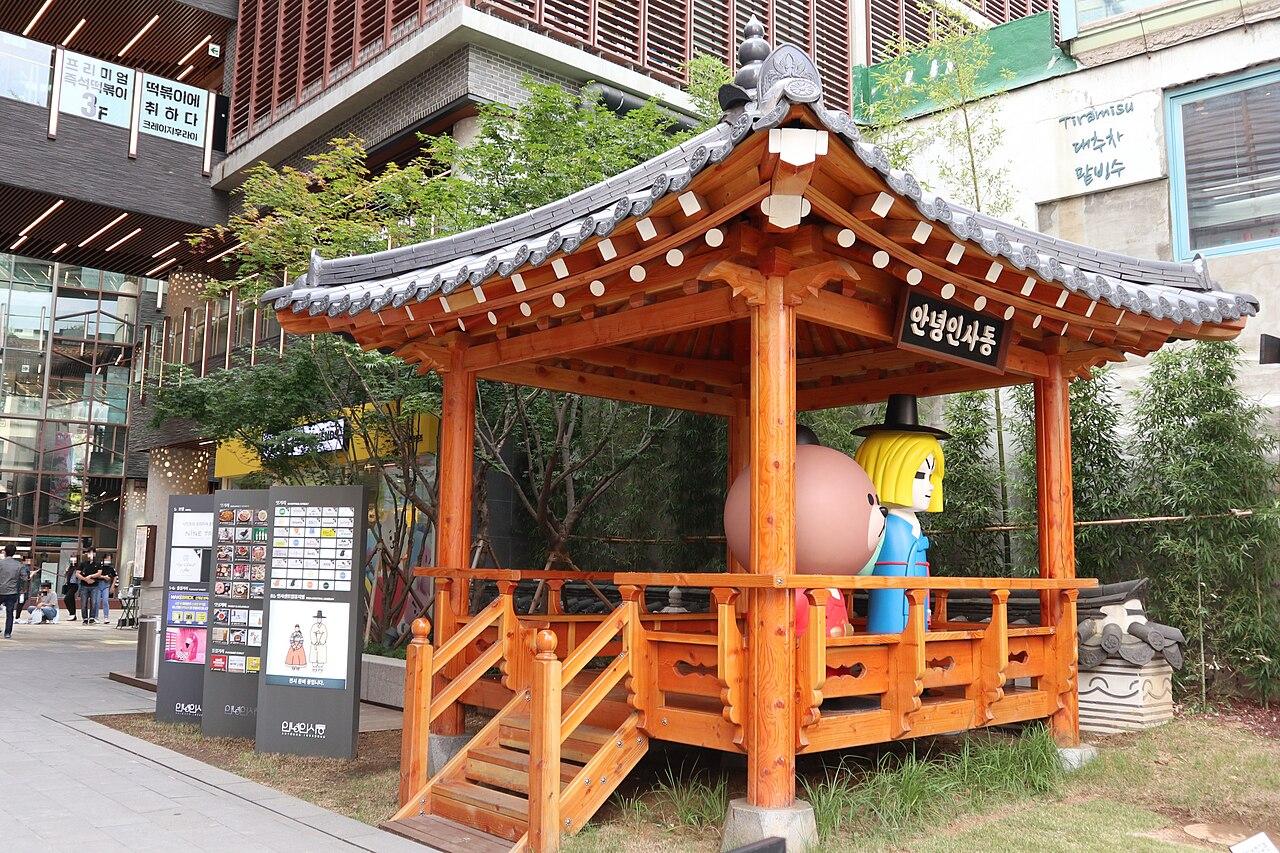
Photo: S h y numis / Wikimedia Commons, CC BY-SA 4.0
Why people stay here
- Morning palace visits start with a short walk or one metro stop, not a river crossing.
- The area feels calmer after dark than Myeongdong or Hongdae.
- You can mix museums, hanok streets and Seochon cafes without rewriting your whole day around transfers.
What to know
- Some guesthouses and hanok stays have stairs, smaller rooms and less elevator access. Confirm luggage handling before you book.
- Many galleries close on Mondays. Sundays often see the main street closed to cars, which is pleasant for walking and slower for taxis.
- English is common in tourist shops, but smaller inns may reply more slowly online. Allow extra time for confirmation emails.
Who it suits: culture-first itineraries, couples, travellers with parents, anyone who wants temples and palaces without a daily commute.
Gangnam: modern Seoul south of the river
Gangnam-gu stretches south of the Han River around Gangnam Station (Line 2 / Shinbundang) and east toward Samseong, COEX and Bongeunsa. It is polished, wide-streeted and full of hotels used for business and events. It is not "central" for palace sightseeing; it is its own city node.
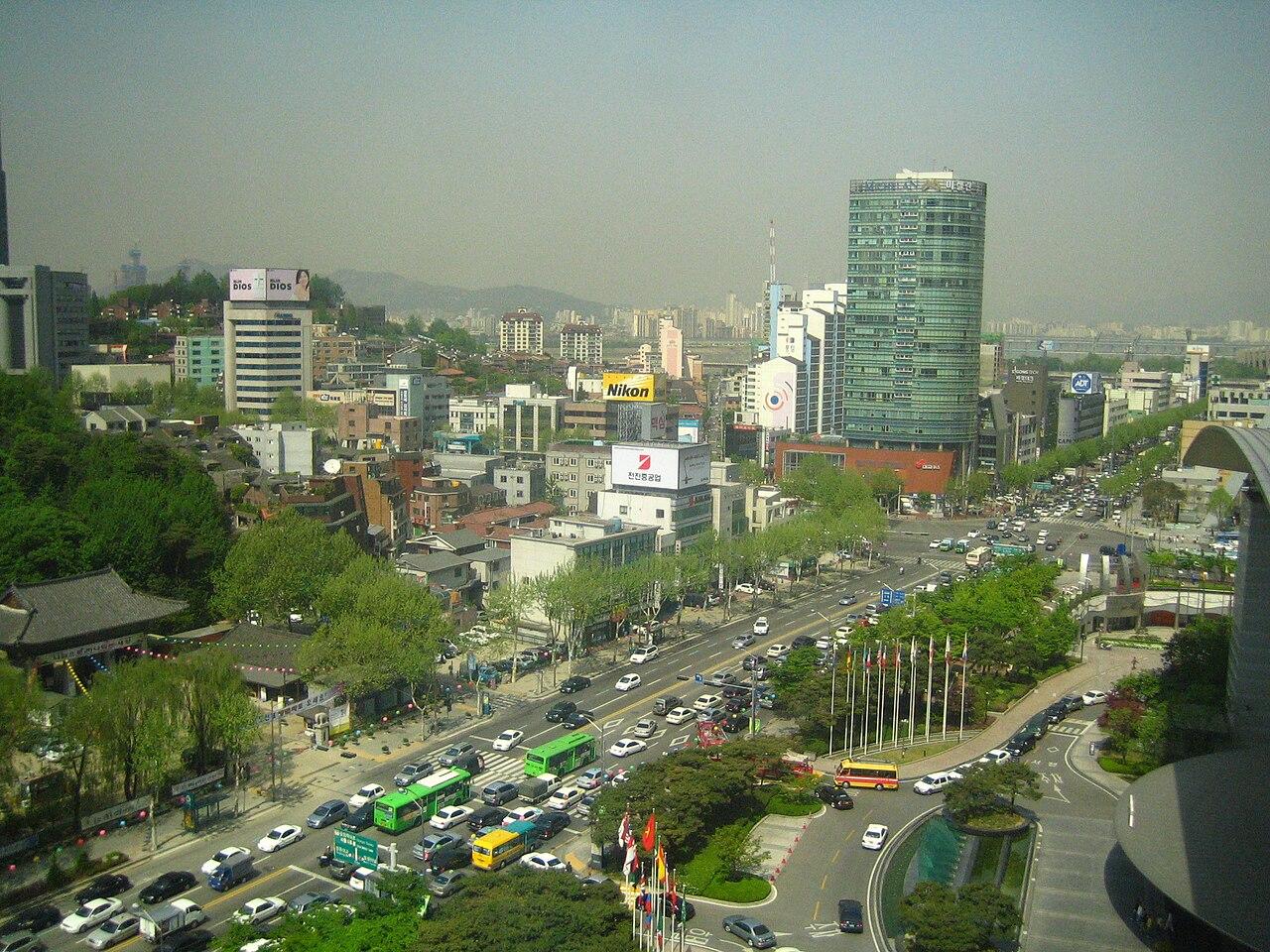
Photo: ayustety / Wikimedia Commons, CC BY-SA 2.0
Why people stay here
- Large hotels, reliable business amenities and easy access to COEX Mall and trade venues.
- Strong options if your trip includes clinics, conferences or concerts on the south side.
- Dining and shopping run late, with a different rhythm from old Seoul.
What to know
- Crossing to Gyeongbokgung or Insadong takes longer than many first visitors expect. Bundle south-side plans on their own day.
- Gangnam Station itself is huge. Being "near Gangnam" on a map can still mean a 15-minute walk with bags.
- Rates jump around major conventions and K-pop event weekends. Check the calendar for COEX and Jamsil venues.
Who it suits: business trips, mall and clinic itineraries, luxury hotel hunters, return visitors who already know Jongno.
How to choose between the four
Ask three questions before you book.
1. What fills your daylight hours? Palaces, Bukchon and museums point to Insadong or Myeongdong. Cafes and evenings point to Hongdae. COEX, Apgujeong or meetings point to Gangnam.
2. How do you arrive? AREX all-stop to Hongik University Station favours Hongdae. Airport buses into the centre favour Myeongdong. If you land late and only need sleep before a south-side meeting, Gangnam can still win.
3. How many nights? Two or three nights: pick one base and stay put. A week or more: some travellers split Myeongdong or Insadong for the first half and Hongdae or Gangnam for the second, but one well-chosen hotel is usually simpler.
Getting around from your hotel
Seoul's subway is the backbone. Lines 1 to 9 plus AREX and several private lines cover the tourist map. Download Naver Map or KakaoMap for walking and transit; Google Maps is weaker for last-metre directions in Korea. T-money cards work on metro and buses.
From Myeongdong, Line 4 and Line 2 cover most classic sights. From Hongdae, Line 2 is your east-west spine. From Insadong, Lines 1 and 3 reach palaces and the river. From Gangnam, Line 2 reconnects you to Hongdae and City Hall, and Shinbundang helps with some south-side hops.
Booking tips that save friction
- Prefer hotels that list an exact subway exit number, not only a neighbourhood name.
- For festival weeks and major concerts, book refundable rates early; area premiums are real.
- If you travel with large luggage, avoid the smallest hanok rooms unless the host confirms storage.
- Read recent reviews for construction noise. Seoul renovates often, and a quiet street can change in a month.
When you have picked an area, you can drop it into a day-by-day outline with RoamerPlanner and keep walking times realistic. A ready starting point is our 3 days in Seoul itinerary; for a longer East Asia loop, pair Seoul with 5 days in Tokyo or a 7-day Japan itinerary. Related reading: Where to stay in Tokyo and Seoul in winter.
FAQ
Is Myeongdong still worth it if it is crowded? Yes, if convenience matters more than atmosphere. You can sleep there and spend days in Jongno or Bukchon.
Is Gangnam bad for tourists? No. It is a poor match only if your list is mostly palaces and Insadong. It is a good match for modern Seoul.
Can I stay in Insadong with kids? Yes, if you choose a hotel with elevators and nearby metro access. Confirm stroller access for hanok properties.
Should I split the stay? Only if you have five or more nights and clearly different agendas. One base plus metro is enough for most first trips.
Sources
Neighbourhood character and transit hubs checked against VisitKorea destination guidance and Seoul metro line maps; Airport Railroad (AREX) stop list for Hongik University Station. Area tips cross-checked with current traveller guides on 21 Oct 2026. Hotel prices and event calendars change; confirm rates and venue schedules before you book.
Cover photo: Dwxn / Wikimedia Commons, CC BY-SA 4.0
อยากเอาที่พักนี้ไปใส่ในแพลนเที่ยวจริงไหม วางแผนต่อใน RoamerPlanner ได้เลย
เปิด RoamerPlanner