Vang Vieng Today: Lagoons, Balloons and the Laos-China Railway
November 21, 2026
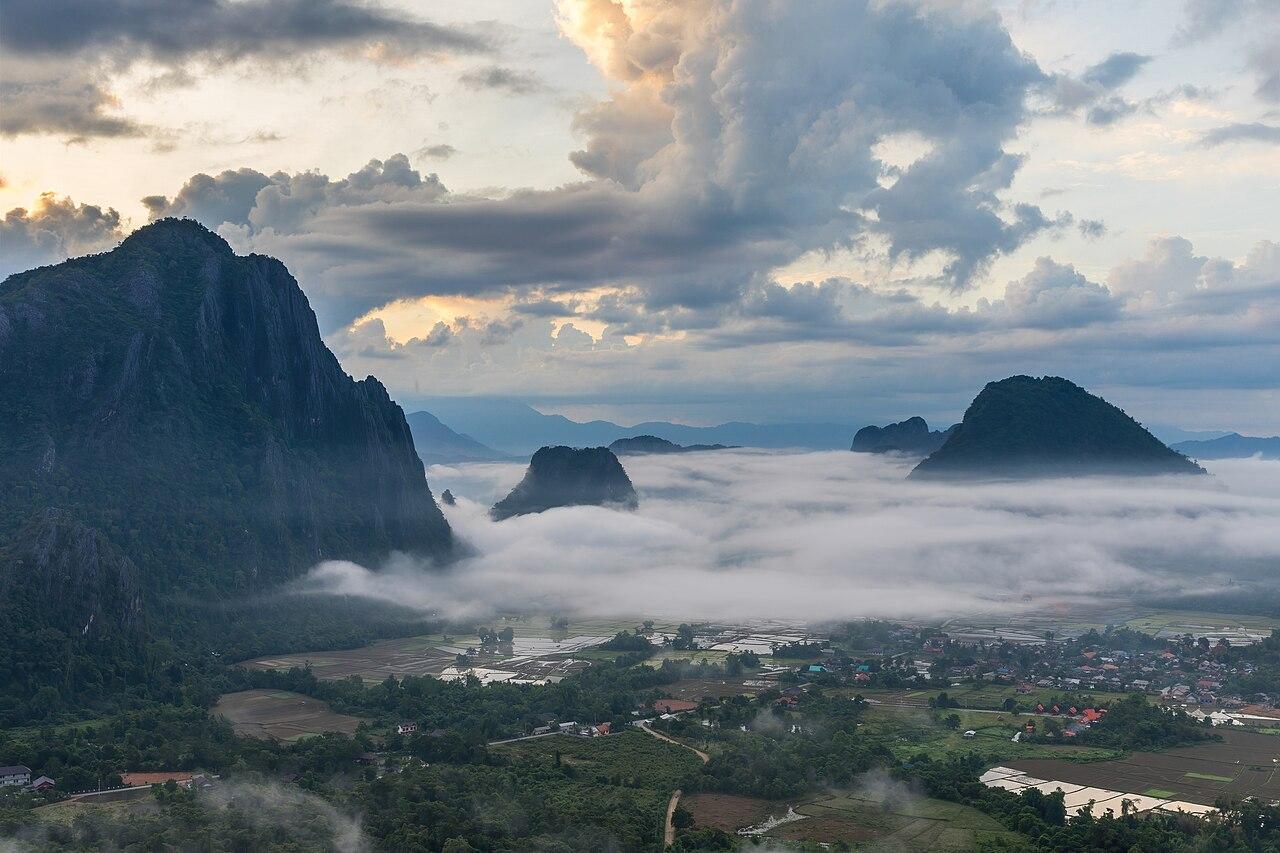
Vang Vieng is no longer the party town people warn you about. Since the Laos-China Railway opened, it sits about an hour by fast train from Vientiane, and most visitors now come for the limestone peaks, the river and the lagoons rather than the bars. This guide covers what Vang Vieng is like today, how the train works, what to do over two days, and the safety advice that still matters.
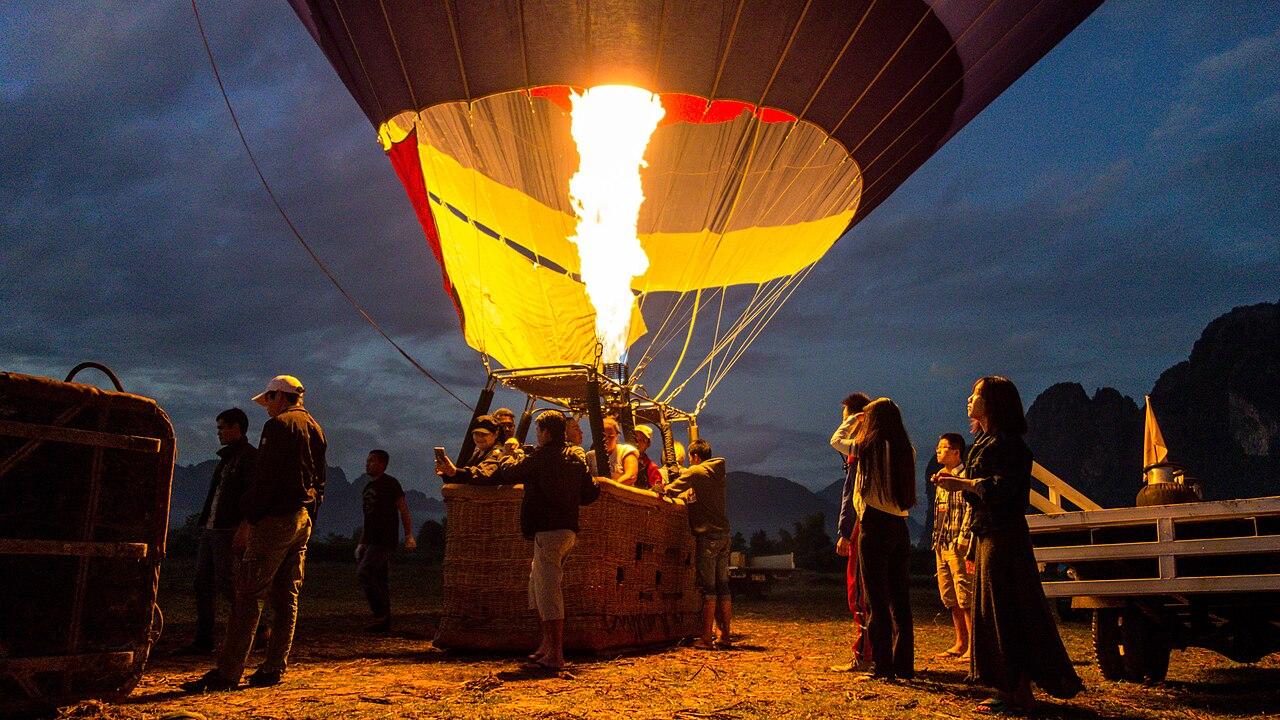
Photo: Visions of Domino / Wikimedia Commons, CC BY 2.0
What changed in Vang Vieng
For years the town was known for river tubing with bars along the bank. That scene was scaled back long ago, and the town has filled in with guesthouses, cafes, Korean and Chinese tour groups, and a lot of outdoor activities: kayaking, caving, zip lines, motorbike loops and sunrise balloon flights.
The other big change is access. The road from Vientiane used to take most of a day. Now there is an expressway and, more usefully for visitors, the railway. Vang Vieng has become an easy stop between Vientiane and Luang Prabang instead of a detour.
What has not changed is the scenery. The Nam Song river runs past the western edge of town, and the karst cliffs on the far bank are the reason to come. Two full days is enough for most people. Add a third if you want a slow day by the river or a backup morning for the balloon.
Getting there on the Laos-China Railway
The railway runs north from Vientiane through Vang Vieng and Luang Prabang to the Chinese border. Fast trains take a little under an hour from Vientiane to Vang Vieng, and about the same again on to Luang Prabang.
A few things to know before you plan around it:
- Tickets open only a few days ahead. For trips inside Laos, sales usually open in the early morning several days before departure. The exact window has changed more than once, so check the official LCR Ticket app for your date.
- Seats sell out in the cool season. November to February is the busy period, and weekend morning trains go first. Book the moment your date opens.
- The app can be fussy. You register with your passport details. Some foreign cards fail and some travellers report needing a Lao phone number. If it does not work, station ticket offices and hotel or agency desks in town can buy tickets for a small fee.
- Bring your passport. The ticket is tied to your passport number and staff check it at the entrance. There is an airport-style security check, so arrive about 45 minutes early.
- The station is outside town. Allow time for a shared van or taxi at each end.
Second class is cheap and comfortable for a one-hour ride, roughly the price of a decent lunch in Bangkok. Fares have gone up since the line opened, so check the current price in the app rather than relying on older blog posts.
Day 1: The river, a cave and a lagoon
Start early. Mornings in the cool season can be misty, and the light on the cliffs is best before mid-morning.
Tham Chang cave. This is the easiest cave to visit from town, across a small bridge at the southern end. Steps lead up to a cave with a viewpoint over the valley, and there is a small spring-fed pool at the bottom. Entry is a small fee.
Kayaking the Nam Song. Half-day kayak trips usually start upstream and float back towards town, often combined with a water cave where you pull yourself through on a rope while sitting in a tube. In the cool season the river is lower and calmer than in the rains, which makes it a good time for beginners. Wear a life jacket even if the operator treats it as optional.
Blue Lagoon 1 in the afternoon. The best-known lagoon is a short ride west of town, past the toll bridge. The water is cold and clear, there is a rope swing, and Tham Phu Kham cave sits up the hill behind it. It gets busy in the middle of the day with tour groups, so late afternoon is calmer. Entry is cheap and paid in kip.
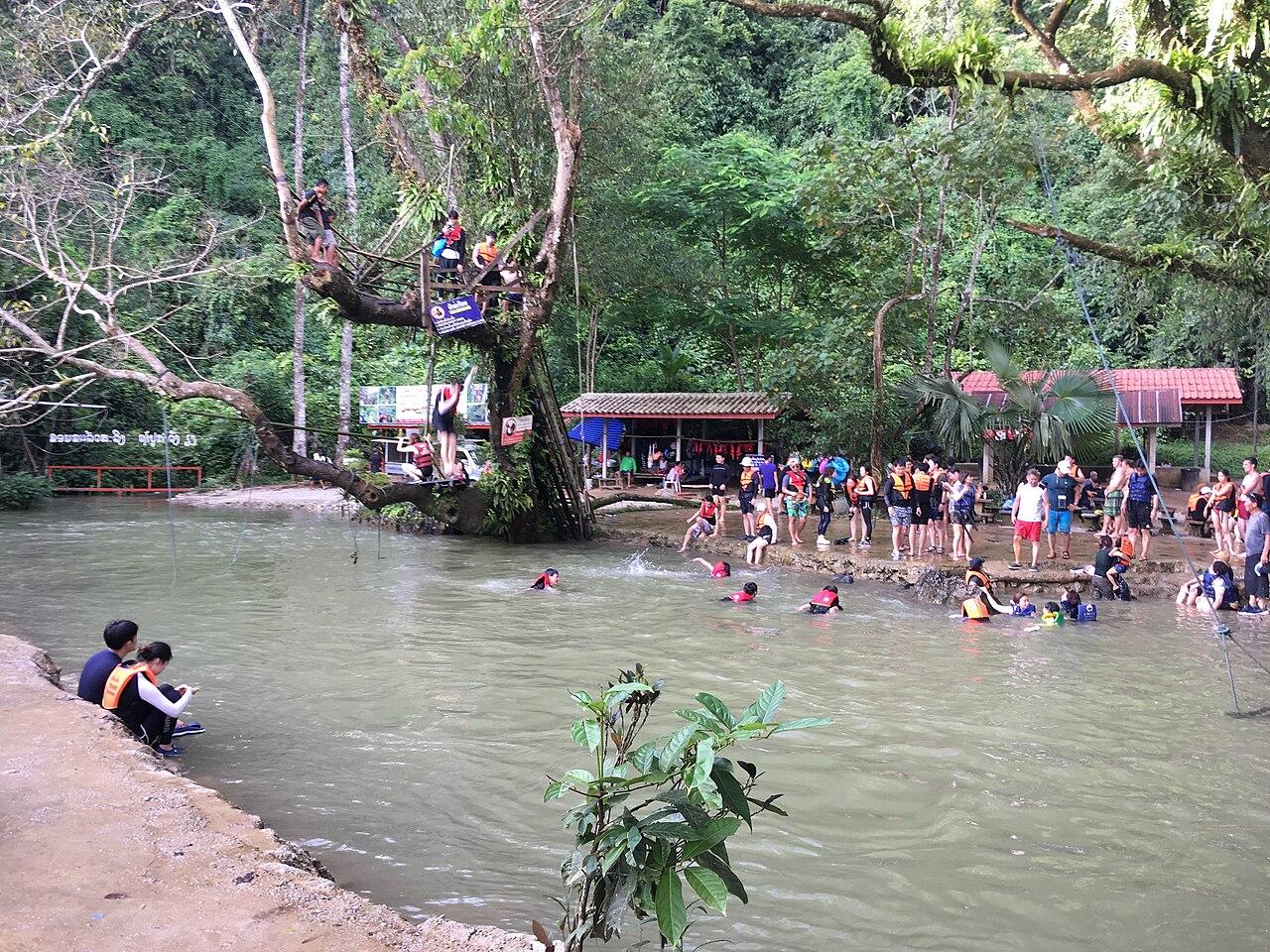
Photo: Christophe95 / Wikimedia Commons, CC BY-SA 4.0
Sunset by the river. Back in town, the riverside bars and restaurants on the western edge look straight at the cliffs. This is the classic Vang Vieng evening, and it is a good one.
Day 2: Balloon, viewpoint and the countryside loop
A sunrise balloon flight. Vang Vieng is one of the few places in Southeast Asia where you can fly over karst country in a hot air balloon. Flights run at dawn from fields outside town and last around 45 minutes to an hour in the air. Prices vary a lot between sellers. One licensed operator listed about US$150 per adult in late 2026, while some older listings quote much less. Ask what is included, who operates the balloon, and what happens if the flight is cancelled. Fog and wind can stop flights, so book it for your first morning and keep the second as a backup.
Nam Xay viewpoint. If you would rather earn your view, the climb to Nam Xay viewpoint is steep but short, under an hour for most people. The top looks over the whole valley, and there is a famous motorbike prop at the summit for photos. Wear proper shoes; the path is rough.
The western loop. Hire a scooter, a bicycle or a tuk-tuk for the afternoon and follow the road west through rice fields and villages. Several smaller lagoons and caves sit along the way, some calmer than Blue Lagoon 1. Only ride a scooter if you are experienced and insured for it; the roads are gravel in places and there is little help if you crash.
Is it worth staying the night?
Some people visit Vang Vieng as a day trip from Vientiane on the train. You can do it, but you will spend a lot of the day on transfers and miss the best light at both ends. One night lets you see the cliffs at sunset and try for a balloon at dawn. Two nights is the comfortable choice.
Where you stay matters less than in bigger cities, because the town is small. The main split is between the centre, which is convenient and can be noisy at night, and the quieter guesthouses across the river or along the western roads, which have better views but need transport. If you plan to fly in a balloon, most operators pick up from any hotel in town.
Safety: what still matters in Vang Vieng
This part is not optional reading.
Methanol in drinks. In November 2024, several foreign tourists died after drinking alcohol contaminated with methanol in Vang Vieng. The Australian and Canadian governments still name this risk in their current Laos advice. Their guidance is simple: avoid free or very cheap spirits and cocktails, buy drinks only at licensed bars and restaurants, choose sealed bottles and cans, and do not drink Tiger Vodka or Tiger Whisky, which Lao authorities have banned. Methanol has no taste or smell. If you or a friend feel unwell after drinking, especially with blurred vision or severe headache, get medical help immediately.
Drugs and spiked food. "Happy" shakes and pizzas are still offered in some places. They can contain unknown amounts of opiates, and foreigners have died after taking them. Do not accept food, drinks or cigarettes from strangers.
Rivers and jumping. People have been seriously hurt tubing, jumping or diving into the river. Water levels change during the year and debris is often hidden below the surface. Do not combine alcohol with river activities.
Xaisomboun Province. Australia advises travellers to reconsider travel to Xaisomboun Province, east of Vang Vieng. Some motorbike loops head in that direction, so check your route before you go.
Read your own government's latest advice before you travel, and make sure your insurance covers the activities you plan to do.
Combining Vang Vieng with the rest of Laos
The railway makes a simple route easy: a night or two in Vientiane, two nights in Vang Vieng, then three nights in Luang Prabang. Each leg is about an hour on a fast train, so you lose very little time.
If you are working out the timing, these sample plans are a good starting point:
- 2 days in Vientiane for temples, the riverside and Buddha Park before you head north
- 2 days in Vang Vieng, which follows a similar shape to the plan above
- 3 days in Luang Prabang for the morning alms, Kuang Si Falls and the old town
We also have guides to Vientiane in 2 days and Luang Prabang in the cool season. If you want to keep train times, booking references and day plans in one place, you can copy a sample trip into RoamerPlanner and edit it.
Quick answers
When is the best time to visit Vang Vieng? November to February is cool and dry, with misty mornings and clear afternoons. March and April get hot and hazy from agricultural burning. The rainy months from June to September are green but the river runs high and some activities stop.
How many days do I need? Two nights is the sweet spot. One night works if you are short on time.
Do I need cash? Yes. Many small places, lagoon entrances and tuk-tuks take only kip. ATMs are available in town, but carry some cash for the day.
Can I buy train tickets on the day? Sometimes, but do not count on it in the cool season. Buy as soon as sales open for your date.
Sources checked 17 November 2026: Smartraveller Laos travel advice (updated 18 August 2026), Government of Canada Laos travel advice (updated 15 October 2026), Lao News Agency (KPL) report on the Vang Vieng alcohol safety campaign (May 2026), LCR Ticket app listing, and published balloon operator prices. Train ticket windows and fares change often; check the LCR Ticket app before you travel.
Cover photo: Basile Morin / Wikimedia Commons, CC BY-SA 4.0
More about Laos: all articles and trip plans
Trips you can copy
Ready-made day-by-day plans for this place. Copy one for free and change it to fit your trip.
Turn this into a plan
Ready to turn this into a real itinerary? Plan it in RoamerPlanner.
Start your own plan, no account neededBrowse sample trips