Sukhothai Historical Park by Bike: Zones, Tickets and a 2-Day Plan
November 12, 2026
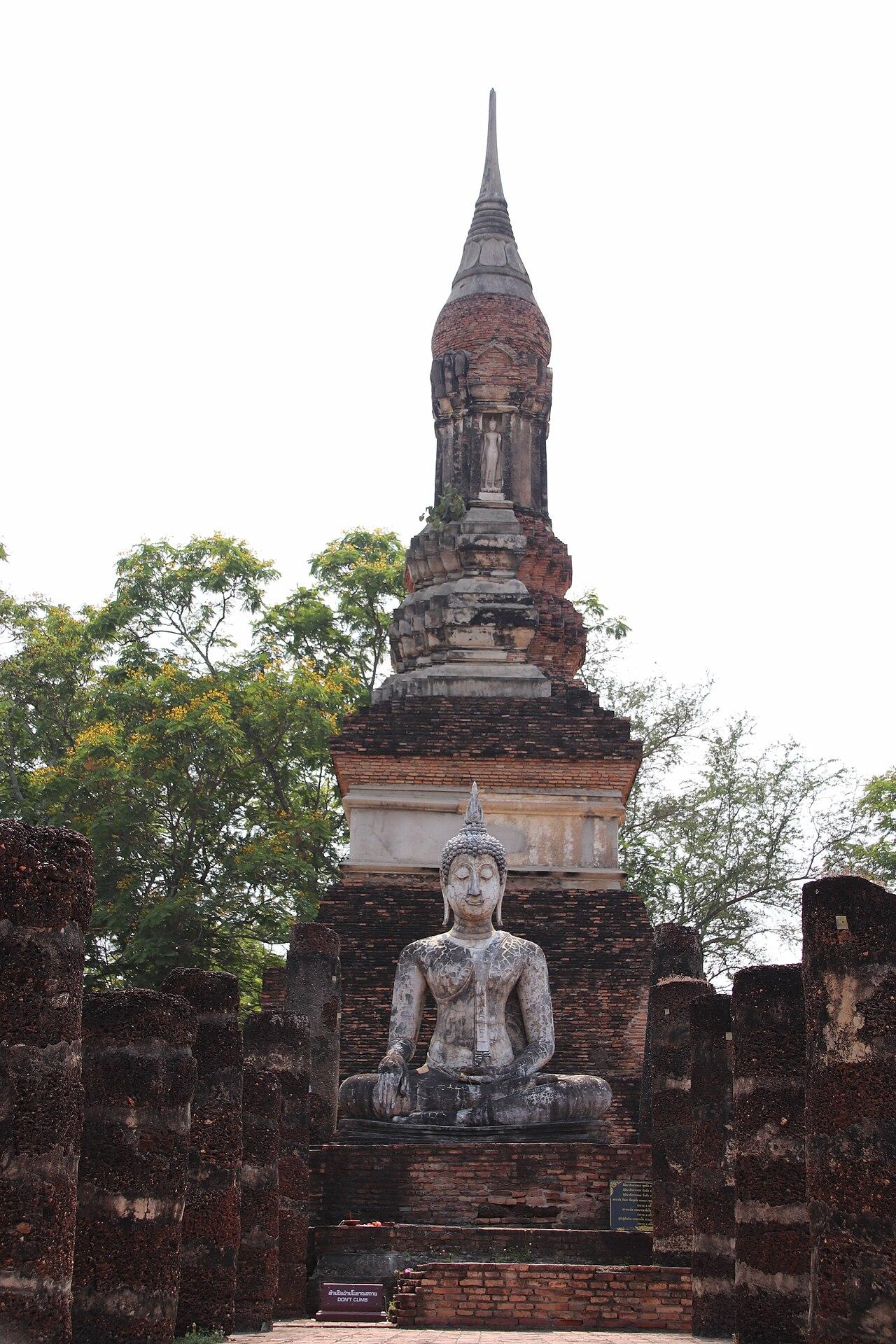
Sukhothai Historical Park is one of the easiest heritage sites in Thailand to explore on two wheels. Flat lanes link brick temples and lotus ponds across several ticketed zones, so a bicycle turns a long walk into a calm day. Two days is enough for the main park plus a look at nearby Si Satchanalai if you want a quieter second set of ruins.
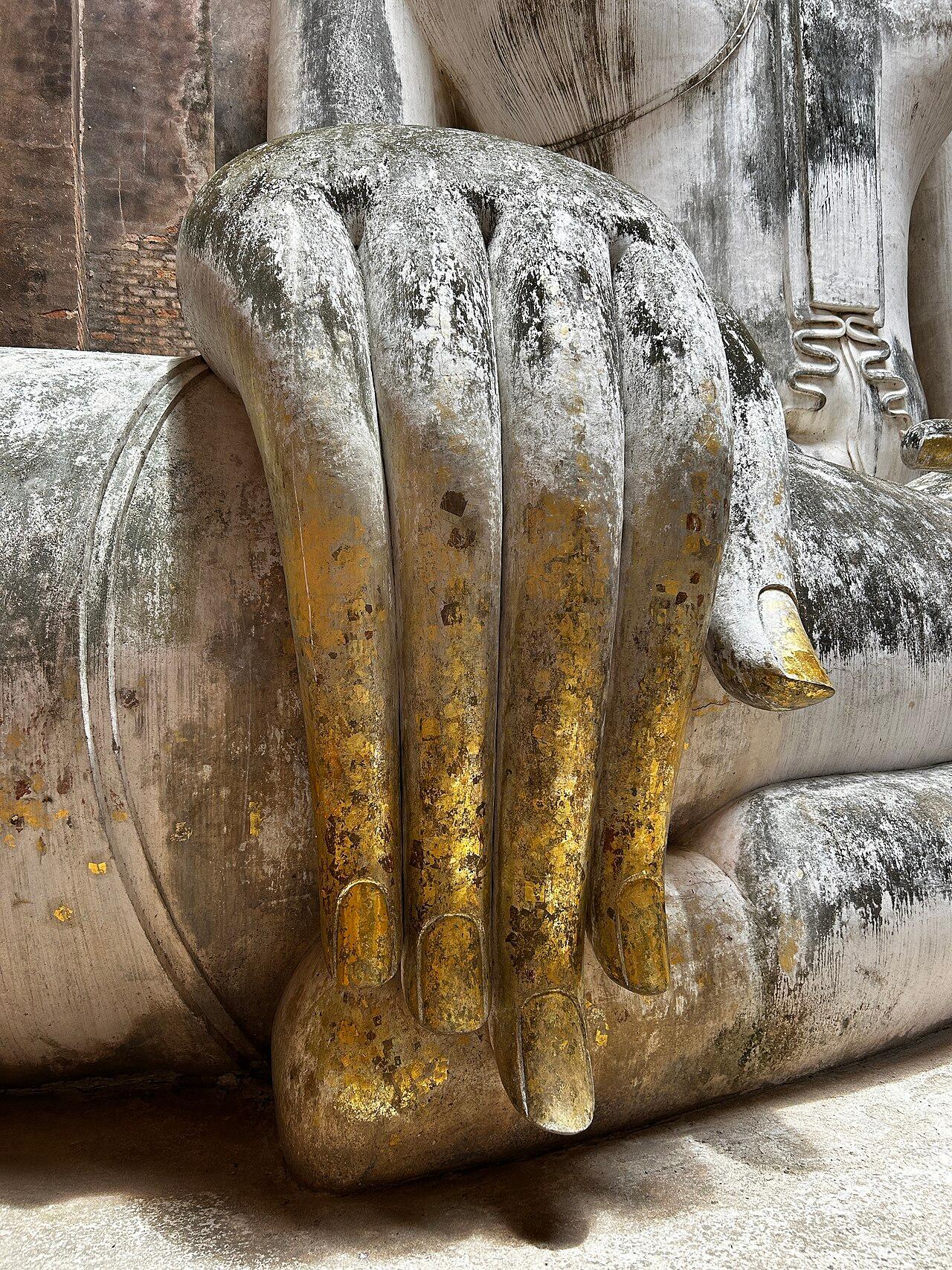
Photo: Gzzz / Wikimedia Commons, CC BY-SA 4.0
Sukhothai Historical Park by bike: how the zones work
The park is not one single gate. Tickets are sold by zone, and a small vehicle fee applies when you take a bike through each paid gate. Plan which zones you actually want before you buy a combined ticket.
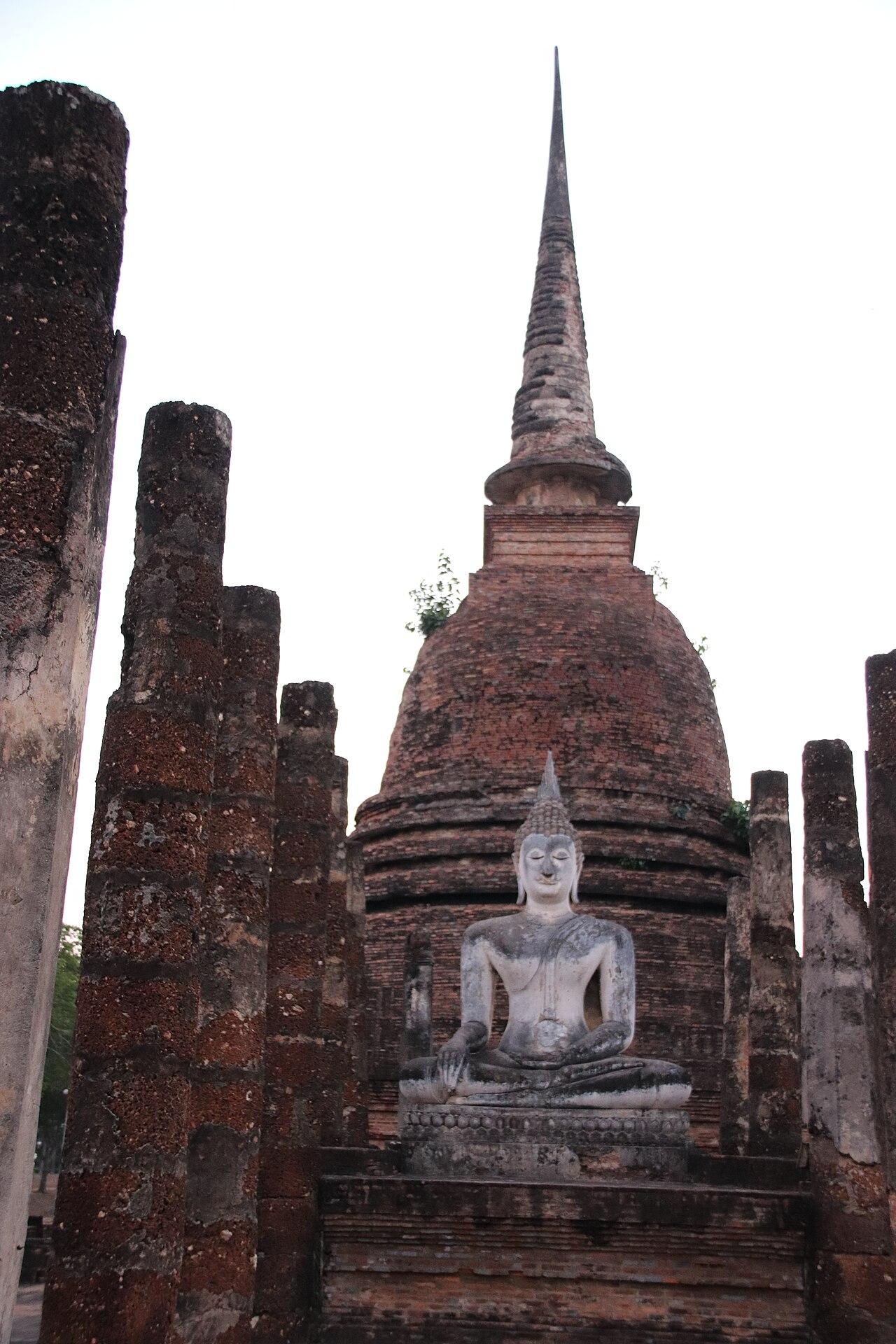
Central (inner) zone. Wat Mahathat, Wat Sa Si, Wat Si Sawai and the Ramkhamhaeng monument sit here. This is the core photo loop and the best first morning.
Northern zone. Wat Si Chum (the seated Buddha in a mandapa) and Wat Phra Phai Luang. A short ride north of the centre; worth the separate ticket for most visitors.
Western zone (Aranyik). Forest temples including Wat Saphan Hin. Expect a climb at the end; the bike gets you close, then you walk.
Southern and eastern ruins outside the ticket booths are free and quieter if you have spare afternoon time.
Tickets and bike fees (check on the day)
Under the Fine Arts Department fee schedule published after the 2025 update, foreign visitors commonly pay about 200 baht for the central zone and 120 baht each for the north and west zones, or about 400 baht for a combined three-zone ticket. Thai nationals pay much less. Taking a bicycle into a paid zone adds about 10 baht per zone. Ramkhamhaeng National Museum is a separate ticket (often around 150–200 baht for foreigners; confirm at the desk).
Hours vary by zone. The central area typically opens early morning and runs into early evening (later on Saturdays when ruins are lit). North and west zones usually close earlier in the afternoon. Always re-check the Fine Arts Department / park notice board; fees and hours can change.
Renting a bike and a simple day loop
Shops east of the main entrance rent basic bicycles for roughly 30–50 baht a day (K-Shop and neighbours are the usual options). Test brakes and tyres, take a lock, and ask for a paper map.
A practical one-day loop:
1. Enter the central zone at opening for soft light on Wat Sa Si and Wat Mahathat. 2. Mid-morning: ride north for Wat Phra Phai Luang and Wat Si Chum. 3. Midday: museum or lunch in the old town; avoid the hottest stretch on the bike. 4. Late afternoon: west to Wat Saphan Hin, or free southern temples if legs are tired. 5. Saturday evening: return to the lit central zone if you still have energy.
Bring water, sunscreen and a hat. Distances between zones are only a few kilometres, but heat adds up.
A practical 2-day plan
Day 1: central and northern zones
Morning in the central zone without rushing. Keep Wat Mahathat and the ponds unhurried. After a break, buy the northern ticket and ride to Wat Si Chum before the afternoon close. Sleep in Old Sukhothai (near the park) if you want dawn access, or in New Sukhothai if you prefer more restaurants and need a songthaew or Grab-style ride back.
Day 2: west zone or Si Satchanalai
Option A: western Aranyik temples, then free southern stops and a slow café afternoon.
Option B: day trip to Si Satchanalai Historical Park (about an hour north). It is part of the same UNESCO grouping and feels emptier. Confirm current bus or songthaew options, or hire a driver for the day if you want flexible temple timing.
Use the 2 days in Sukhothai sample as a skeleton and trim west-zone climbs if you only want one hard ride.
Getting to Sukhothai
From Bangkok. Bangkok Airways flies to Sukhothai Airport (near the new town). Trains and buses also reach the province; the park itself sits in Muang Kao (Old Sukhothai), not next to the airport. Budget a transfer.
From Chiang Mai or the north. Bus connections exist; journey times are long enough that an overnight stop often makes sense. Pairing Sukhothai after Chiang Mai or a Bangkok temples block works if you treat it as its own destination rather than a rushed add-on.
When to go and seasonal notes
Cool season (roughly November to February) is the most comfortable for cycling. Loy Krathong in Sukhothai is a major local event held in and around the historical park; government listings for 2026 pointed to mid-to-late November with the main night around 24 November. Festival nights mean crowds, ticketed shows and higher room rates. If you want empty lanes, avoid those peak evenings or arrive early and leave before night programmes start. Confirm festival dates on the Tourism Authority of Thailand or provincial listings before you lock flights.
Hot season cycling is possible with very early starts and long midday breaks. Rainy days make brick paths slippery; walk where needed.
Where to stay
Old Sukhothai (Muang Kao) puts you next to bike shops and dawn entry. New Sukhothai has more food variety and transport links to the airport and bus station. Many visitors sleep in the new town and songthaew to the park for the day.
Planning tips that save time
- Buy only the zones you will enter; the combined ticket helps if you are sure about all three.
- Photograph ticket stubs; staff sometimes check when you move between areas.
- Do not treat the park as a checklist race. Ten temples done badly feel worse than five done slowly.
- Keep Si Satchanalai optional; it is excellent, not mandatory.
- Put park hours, bike rental and hotel nights on one timeline in RoamerPlanner so transfers do not collide with gate closing times.
What to expect at the main temples
Wat Mahathat is the ceremonial heart of the central zone: brick towers, surrounding chedis and lotus ponds that catch morning light. Walk the circuit once without photographing every angle, then return to the spots you liked.
Wat Sa Si sits on an island-like setting that photographs well early, before tour groups thicken. Wat Si Sawai is known for its Khmer-influenced towers and is an easy stop on the same central loop.
In the north, Wat Si Chum is the reason many people buy the second ticket: a large seated Buddha framed by a narrow opening. Be patient if there is a short queue for the viewing spot. Wat Phra Phai Luang feels more sprawling and quieter.
None of these stops need a long lecture to enjoy. Read a short history note the night before, then let the site do the work.
FAQ
Can I see Sukhothai Historical Park in half a day?
You can cover the central zone in a morning. You will miss the northern Buddha hall and most of the west. Half a day is a taste, not a full visit.
Is a tram better than a bike?
A central-zone tram or golf-cart tour helps in extreme heat or with limited mobility. A bike is still the flexible default for central-plus-north.
Do I need a guide?
Not required for a first visit if you read a simple map. A guide helps if you want inscriptions and kingdom history explained on site.
Is Sukhothai worth it if I already saw Ayutthaya?
Yes, if you like quieter ruins and cycling. Ayutthaya is easier as a Bangkok day trip; Sukhothai rewards an overnight.
Sources checked 7 Nov 2026: Fine Arts Department / virtualhistoricalpark.finearts.go.th park map and fees; Thai government open data fee table for Sukhothai Historical Park; TAT notes on bike rental; UNESCO Historic Town of Sukhothai listing; provincial festival listings for Loy Krathong timing (confirm closer to travel).
Cover photo: Gary Todd / Wikimedia Commons, public domain
ดูบทความและแพลนเที่ยวไทยทั้งหมด
ทริปที่คัดลอกไปใช้ได้
แผนเที่ยวรายวันพร้อมใช้สำหรับที่นี่ คัดลอกได้ฟรีแล้วปรับให้เข้ากับทริปของคุณ
เปลี่ยนบทความนี้เป็นแผนทริป
อยากเอาเรื่องนี้ไปใส่ในแพลนเที่ยวจริงไหม วางแผนต่อใน RoamerPlanner ได้เลย
เริ่มวางแผนของคุณเอง ไม่ต้องสมัครก่อนดูทริปตัวอย่าง