Kanazawa in Winter: Kenrokuen Snow Ropes, Crab Season and 2 Days
November 13, 2026
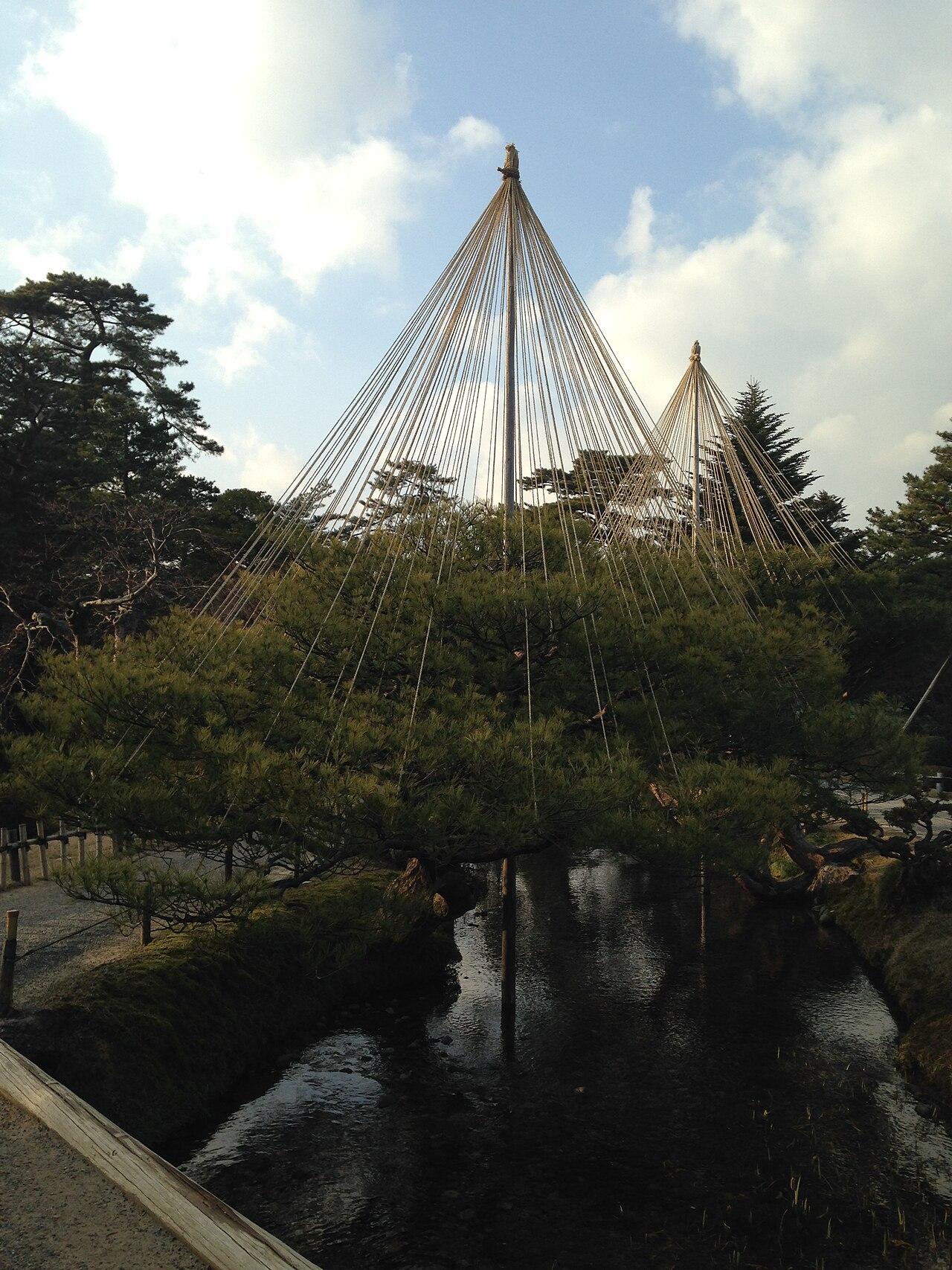
Kanazawa in winter is snow ropes in Kenrokuen, crab season at the market and short daylight that forces an earlier evening plan. Two days work well if you protect a morning garden slot and keep one flexible block for rain or wet snow.
Photo: そらみみ / Wikimedia Commons, CC BY-SA 4.0
Kanazawa in winter: what to prioritise
Three anchors cover most first visits:
1. Kenrokuen with yukitsuri (snow ropes) from November into March. 2. Omicho Market for seafood breakfasts while crab is in season. 3. Higashi Chaya or Nagamachi lanes for a compact historic walk between weather breaks.
Everything else (21st Century Museum, castle park grounds, gold-leaf craft stops) fits around those three.
Kenrokuen snow ropes and hours
Gardeners install yukitsuri from 1 November, starting with the famous pines, and keep the ropes up into mid-March. December shows the finished cones; January and February are the likelier months for snow on the ropes. Visit Kanazawa lists the installation window through mid-December for the main work, with the ropes remaining as the winter scene.
Official Kenrokuen guidance (Ishikawa Prefecture) for mid-October through end of February: paid hours 08:00–17:00. Adults 320 yen, ages 6–17 100 yen, ages 65+ free with ID. Cash is still the safe default at the gate even when other payment options appear on Japanese notices.
Free early entry runs from 06:00 in November–February through Renchi-mon and Zuishinzaka only. You must leave 15 minutes before paid opening (by about 07:45). Stay within walking distance of the garden if you want that slot; the first buses from the station arrive later than you need.
Shigure-tei teahouse inside the garden keeps separate hours (about 09:00–16:30, last entry 16:00) and closes 29 December–3 January. Do not plan a teahouse stop on the free early walk; exit and re-enter later if you want both.
Confirm hours and fees on the official Kenrokuen guidance page before you go.
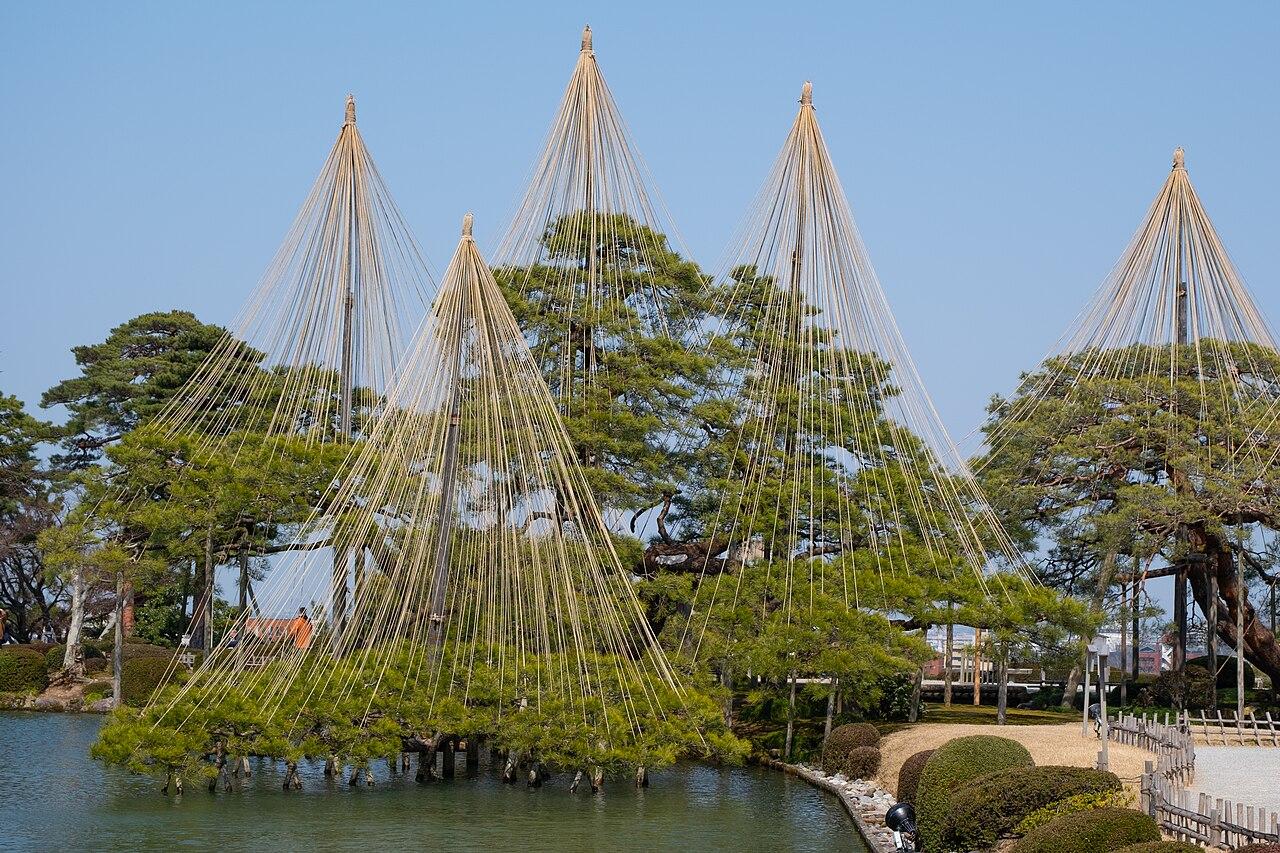
Photo: Winniepix / Wikimedia Commons, CC BY 2.0
Crab season without turning the trip into a food chase
Ishikawa snow crab fishing opens 6 November. Male Kano crab runs through 20 March; female kobako crab is much shorter, into late December. Blue tags mark local product at market stalls. Omicho Market is the easy morning stop: pick one bowl or sushi set rather than grazing every aisle if you have a timed garden plan.
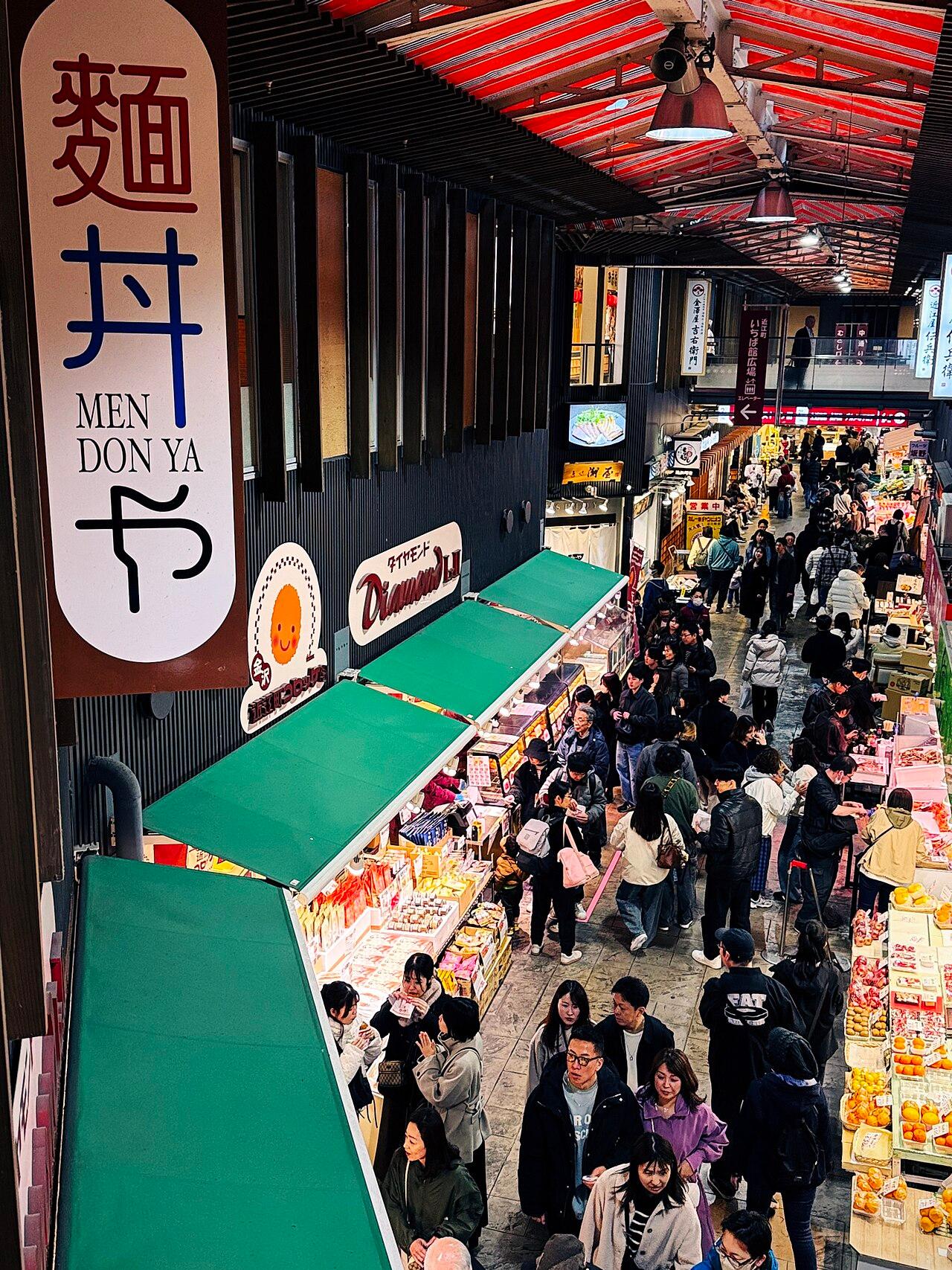
Photo: NevinThompson / Wikimedia Commons, CC BY-SA 4.0
Book one proper crab dinner if that is a trip highlight, especially on Friday and Saturday nights in December. Keep breakfast flexible at the market so a late dinner reservation does not force two heavy seafood meals the same day.
A practical 2-day plan
Day 1: arrive, Higashi Chaya, evening indoors
Arrive on the Hokuriku Shinkansen, store bags, walk or bus to Higashi Chaya while light remains. Early dinner. Use the evening for a covered shopping street or a museum if rain sets in. Sleep near the garden or on a direct bus line if you want the free early Kenrokuen slot.
Day 2: Kenrokuen morning, Omicho, optional castle park
Early garden entry or paid opening at 08:00. Slow walk among the ropes; paths can be slippery. Late breakfast or early lunch at Omicho. Afternoon for Kanazawa Castle Park grounds (outer grounds free) or the 21st Century Museum if you need heat and seating. Evening train out, or a second night if snow is falling and you want another garden look.
Use the 2 days in Kanazawa sample and swap outdoor blocks when ice warnings appear. For a wider rail loop, place Kanazawa between Tokyo and the Alps or Kansai inside a 7-day Japan itinerary or a longer 14-day Japan itinerary.
Getting there and moving around
From Tokyo, the Hokuriku Shinkansen is the simple rail choice. From Osaka or Kyoto, expect a transfer via Tsuruga on current routings; check the day’s connections rather than old nonstop assumptions. City loop buses link the station, Kenrokuen and Omicho; taxis help with luggage or icy sidewalks.
Winter storms can slow local buses more than the Shinkansen. Build a buffer before reserved long-distance seats.
Where to stay in Kanazawa in winter
Garden-adjacent hotels make the 06:00 entry realistic. Station hotels win if your priority is morning departures and you will use paid garden hours instead. Higashi Chaya stays are atmospheric; they add evening walks on possibly icy lanes. For two nights focused on Kenrokuen photos, walking distance to Renchi-mon or Zuishinzaka matters more than a river view.
Packing and footing
Kanazawa winter is wet cold: waterproof shoes with grip beat fashion boots. A hood beats a loose scarf in wind. Gloves help on metal railings and camera controls. Indoor layers should strip easily for heated museums and crowded market aisles.
Sample morning for rope photos
05:50 – leave the hotel on foot toward Zuishinzaka or Renchi-mon. 06:05 – enter for free early admission. 06:15–07:30 – walk the main pines and pond edges; keep steps short on frost. 07:40 – exit before paid opening. 08:30 – warm drink, then Omicho when stalls are fully open.
If waking at five does not fit your group, use paid 08:00 entry and accept more visitors. The ropes are still the point.
Rainy-day swaps that still feel local
When wet snow or wind makes long outdoor walks unwise:
- Spend longer at Omicho upstairs counters and covered aisles
- Visit the 21st Century Museum for seating and short exhibits
- Walk only one historic lane instead of both Higashi Chaya and Nagamachi
- Move the garden to the clearest morning you have, even if that means Day 1 afternoon paid entry instead of Day 2 dawn
Winter Kanazawa rewards one excellent garden hour more than three half-finished outdoor stops.
Linking Kanazawa with nearby winter cities
Kanazawa sits well between Tokyo and the Japanese Alps. A common pattern is Tokyo to Kanazawa for ropes and crab, then onward toward Takayama or Matsumoto if road and rail conditions allow. Keep at least one empty half-day in the plan when snow warnings are active.
If your trip is Tokyo-first, compare neighbourhood bases in where to stay in Tokyo for a first trip before you lock Shinkansen times into Hokuriku.
Budget notes without a full spreadsheet
Garden admission is low. Crab is the cost that climbs. A market bowl keeps lunch controlled; a multi-course crab dinner is the treat. Buses are cheap compared with repeated taxis, but taxis buy comfort on icy nights with luggage. Decide which one evening is the “crab night” and keep the other meals simpler.
FAQ
Is Kenrokuen open every day in winter? Yes. The teahouse has its own New Year closure.
Do I need a ticket for yukitsuri? Standard garden admission covers it during paid hours. Early entry is free with the gate rules above.
Is one day enough? One full day covers garden plus market plus one historic lane. Two days add weather buffer and a calmer pace.
When is snow most likely on the ropes? Often January–February, but snow is not guaranteed on any given night. December still shows the rope geometry clearly.
Sources
Ishikawa Prefecture Kenrokuen guidance (hours, fees, early admission), checked 8 Nov 2026; Visit Kanazawa yukitsuri event notes; Kanazawa tourism winter 2026 crab season overview (Kano crab 6 Nov–20 Mar; kobako shorter to late December).
Sketch the two days in RoamerPlanner so garden open times and train seats share one timeline.
Cover photo: そらみみ / Wikimedia Commons, CC BY-SA 4.0
ดูบทความและแพลนเที่ยวญี่ปุ่นทั้งหมด
ทริปที่คัดลอกไปใช้ได้
แผนเที่ยวรายวันพร้อมใช้สำหรับที่นี่ คัดลอกได้ฟรีแล้วปรับให้เข้ากับทริปของคุณ
เปลี่ยนบทความนี้เป็นแผนทริป
อยากเอาเรื่องนี้ไปใส่ในแพลนเที่ยวจริงไหม วางแผนต่อใน RoamerPlanner ได้เลย
เริ่มวางแผนของคุณเอง ไม่ต้องสมัครก่อนดูทริปตัวอย่าง