Hue Imperial City: Tickets, Tombs and a 2-Day Plan
November 17, 2026
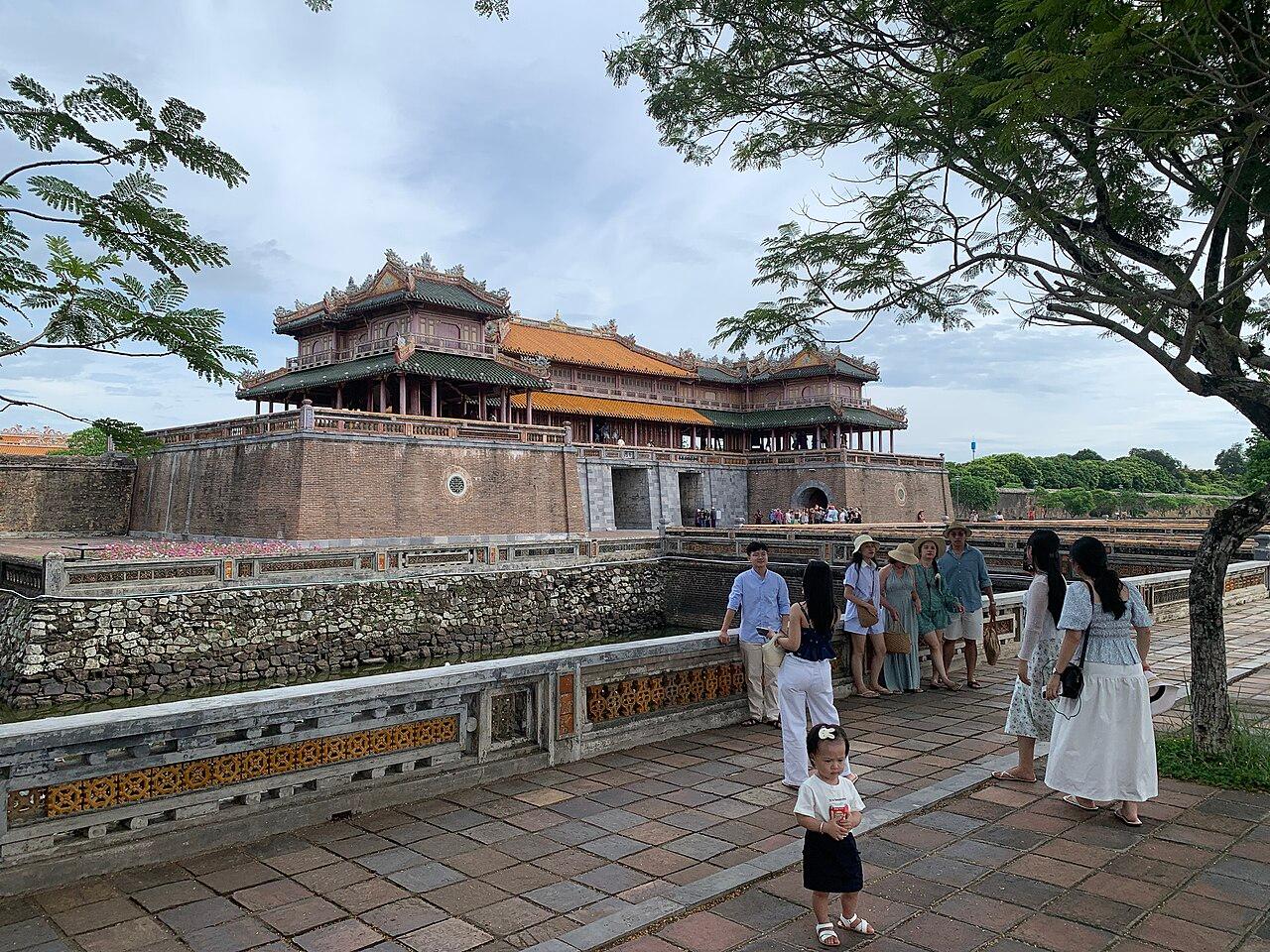
The Hue Imperial City is the reason most people stop in this former capital, and it rewards a slower visit than a rushed stop between trains. The citadel sits beside the Perfume River, with palaces, gates and courtyards inside a large walled enclosure. Around the city, the Nguyen emperors' tombs are spread along the river and in the hills. Two days is enough to see the main enclosure properly and visit the three tombs that matter most, without treating Hue as a checklist.
This guide covers current ticket prices and combo routes, how to use them, what to see inside Dai Noi, and a simple two-day plan. A ready outline is on our 2 days in Hue page.
Hue Imperial City tickets and combo routes
Tickets are sold by the Hue Monuments Conservation Centre. Prices below come from the centre's official fee page and from Hue City's fee resolution, which has been in force for 2026. They apply to international and Vietnamese visitors at the same rates, with separate child prices and a list of discounts and exemptions (including children under 7, and free entry for Vietnamese citizens on certain public holidays). Always check the official board if you are visiting after a new year, as fees can be revised.
Single-site adult tickets (child 7-12 in brackets):
- Hue Imperial City (Dai Noi): 200,000 dong (40,000)
- Minh Mang, Tu Duc or Khai Dinh tombs: 150,000 dong each (30,000)
- Gia Long tomb: 150,000 dong (children free)
- Dong Khanh tomb: 100,000 dong (children free)
- Thieu Tri tomb, Museum of Royal Antiquities, Hon Chen, An Dinh Palace, Nam Giao and Duc Duc tomb: 50,000 dong each (children free)
Combo routes, which save money if you are visiting several sites:
- Imperial City + Minh Mang + Khai Dinh: 420,000 dong (80,000)
- Imperial City + Minh Mang + Tu Duc: 420,000 dong (80,000)
- Imperial City + Tu Duc + Khai Dinh: 420,000 dong (80,000)
- Imperial City + Minh Mang + Tu Duc + Khai Dinh: 530,000 dong (100,000), valid for two days
- All listed heritage sites: 600,000 dong (120,000), valid for five days
For a typical first visit, the three-site or four-site combo is the one that makes sense. Buying Dai Noi and three tombs separately costs more. Thien Mu Pagoda is not part of this ticket system and is free to enter.
The official visiting-hours page listed Dai Noi as open 07:00 to 17:30, with tickets sold until 17:00, when checked in mid-November 2026. Tombs follow similar daytime hours. Confirm before you go, especially around Tet and other holidays.
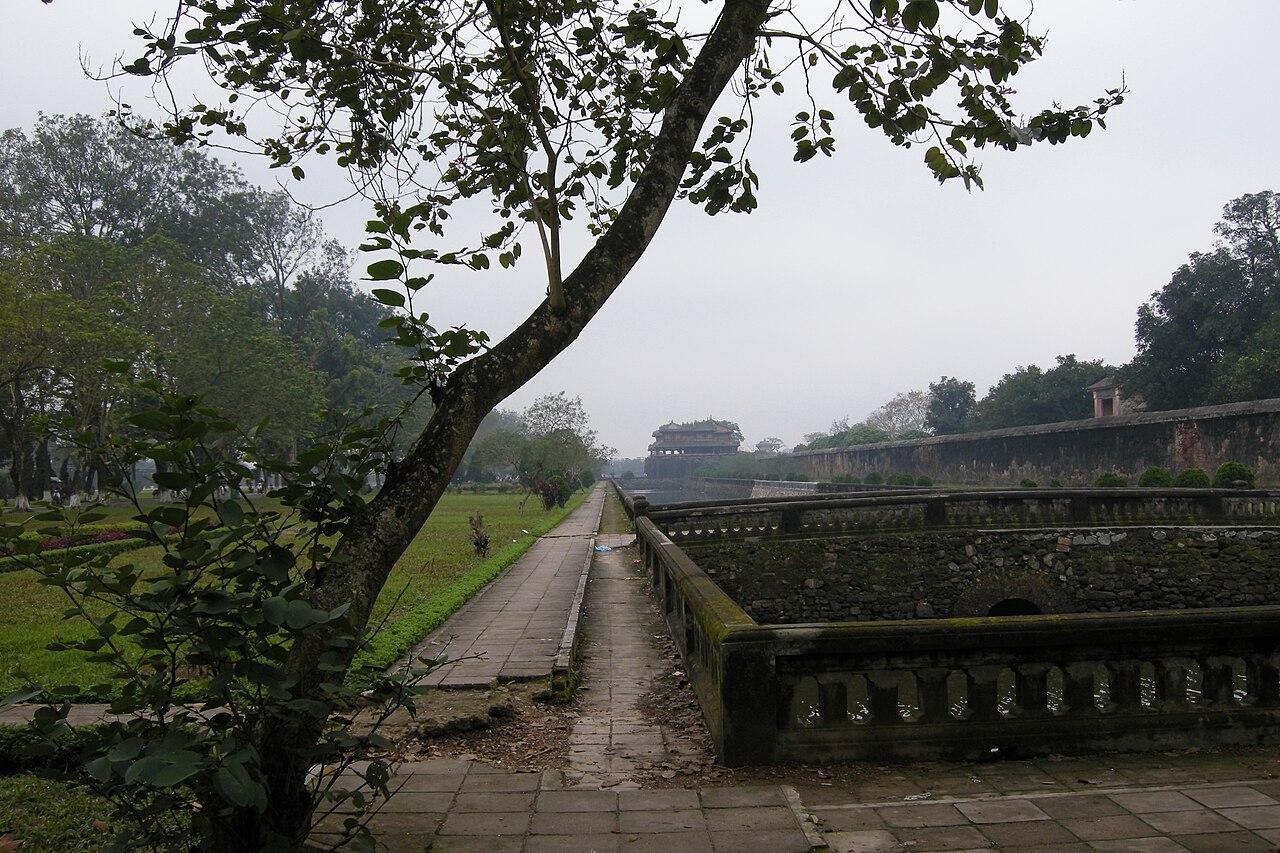
Photo: Vyacheslav Argenberg / Wikimedia Commons, CC BY 4.0
What to see inside the Imperial City
Enter through Ngo Mon, the Meridian Gate, and give the enclosure more time than a single loop of the main axis. Much of the citadel was damaged in the twentieth century, and restoration is still visible. That is part of what you are looking at, not a flaw in the visit. The Thai Hoa Palace, courtyards, royal theatre and the quieter side palaces (such as the Dien Tho area) are enough for a full morning or a short day.
A few practical notes:
- Go early, both for softer light and for thinner crowds on the main axis.
- Dress comfortably for walking on stone and open courtyards. There is little shade at midday.
- An audio guide or a licensed guide helps, because many buildings are more meaningful with a short explanation than as empty halls.
- You will not see everything. Pick a main route and one or two side courts, then stop.
If you only have a few hours between trains, see Dai Noi and leave the tombs for a later trip. Trying to add Khai Dinh in a leftover hour is how visits become a blur.
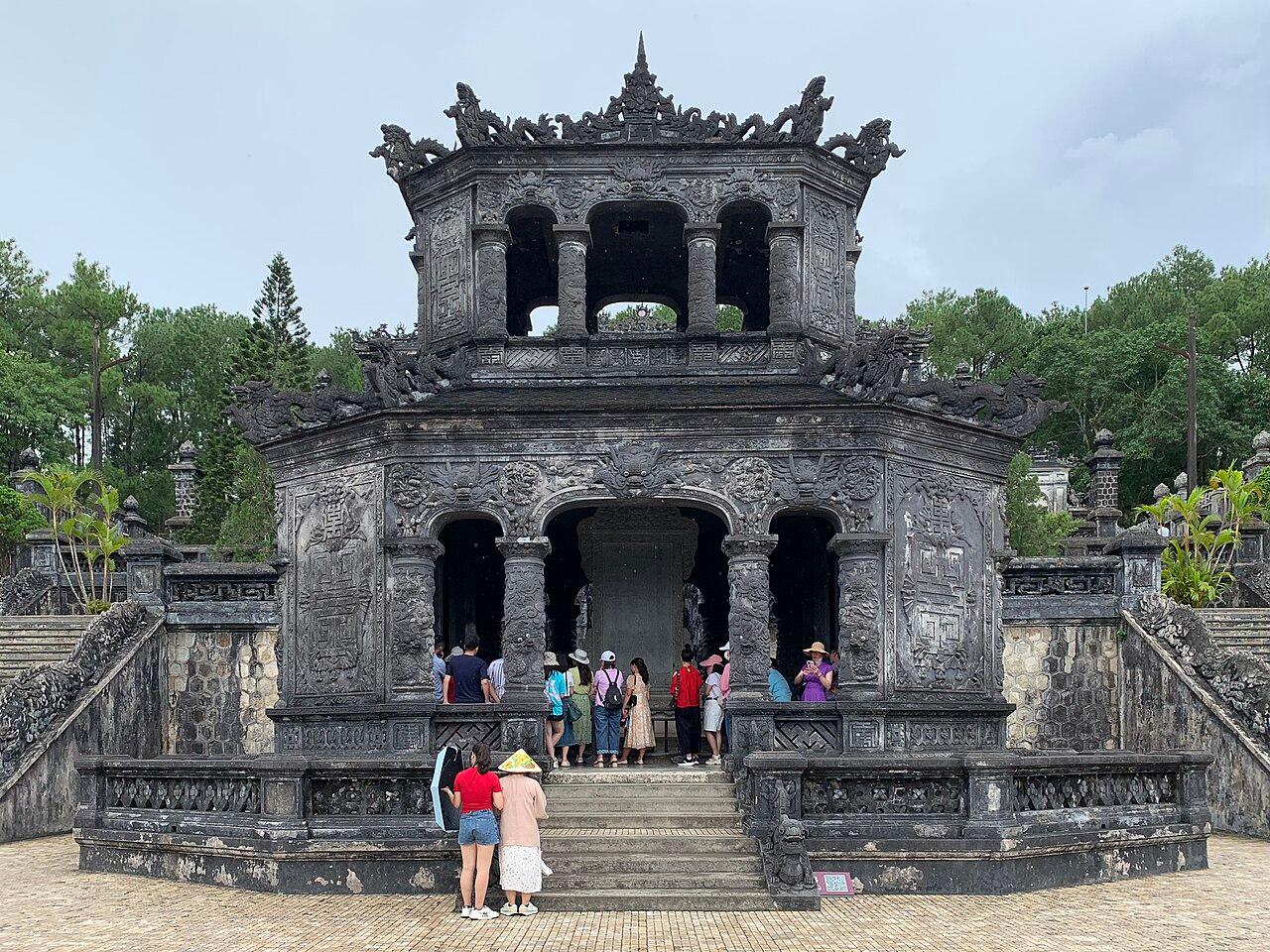
Photo: Chainwit. / Wikimedia Commons, CC BY 4.0
The tombs, and which ones to choose
The three tombs most visitors consider are Tu Duc, Minh Mang and Khai Dinh. They are not interchangeable.
Tu Duc is a large, wooded complex with lakes, pavilions and the tomb itself. It was built while the emperor was still alive and used as a retreat, which is why it feels like a landscape as much as a grave. Allow a relaxed hour or more.
Minh Mang sits further out, organised in a formal, symmetrical plan leading toward the burial hill. The setting is quieter. It pairs well with a river approach if you have a driver or a boat arrangement, though a car is the usual way.
Khai Dinh is later, more compact, and very different in style, with a hillside approach and a richly decorated interior that mixes Vietnamese and European details. It is the most popular of the three for photography, and it can feel busy in the middle of the day.
If you take the four-site combo, see Dai Noi on one day and two tombs, then the third tomb the next morning, or group Tu Duc and Khai Dinh, which are easier to combine by road. Gia Long is further still and is worth it only if you have a special interest and spare time.
A two-day plan that does not feel rushed
Day 1. The Imperial City and the river. Start at Ngo Mon when the gates open, or as close as you can. Spend the morning inside Dai Noi. After lunch, walk or cycle a section of the riverside, and add Thien Mu Pagoda if you have the energy. Thien Mu is a short ride west of the centre and pairs naturally with a Perfume River view. Keep the evening in the old commercial streets on the south bank, around the more compact hotel area.
Day 2. Two or three tombs. Begin with Tu Duc, while it is still relatively quiet, then Khai Dinh. Add Minh Mang if you have the four-site ticket and a driver, or if you started early enough. Leave late afternoon for travel onward to Da Nang or Hoi An, or for a slower coffee if you are staying a third night.
This shape matches a two-day Hue stay. If you are also seeing central Vietnam's coast, it sits cleanly before or after Da Nang or Hoi An. You can keep the ticket combos, tomb order and train times in RoamerPlanner so a delayed morning does not collapse the second day.
Getting to Hue, and where to stay
Hue has its own airport, with connections to Hanoi and Ho Chi Minh City, and it sits on the north-south railway. The train from Da Nang is the most useful regional hop; the coast and the Hai Van Pass make the short flight unnecessary for that leg. From the station or airport, the hotel area on the south bank of the river is a brief drive and is the most convenient place to stay for restaurants and evening walks. Staying on the citadel side is quieter and closer to Dai Noi, but you will cross the river for most dinners.
A car and driver for the tomb day is the simplest arrangement if you are not on a tour. Motorbike hire is common but only sensible if you already ride confidently in Vietnamese traffic. Between October and January the weather can be wet and cool; the tombs are still open, but paths are slippery and views are flatter. From late February the rain usually eases. Around Tet, check holiday hours and transport as you would elsewhere in Vietnam.
Quick answers
How long do you need for the Imperial City? A short visit is two hours. A better visit is a full morning. The enclosure is large, and it is tiring to sprint.
Are the combo tickets worth it? Yes, if you plan to see Dai Noi and at least two of the main tombs. The four-site ticket is the best value for a two-day stay.
Can you see Hue as a day trip from Da Nang? Yes, but you will probably only manage Dai Noi and one tomb. Staying overnight is more satisfying.
Is Thien Mu included in the monument ticket? No. Entry is free, and it is still worth the short trip.
Do you need to book tickets online? Most visitors buy at the gate. Official prices are published by the conservation centre; be wary of unofficial resellers adding a markup for the same ticket.
Sources
Checked 12 November 2026. Ticket prices and combo routes: Hue Monuments Conservation Centre fee page (hueworldheritage.org.vn) and Hue City People's Council Resolution 55/2025/NQ-HDND, in force from 4 January 2026 (all-sites route and discount rules). Opening hours: the centre's official visiting-hours page, as commonly cited in mid-November 2026 (Dai Noi 07:00-17:30, tickets until 17:00); confirm on the day. Thien Mu is outside this fee system.
Cover photo: Chainwit. / Wikimedia Commons, CC BY 4.0
More about Vietnam: all articles and trip plans
Trips you can copy
Ready-made day-by-day plans for this place. Copy one for free and change it to fit your trip.
Turn this into a plan
Ready to turn this into a real itinerary? Plan it in RoamerPlanner.
Start your own plan, no account neededBrowse sample trips