Da Nang vs Hoi An: Where to Base Yourself in Central Vietnam
November 16, 2026

Choosing da nang vs hoi an is the first practical decision for most trips to central Vietnam. The two places are close enough to share an airport and to visit each other on a day trip, but they feel different once you unpack. Da Nang is a large beach city with a modern riverfront and an easy airport transfer. Hoi An is a smaller heritage town, built for walking, lantern-lit evenings and a slower day around the old streets and the river.
This guide compares them as bases, not as a contest for which is "better". Many travellers use both. The question is where you should sleep, and for how many nights. Ready-made outlines are on our 3 days in Da Nang and 3 days in Hoi An pages.
Da Nang vs Hoi An at a glance
- Distance: about 30 kilometres. The road journey is usually 45 minutes to an hour, depending on traffic and which end of each place you mean.
- Airport: Da Nang International is the gateway for both. A taxi or ride-hail to a Da Nang beach hotel is short. A transfer to Hoi An takes longer and costs more, but is still simple.
- Choose Da Nang if you want a morning swim, a wider range of hotels at different prices, easy food late at night, or a base for day trips in several directions.
- Choose Hoi An if you want to walk out of your door into the old town, spend evenings by the river, and do not mind a quieter, more compact centre.
- Split the stay if you have four or more nights. Two and two, or one and three, both work.
You can also stay in one and take a day trip to the other. That is easier from Da Nang to Hoi An than the other way around, because the ancient town is the destination you wander, while Da Nang is more spread out.
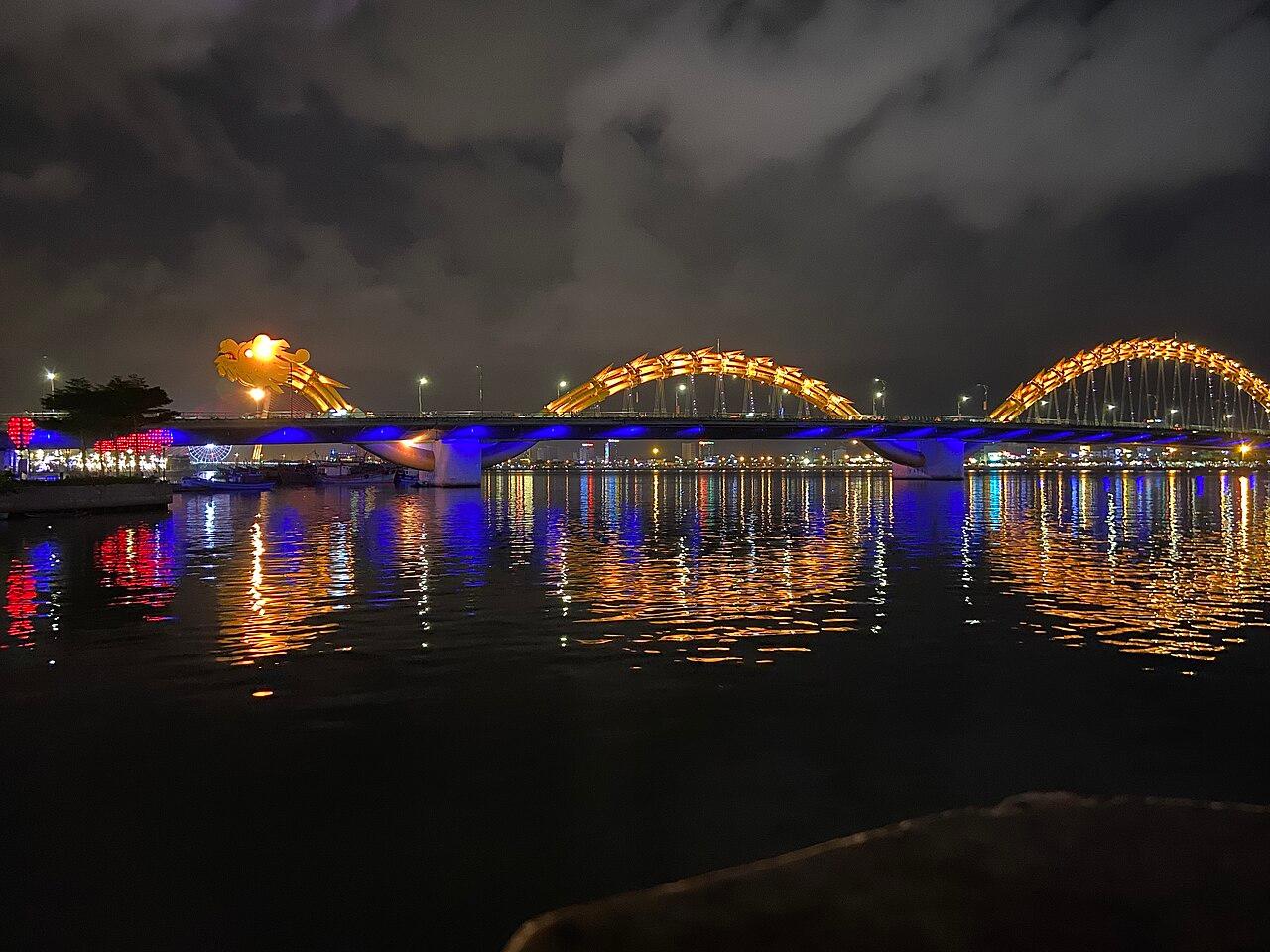
Photo: Kuroczynski / Wikimedia Commons, CC BY-SA 4.0
What Da Nang is like as a base
Da Nang is a working city that also happens to have a long, fine city beach. My Khe and the adjacent stretches of sand are the main reason many people stay here. You can swim in the morning, go inland or up the coast in the middle of the day, and be back for sunset. The Han River cuts through the centre, with the Dragon Bridge as the best-known landmark. The bridge has a scheduled fire-and-water show on some evenings; check the current timetable, as the days and times are set by the city and do change.
Other points in Da Nang's favour:
- The airport is close. Early flights are less painful than from Hoi An.
- Beaches are a daily habit, not a trip. You do not need a tour to reach the sea.
- Day trips are well placed. Hoi An is one direction, the Hai Van Pass and Hue are another, and the Marble Mountains sit just south of the city.
- Hotels cover a wide range. Beachfront towers, quieter mid-range places a block inland, and business hotels near the river are all options.
The downside is character. Da Nang does not have a small historic core you can explore on foot for hours. Some seafront strips are dominated by large hotels. If your picture of central Vietnam is lanterns and yellow shophouses, you will be looking at Hoi An.
What Hoi An is like as a base
Hoi An's ancient town is a UNESCO World Heritage site and a living neighbourhood of shophouses, assembly halls, small museums and the Japanese Covered Bridge. Evenings are the main event, when the lanterns are lit and the pedestrian streets fill. That is also when it is most crowded, especially in peak months and at weekends.
A ticket is required to visit the protected sites inside the old town. According to the official Hoi An World Heritage centre, checked in mid-November 2026, there are two visitor tickets:
- 80,000 dong: access to the common streets of the ancient town, plus either the Japanese Covered Bridge or Quan Cong Temple, and two other listed sites.
- 120,000 dong: the same, plus the museum system and three further sites.
One ticket can be used for the length of your stay, up to three days. Keep the stub; it can be checked at entrances. The centre also publishes pedestrian hours for the old town (from 09:00 into the evening, with slightly earlier closing in winter than in summer) and a separate evening window for Phan Chau Trinh street. Confirm the current hours at the ticket office, as seasonal times are set locally.
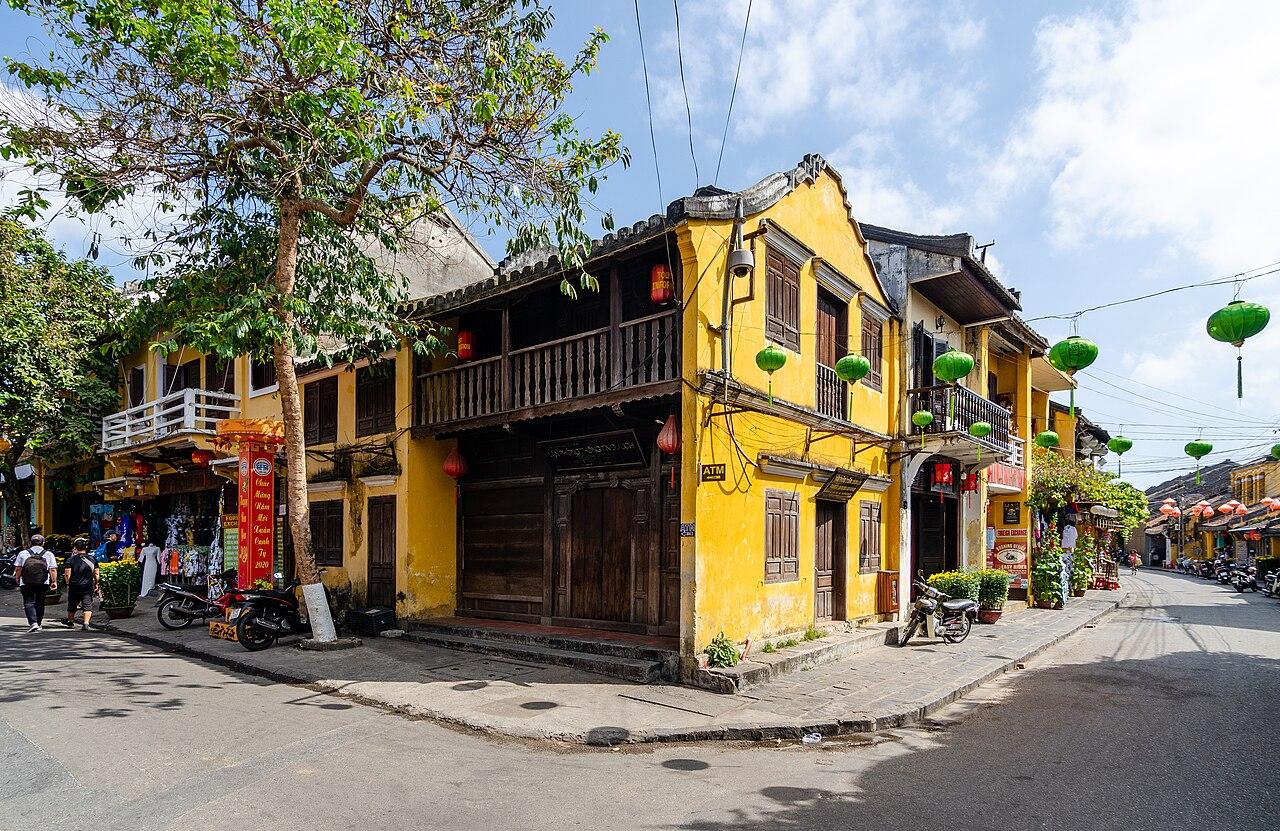
Photo: Steffen Schmitz (more photos) / Wikimedia Commons, CC BY-SA 4.0
Outside the ticketed houses, you can still walk many streets, eat, and look at the river. An Hoi, just across the water, has many hotels and restaurants and is a common place to stay if you want to be close to the old town without sleeping on its busiest lanes.
Hoi An's limits as a base are practical. The transfer from the airport is longer. The beach (Cua Dai or An Bang) is a short ride, not a stroll from most old-town rooms. And if you want to see Hue in a day, you will spend more time on the road than from Da Nang.
Day trips, and when a split stay is worth it
Hoi An from Da Nang is the classic day trip: a morning in the ancient town, lunch, the bridge and a couple of old houses, then back to the beach before dinner. It works, but you will miss the lanterns after dark unless you return late. If the old town is a priority, spending the night is better.
Da Nang from Hoi An makes sense if you want a beach morning, the Marble Mountains, or the Dragon Bridge in the evening. It is a longer day for less of a "place" at the end, so most people do this only if they are not already staying in Da Nang.
Hue is more realistic from Da Nang. The train or a car over the Hai Van Pass turns a visit to the Imperial City into a long day or, more comfortably, an overnight. If Hue is on your list, Da Nang is the better hub, or you can add Hue as its own stay.
A split stay is the cleanest answer for four nights or more: Da Nang for the airport, the beach and a Hue day, Hoi An for two slower days and nights in the old town. Put the plan in RoamerPlanner so the transfer sits on the right morning and you are not packing twice in a rush.
How to decide in one minute
- Flying in late or out early: Da Nang
- Main interest is the ancient town and evenings: Hoi An
- Main interest is swimming every day: Da Nang, or Hoi An only if you stay near An Bang
- First visit, five nights, want both: two nights Da Nang, three Hoi An (or the reverse if you care more about the beach)
- Travelling in the Tet period: read our Tet 2027 guide before you lock hotel dates, because Hoi An's old town and Da Nang's services are affected in different ways
Quick answers
Can you visit both without changing hotels? Yes. Stay in one and day-trip to the other. You will see more of Hoi An if you sleep there at least one night.
Which is cheaper? It depends on the season and the street, not the city name. Da Nang has more large hotels, which can help on price. Hoi An has a wide range of guesthouses, but the most central rooms are in demand.
Is the beach better in Da Nang? The city beach in Da Nang is easier to use every day. An Bang, near Hoi An, is a good beach too, but you generally need a short ride from the old town.
Do you need a ticket just to walk into Hoi An? You can walk many streets without one, but you need a ticket for the listed heritage sites, including the Japanese Covered Bridge or Quan Cong Temple under the official packages.
Sources
Checked 12 November 2026. Hoi An ticket types, prices (80,000 and 120,000 dong), three-day validity and pedestrian hours: Hoi An World Heritage centre (hoianworldheritage.org.vn). Dragon Bridge show days and times are set by Da Nang and should be confirmed locally. Road times are typical, not a guarantee in heavy traffic or at holiday peaks. Tet 2027 dates are those in Government Office document 10065/VPCP-KGVX.
Cover photo: Chainwit. / Wikimedia Commons, CC BY 4.0
More about Vietnam: all articles and trip plans
Trips you can copy
Ready-made day-by-day plans for this place. Copy one for free and change it to fit your trip.
Turn this into a plan
Ready to turn this into a real itinerary? Plan it in RoamerPlanner.
Start your own plan, no account neededBrowse sample trips