Where to Stay in Chiang Mai: Old City vs Nimman vs Riverside
October 19, 2026
If you are working out where to stay in Chiang Mai, the choice for most first trips comes down to three areas: the Old City, Nimman and the riverside. They are close to each other, a short ride apart, but each one gives your trip a different rhythm. This guide explains how they differ and who each one suits, so you can book once and not regret it.
The short answer
- Old City: best for a first visit, temples and walking. You can see a lot without transport.
- Nimman: best for cafes, shopping and a more modern feel. Good for longer stays and remote work.
- Riverside: best for a calmer base, river views and quieter evenings, with the Night Bazaar close by on the east bank.
If you only have two or three days and want to see the main temples, stay in or right next to the Old City. If you are staying a week or more, Nimman or the riverside often feel easier to live in.
Where to stay in Chiang Mai for a first visit: the Old City
The Old City is the square inside the moat and the remains of the old walls. It holds many of the city's best known temples, including Wat Phra Singh and Wat Chedi Luang, and it is flat and compact enough to cross on foot in about half an hour.
Why people stay here
- Most of the sights you came for are a walk away.
- There is a wide range of places to stay, from guesthouses to small boutique hotels.
- The Sunday Walking Street market runs along Ratchadamnoen Road through the Old City, and the Saturday market is a short walk south on Wualai Road.
What to know
- Streets inside the walls are narrow, and traffic around the moat is heavy at rush hour.
- Some lanes have bars that stay open late. If you sleep lightly, read recent reviews about noise and choose a room away from the street.
- The area near Tha Phae Gate, on the east side, is the most convenient for the Night Bazaar and the river. The quieter corners tend to be in the north-west and south-west.
Who it suits: first-timers, short stays, people who like walking and temples.
Nimman: cafes, malls and a modern base
Nimmanhaemin Road, usually just called Nimman, lies west of the Old City near Chiang Mai University. It is a grid of small streets (sois) with cafes, restaurants, coworking spaces and shops, and the large One Nimman and Maya malls sit at its northern end.
Why people stay here
- It is easy to find good coffee, international food and air-conditioned places to work.
- Accommodation tends to be newer: serviced apartments, condos and design hotels.
- Doi Suthep, the mountain temple above the city, is closer from here than from most other areas.
What to know
- You will need a short ride to reach the Old City temples, usually 10 to 15 minutes by car outside rush hour.
- Traffic on Nimman and Huay Kaew Road can be slow in the evening.
- It feels less traditional than the Old City. Some visitors love that, others find it could be anywhere.
Who it suits: longer stays, remote workers, food and cafe lovers, travellers who prefer modern rooms.
The riverside: quieter nights by the Ping
The Ping River runs east of the Old City. The riverside here means both banks, from around the Nawarat Bridge north towards Wat Ket and south past the Iron Bridge. The east bank is closer to the Night Bazaar; parts of the west bank and further north feel more residential.
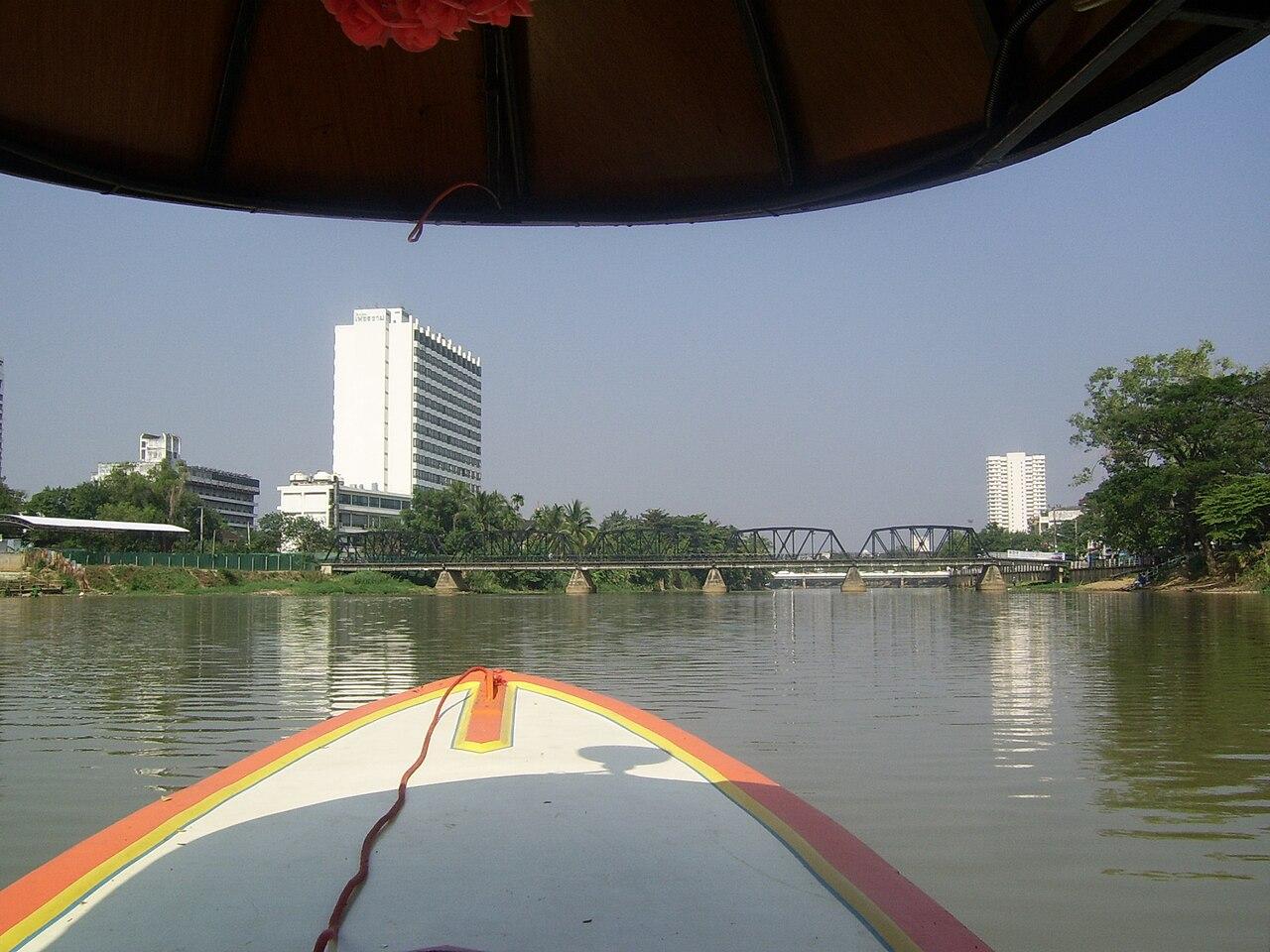
Photo: Erebusso. / [Wikimedia Commons](https://commons.wikimedia.org/wiki/File:Ping_River_in_Chiang_Mai_-_panoramio_-_Erebusso._(7).jpg), [CC BY-SA 3.0](https://creativecommons.org/licenses/by-sa/3.0)
Why people stay here
- It is calmer than the Old City and Nimman, especially in the evening.
- Several larger hotels and resort-style properties sit on the water, often with gardens and pools.
- On Loy Krathong night, people float krathongs on this river, so you are right where it happens.
What to know
- Distances are longer. Many riverside hotels are a ride from the Old City rather than a walk, so check the exact location on a map before booking.
- Some properties run their own shuttle into town. If you do not want to rely on ride-hailing, look for one that does.
- Mosquitoes can be more noticeable near the water at dusk.
Who it suits: couples, families wanting space, travellers who want a quieter base and don't mind a short ride.
How to choose between them
Ask yourself three questions.
1. How many days do you have? Two or three days: the Old City saves time. A week or more: you may prefer Nimman or the riverside and visit the temples on one or two days.
2. How will you get around? Ride-hailing apps such as Grab and Bolt work well across the city, and red shared trucks (songthaew) cover the main roads. If you plan to walk most of the time, stay in the Old City. If you are happy to take short rides, all three areas work.
3. What do you want from your evenings? Night markets and street food: Old City or near Tha Phae Gate. Cafes, bars and restaurants with a modern feel: Nimman. Quiet dinners and an early night: riverside.
Staying during festivals and high season
Chiang Mai's busiest months are usually November to February, when the weather is cooler and drier. Around Yi Peng and Loy Krathong (23 to 25 November in 2026), rooms in the Old City and by the river book up first, and prices jump.
A few tips for festival dates:
- Book a refundable rate early and change later if you find something better.
- Roads near Tha Phae Gate and the river close or jam on festival evenings, so being able to walk to events is worth a lot that week.
- Our Yi Peng 2026 guide covers dates, lantern rules and a three-day plan.
From around February to April, smoke from agricultural burning can affect air quality in northern Thailand. If you travel then, check air quality forecasts and look for rooms with good air filtering.
Other areas worth a look
- Santitham: north of the Old City, local and good value, a short ride to both Nimman and the Old City.
- Chang Klan and the Night Bazaar area: between the Old City and the river, busy and central, with many mid-range hotels.
- Hang Dong and the outskirts: for resorts with space and greenery, if you plan to use a car.
Putting it into a plan
Once you know your area, sketch out your days. Put the fixed parts first, such as a cooking class, a day trip to Doi Inthanon or a festival night, then fill in temples and markets around them. The 3 days in Chiang Mai itinerary is a good starting point, and you can copy it into RoamerPlanner and move days around your hotel location. For one hotel near Tha Phae Gate, see our dusitD2 Chiang Mai notes.
FAQ
Is it better to stay in the Old City or Nimman? For a short first trip, the Old City, because the temples are within walking distance. For a longer stay with more cafes and modern rooms, Nimman.
Is the riverside too far from everything? Not too far, but plan on short rides. Check the hotel's exact location; some riverside spots are walkable to the Night Bazaar and Tha Phae Gate, others are not.
Which area is quietest at night? Generally the riverside and the residential corners of the Old City. Nimman and the streets near Tha Phae Gate are livelier.
Do I need to book far ahead? For November to February, and especially Yi Peng week, book early. Outside the high season you usually have more choice closer to the date.
Cover photo: CEphoto, Uwe Aranas / [Wikimedia Commons](https://commons.wikimedia.org/wiki/File:Chiang-Mai_Thailand_Brick-wall-01.jpg), [CC BY-SA 3.0](https://creativecommons.org/licenses/by-sa/3.0)
อยากเอาที่พักนี้ไปใส่ในแพลนเที่ยวจริงไหม วางแผนต่อใน RoamerPlanner ได้เลย
เปิด RoamerPlanner